Taylor & Francis

Free Radical Research Template

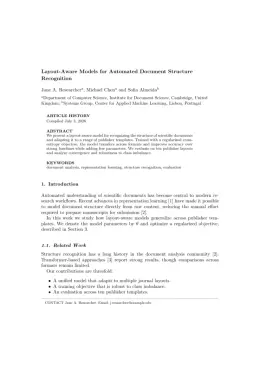
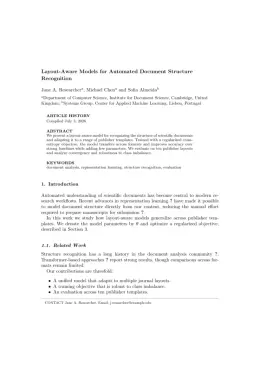
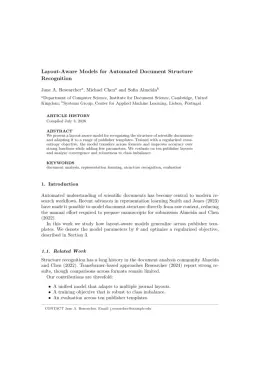
Write in a clean editor, then format for Free Radical Research in one click — DocuGuru applies the official Taylor & Francis template with author–year references and exports a submission-ready PDF plus the editable LaTeX source. Free to start.

About the Free Radical Research format

Free Radical Research is a peer-reviewed journal published by Taylor & Francis, covering Antioxidant Activity and Oxidative Stress, Free Radicals and Antioxidants, Nitric Oxide and Endothelin Effects.

PublisherTaylor & Francis
Reference styleAuthor–year (Chicago, T&F)
Author–year — (Smith, 2023) in the text
Smith, Ada, Ben Jones, and Cara Lee. 2023. "A Representative Article Title." Free Radical Research 12 (3): 45–58.

Formats any DOI in Free Radical Research style. No sign-up.

Publishes research inAntioxidant Activity and Oxidative Stress Free Radicals and Antioxidants Nitric Oxide and Endothelin Effects Electron Spin Resonance Studies Genomics, phytochemicals, and oxidative stress
ISSN1029-2470
Citation impact (2-yr)2.72
h-index158
i10-index2,981
Total citations177,478
Top institutions publishing hereNagoya University
Journal websitewww.tandfonline.com
You getA submission-ready PDF and the editable LaTeX source — ready to submit.

Papers published in Free Radical Research per year

149
2014
118
2015
117
2016
100
2017
121
2018
110
2019
92
2020
74
2021
65
2022
45
2023
60
2024
59
2025

Citation impact of Free Radical Research by publication year

5.7K
2014
4.6K
2015
3.3K
2016
3.1K
2017
4.1K
2018
3.5K
2019
2K
2020
1.4K
2021
720
2022
422
2023
294
2024
102
2025

Citations each year’s papers have accumulated so far — the most recent years are still building up.

Most-cited papers in Free Radical Research

Reactive oxygen species in cancer

Geou‐Yarh Liou, Peter Störz · 1 Jan 2010

Elevated rates of reactive oxygen species (ROS) have been detected in almost all cancers, where they promote many aspects of tumour development and progression. However, tumour cells also express increased levels of antioxidant proteins to detoxify from ROS, suggesting that a delicate balance of intracellular ROS levels is required for cancer cell function. Further, the…

3,402 citations Cite SaveGo to paper →
The Relative Antioxidant Activities of Plant-Derived Polyphenolic Flavonoids

Catherine Rice‐Evans, Nicholas J. Miller, Paul Bolwell et al. · 1 Jan 1995

The relative antioxidant activities, against radicals generated in the aqueous phase, of a range of plant-derived polyphenolic flavonoids, constituents of fruit, vegetables, tea and wine, have been assessed. The results show that compounds such as quercetin and cyanidin, with 3',4' dihydroxy substituents in the B ring and conjugation between the A and B rings, have…

2,157 citations Cite SaveGo to paper →
Glutathione and glutathione-dependent enzymes represent a co-ordinately regulated defence against oxidative stress

John D. Hayes, Lesley I. McLellan · 1 Jan 1999

Increases in the intracellular levels of reactive oxygen species (ROS), frequently referred to as oxidative stress, represents a potentially toxic insult which if not counteracted will lead to membrane dysfunction, DNA damage and inactivation of proteins. Chronic oxidative stress has numerous pathological consequences including cancer, arthritis and neurodegenerative disease. Glutathione-associated metabolism is a major mechanism…

1,527 citations Cite SaveGo to paper →
Protein oxidation and aging

Earl R. Stadtman · 1 Jan 2006

Organisms are constantly exposed to various forms of reactive oxygen species (ROS) that lead to oxidation of proteins, nucleic acids, and lipids. Protein oxidation can involve cleavage of the polypeptide chain, modification of amino acid side chains, and conversion of the protein to derivatives that are highly sensitive to proteolytic degradation. Unlike other types of…

1,049 citations Cite SaveGo to paper →
Interactions of Flavonoids with Iron and Copper Ions: A Mechanism for their Antioxidant Activity

Lurdes Mira, M. Tereza Fernandez, Marta Santos et al. · 1 Jan 2002

The metal chelating properties of flavonoids suggest that they may play a role in metal-overload diseases and in all oxidative stress conditions involving a transition metal ion. A detailed study has been made of the ability of flavonoids to chelate iron (including Fe3+) and copper ions and its dependence of structure and pH. The acid…

1,013 citations Cite SaveGo to paper →

Free Radical Research template — frequently asked questions

How do I write a paper in the Free Radical Research format?
In DocuGuru you write your manuscript in a normal editor — no LaTeX setup required — and select the Free Radical Research template. When you export, DocuGuru compiles the paper into the official Taylor & Francis format and hands you a submission-ready PDF along with the editable LaTeX source.
What reference style does Free Radical Research use?
Free Radical Research uses Author–year (Chicago, T&F) references, shown as author–year markers such as (Smith, 2023) in the text. DocuGuru formats every in-text citation and the reference list in this exact style automatically. A reference appears like this: Smith, Ada, Ben Jones, and Cara Lee. 2023. "A Representative Article Title." Free Radical Research 12 (3): 45–58.
Do I need to know LaTeX to submit to Free Radical Research?
No. DocuGuru generates the interact LaTeX class and compiles the PDF for you in the background, so you get a Taylor & Francis-ready Free Radical Research document without writing any LaTeX. If you do want it, the LaTeX source is included in the export.
Can I import an existing draft into the Free Radical Research template?
Yes. Paste or upload your current manuscript — Word, LaTeX, Markdown, or plain text — and DocuGuru reflows it into the Free Radical Research format with correct headings, figures, tables, and author–year citations.
Who publishes Free Radical Research?
Free Radical Research is a multidisciplinary journal published by Taylor & Francis. DocuGuru's Free Radical Research template matches Taylor & Francis's official submission format.
Can I export a submission-ready Free Radical Research PDF?
Yes — DocuGuru produces a PDF built with the official Free Radical Research template (the interact class) that is ready to submit to Taylor & Francis, together with the matching LaTeX source files.
How much does the Free Radical Research template cost?
You can start writing in the Free Radical Research template for free. Exporting the final submission-ready Free Radical Research PDF and LaTeX source is part of DocuGuru's paid plans — see the app for current pricing.
Use the Free Radical Research template