Taylor & Francis

Food Biotechnology Template

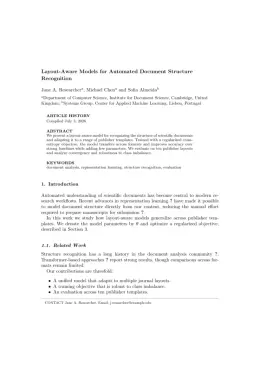
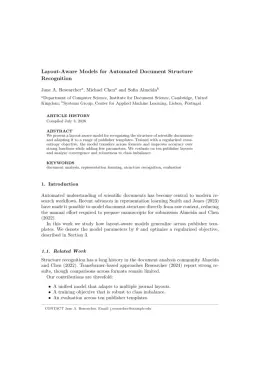
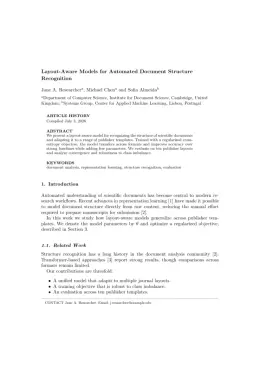
Write in a clean editor, then format for Food Biotechnology in one click — DocuGuru applies the official Taylor & Francis template with author–year references and exports a submission-ready PDF plus the editable LaTeX source. Free to start.

About the Food Biotechnology format

Food Biotechnology is a peer-reviewed journal published by Taylor & Francis, covering Probiotics and Fermented Foods, Microbial Metabolites in Food Biotechnology, Enzyme Production and Characterization.

PublisherTaylor & Francis
Reference styleAuthor–year (Chicago, T&F)
Author–year — (Smith, 2023) in the text
Smith, Ada, Ben Jones, and Cara Lee. 2023. "A Representative Article Title." Food Biotechnology 12 (3): 45–58.

Formats any DOI in Food Biotechnology style. No sign-up.

Publishes research inProbiotics and Fermented Foods Microbial Metabolites in Food Biotechnology Enzyme Production and Characterization Protein Hydrolysis and Bioactive Peptides Biofuel production and bioconversion
ISSN0890-5436
Citation impact (2-yr)1.03
h-index55
i10-index380
Total citations15,104
Top institutions publishing hereUniversity of Massachusetts Amherst
Journal websitewww.tandfonline.com
You getA submission-ready PDF and the editable LaTeX source — ready to submit.

Papers published in Food Biotechnology per year

22
2014
18
2015
31
2016
43
2017
20
2018
19
2019
20
2020
17
2021
20
2022
20
2023
19
2024
48
2025

Citation impact of Food Biotechnology by publication year

498
2014
172
2015
252
2016
386
2017
218
2018
299
2019
327
2020
221
2021
119
2022
108
2023
58
2024
14
2025

Citations each year’s papers have accumulated so far — the most recent years are still building up.

Most-cited papers in Food Biotechnology

Antibacterial action of chitosan

Nikita Sudarshan, Dallas G. Hoover, Dietrich Knorr · 1 Jan 1992

Abstract The antibacterial action of chitosan hydroglutamate (CH), chitosan lactate (CL) and chitosan derived from fungal mycelia was examined against both gram‐negative and gram‐positive bacteria. Plate counts indicated inactivation rates of one‐ to five‐log‐cycles within one hour. Fungal chitosan had significantly less antibiotic effect than CH and CL. The antibacterial action of CH and CL…

Antimicrobial effect of water‐soluble chitosans with high hydrostatic pressure

Anne M. Papineau, Dallas G. Hoover, Dietrich Knorr et al. · 1 Jan 1991

Abstract Two commercially available water‐soluble chitosan salts, chitosan lactate and chitosan hydroglutamate, were examined for antagonistic effect against Escherichia coli V517, Staphylococcus aureus MF‐31 and Saccharomyces cerevisiae 15. Significant inactivation of each population was evident within 2 min of incubation with Chitosan. S. cerevisiae was the most sensitive of the microorganisms examined. Concentration effects varied…

Inactivation of microorganisms with pulsed electric fields: Potential for food preservation

Patrick C. Wouters, J.P.P.M. Smelt · 1 Nov 1997

Abstract High voltage pulsed electric field (PEF) treatment is a potential non‐thermal food decontamination technique to replace or partially substitute thermal processes. Microorganisms in foods can be inactivated with pulsed electric fields at ambient or refrigerated temperatures for a short treatment time of less than a second and the fresh‐like quality of food is preserved.…

Cellular permeabilization of cultured plant tissues by high electric field pulses or ultra high pressure for the recovery of secondary metabolites

Heike Dörnenburg, Dietrich Knorr · 1 Mar 1993

Abstract Chenopodium rubrum and Morinda citrifolia cells were subjected to high electric field pulses (0 to 1.6 kV ∗ cm−1, 0 to 30 pulses) or high hydrostatic pressure (0.1 to 350 MPa, 10 min, RT) to examine their role in cell permeabilization. A maximum amount of 85 % of the total amaranthin content and 5.7…

Effect of Fermentation of Pomegranate Juice by<i>Lactobacillus plantarum</i>and<i>Lactobacillus acidophilus</i>on the Antioxidant Activity and Metabolism of Sugars, Organic Acids and Phenolic Compounds

Zeinab E. Mousavi, Seyed Mohammad Mousavi, Seyed Hadi Razavi et al. · 1 Feb 2013

The effect of lactic acid bacterial fermentation on sugars, organic acids, bio-transformation of phenolic compounds (anthocyanins and ellagic acid), and antioxidant activity was investigated in pomegranate juice. L. plantarum and L. acidophilus were used as probiotic starter organisms. Both bacteria were able to grow in the juice and their viable cells reached to 3.9×10⁸ CFU/mL…

Food Biotechnology template — frequently asked questions

How do I write a paper in the Food Biotechnology format?
In DocuGuru you write your manuscript in a normal editor — no LaTeX setup required — and select the Food Biotechnology template. When you export, DocuGuru compiles the paper into the official Taylor & Francis format and hands you a submission-ready PDF along with the editable LaTeX source.
What reference style does Food Biotechnology use?
Food Biotechnology uses Author–year (Chicago, T&F) references, shown as author–year markers such as (Smith, 2023) in the text. DocuGuru formats every in-text citation and the reference list in this exact style automatically. A reference appears like this: Smith, Ada, Ben Jones, and Cara Lee. 2023. "A Representative Article Title." Food Biotechnology 12 (3): 45–58.
Do I need to know LaTeX to submit to Food Biotechnology?
No. DocuGuru generates the interact LaTeX class and compiles the PDF for you in the background, so you get a Taylor & Francis-ready Food Biotechnology document without writing any LaTeX. If you do want it, the LaTeX source is included in the export.
Can I import an existing draft into the Food Biotechnology template?
Yes. Paste or upload your current manuscript — Word, LaTeX, Markdown, or plain text — and DocuGuru reflows it into the Food Biotechnology format with correct headings, figures, tables, and author–year citations.
Who publishes Food Biotechnology?
Food Biotechnology is a multidisciplinary journal published by Taylor & Francis. DocuGuru's Food Biotechnology template matches Taylor & Francis's official submission format.
Can I export a submission-ready Food Biotechnology PDF?
Yes — DocuGuru produces a PDF built with the official Food Biotechnology template (the interact class) that is ready to submit to Taylor & Francis, together with the matching LaTeX source files.
How much does the Food Biotechnology template cost?
You can start writing in the Food Biotechnology template for free. Exporting the final submission-ready Food Biotechnology PDF and LaTeX source is part of DocuGuru's paid plans — see the app for current pricing.

Use the Food Biotechnology template