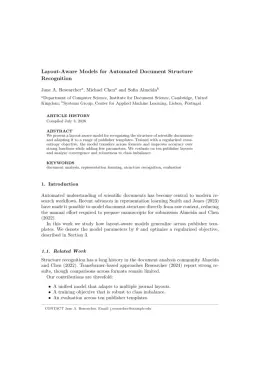
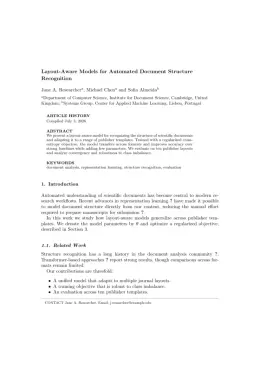
Taylor & Francis

Expert Review of Proteomics Template

Write in a clean editor, then format for Expert Review of Proteomics in one click — DocuGuru applies the official Taylor & Francis template with numbered references and exports a submission-ready PDF plus the editable LaTeX source. Free to start.

About the Expert Review of Proteomics format

Expert Review of Proteomics is a peer-reviewed journal published by Taylor & Francis, covering Advanced Proteomics Techniques and Applications, Mass Spectrometry Techniques and Applications, Metabolomics and Mass Spectrometry Studies.

PublisherTaylor & Francis
Reference styleNumbered (Vancouver/NLM)
Numbered — [1], [2] in the text
1. Smith A, Jones B, Lee C. A representative article title. Expert Review of Proteomics. 2023;12(3):45–58.

Formats any DOI in Expert Review of Proteomics style. No sign-up.

Publishes research inAdvanced Proteomics Techniques and Applications Mass Spectrometry Techniques and Applications Metabolomics and Mass Spectrometry Studies Advanced Biosensing Techniques and Applications Monoclonal and Polyclonal Antibodies Research
ISSN1478-9450
Citation impact (2-yr)3.2
h-index89
i10-index977
Total citations44,000
Top institutions publishing hereCentre National de la Recherche Scientifique
Journal websitewww.tandfonline.com
You getA submission-ready PDF and the editable LaTeX source — ready to submit.

Papers published in Expert Review of Proteomics per year

66
2014
72
2015
95
2016
99
2017
87
2018
66
2019
66
2020
78
2021
25
2022
39
2023
43
2024
47
2025

Citation impact of Expert Review of Proteomics by publication year

2.3K
2014
2.4K
2015
2.4K
2016
3.1K
2017
2.8K
2018
1.9K
2019
1.7K
2020
1.5K
2021
390
2022
262
2023
207
2024
106
2025

Citations each year’s papers have accumulated so far — the most recent years are still building up.

Most-cited papers in Expert Review of Proteomics

Exosomes: proteomic insights and diagnostic potential

Richard J. Simpson, Justin WE Lim, Robert L. Moritz et al. · 1 Jun 2009

Exosomes are 40-100-nm diameter membrane vesicles of endocytic origin that are released by most cell types upon fusion of multivesicular bodies with the plasma membrane, presumably as a vehicle for cell-free intercellular communication. While early studies focused on their secretion from diverse cell types in vitro, exosomes have now been identified in body fluids such…

1,127 citations Cite SaveGo to paper →
Role of spectral counting in quantitative proteomics

Deborah H. Lundgren, Sun‐Il Hwang, Linfeng Wu et al. · 1 Feb 2010

Spectral count, defined as the total number of spectra identified for a protein, has gained acceptance as a practical, label-free, semiquantitative measure of protein abundance in proteomic studies. In this review, we discuss issues affecting the performance of spectral counting relative to other label-free methods, as well as its limitations. Possible consequences of modifications, which…

Histone structure and nucleosome stability

Leonardo Mariño‐Ramírez, Maricel G. Kann, Benjamin A. Shoemaker et al. · 1 Oct 2005

Histone proteins play essential structural and functional roles in the transition between active and inactive chromatin states. Although histones have a high degree of conservation due to constraints to maintain the overall structure of the nucleosomal octameric core, variants have evolved to assume diverse roles in gene regulation and epigenetic silencing. Histone variants, post-translational modifications…

Proximity ligation assays: a recent addition to the proteomics toolbox

Irene Weibrecht, Karl‐Johan Leuchowius, Carl-Magnus Clausson et al. · 1 Jun 2010

An essential skill for every researcher is to learn how to select and apply the most appropriate methods for the questions they are trying to answer. With the extensive variety of methods available, it is increasingly important to scrutinize the advantages and disadvantages of these techniques prior to making a decision on which to use.…

The necessity of and strategies for improving confidence in the accuracy of western blots

Rajeshwary Ghosh, Jennifer E. Gilda, Aldrin V. Gomes · 25 Jul 2014

Western blotting is one of the most commonly used laboratory techniques for identifying proteins and semi-quantifying protein amounts; however, several recent findings suggest that western blots may not be as reliable as previously assumed. This is not surprising since many labs are unaware of the limitations of western blotting. In this manuscript, we review essential…

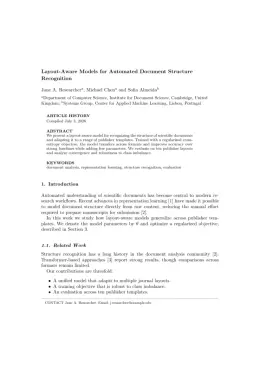
Expert Review of Proteomics template — frequently asked questions

How do I write a paper in the Expert Review of Proteomics format?
In DocuGuru you write your manuscript in a normal editor — no LaTeX setup required — and select the Expert Review of Proteomics template. When you export, DocuGuru compiles the paper into the official Taylor & Francis format and hands you a submission-ready PDF along with the editable LaTeX source.
What reference style does Expert Review of Proteomics use?
Expert Review of Proteomics uses Numbered (Vancouver/NLM) references, shown as numbered [1], [2] markers in the text. DocuGuru formats every in-text citation and the reference list in this exact style automatically. A reference appears like this: 1. Smith A, Jones B, Lee C. A representative article title. Expert Review of Proteomics. 2023;12(3):45–58.
Do I need to know LaTeX to submit to Expert Review of Proteomics?
No. DocuGuru generates the interact LaTeX class and compiles the PDF for you in the background, so you get a Taylor & Francis-ready Expert Review of Proteomics document without writing any LaTeX. If you do want it, the LaTeX source is included in the export.
Can I import an existing draft into the Expert Review of Proteomics template?
Yes. Paste or upload your current manuscript — Word, LaTeX, Markdown, or plain text — and DocuGuru reflows it into the Expert Review of Proteomics format with correct headings, figures, tables, and numbered citations.
Who publishes Expert Review of Proteomics?
Expert Review of Proteomics is a multidisciplinary journal published by Taylor & Francis. DocuGuru's Expert Review of Proteomics template matches Taylor & Francis's official submission format.
Can I export a submission-ready Expert Review of Proteomics PDF?
Yes — DocuGuru produces a PDF built with the official Expert Review of Proteomics template (the interact class) that is ready to submit to Taylor & Francis, together with the matching LaTeX source files.
How much does the Expert Review of Proteomics template cost?
You can start writing in the Expert Review of Proteomics template for free. Exporting the final submission-ready Expert Review of Proteomics PDF and LaTeX source is part of DocuGuru's paid plans — see the app for current pricing.
Use the Expert Review of Proteomics template