Taylor & Francis

Expert Review of Molecular Diagnostics Template

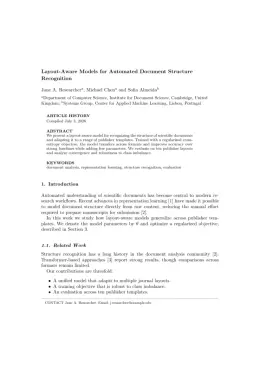
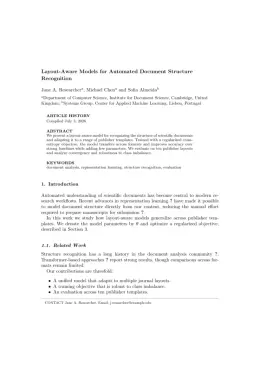
Write in a clean editor, then format for Expert Review of Molecular Diagnostics in one click — DocuGuru applies the official Taylor & Francis template with numbered references and exports a submission-ready PDF plus the editable LaTeX source. Free to start.

About the Expert Review of Molecular Diagnostics format

Expert Review of Molecular Diagnostics is a peer-reviewed journal published by Taylor & Francis, covering Cancer Genomics and Diagnostics, Molecular Biology Techniques and Applications, Biosensors and Analytical Detection.

PublisherTaylor & Francis
Reference styleNumbered (Vancouver/NLM)
Numbered — [1], [2] in the text
1. Smith A, Jones B, Lee C. A representative article title. Expert Review of Molecular Diagnostics. 2023;12(3):45–58.

Formats any DOI in Expert Review of Molecular Diagnostics style. No sign-up.

Publishes research inCancer Genomics and Diagnostics Molecular Biology Techniques and Applications Biosensors and Analytical Detection MicroRNA in disease regulation Advanced biosensing and bioanalysis techniques
ISSN1473-7159
Citation impact (2-yr)4.13
h-index104
i10-index1,556
Total citations70,116
Top institutions publishing hereInserm
Journal websitewww.tandfonline.com
You getA submission-ready PDF and the editable LaTeX source — ready to submit.

Papers published in Expert Review of Molecular Diagnostics per year

117
2014
151
2015
116
2016
102
2017
97
2018
130
2019
102
2020
138
2021
78
2022
121
2023
86
2024
91
2025

Citation impact of Expert Review of Molecular Diagnostics by publication year

3.9K
2014
5.4K
2015
3K
2016
4.3K
2017
3.8K
2018
3.4K
2019
3.5K
2020
2.7K
2021
1.1K
2022
1.3K
2023
691
2024
207
2025

Citations each year’s papers have accumulated so far — the most recent years are still building up.

Most-cited papers in Expert Review of Molecular Diagnostics

Current advances in research and clinical applications of PLGA-based nanotechnology

Jianming Lü, Xinwen Wang, Christian Marín‐Müller et al. · 1 May 2009

Co-polymer poly(lactic-co-glycolic acid) (PLGA) nanotechnology has been developed for many years and has been approved by the US FDA for the use of drug delivery, diagnostics and other applications of clinical and basic science research, including cardiovascular disease, cancer, vaccine and tissue engineering. This article presents the more recent successes of applying PLGA-based nanotechnologies and…

Metabolomics-based methods for early disease diagnostics

G. A. Nagana Gowda, Shucha Zhang, Haiwei Gu et al. · 1 Sep 2008

The emerging field of metabolomics, in which a large number of small-molecule metabolites from body fluids or tissues are detected quantitatively in a single step, promises immense potential for early diagnosis, therapy monitoring and for understanding the pathogenesis of many diseases. Metabolomics methods are mostly focused on the information-rich analytical techniques of NMR spectroscopy and…

Basic principles of real-time quantitative PCR

Manit Arya, Iqbal Shergill, Magali Williamson et al. · 1 Mar 2005

Real-time quantitative PCR allows the sensitive, specific and reproducible quantitation of nucleic acids. Since its introduction, real-time quantitative PCR has revolutionized the field of molecular diagnostics and the technique is being used in a rapidly expanding number of applications. This exciting technology has enabled the shift of molecular diagnostics toward a high-throughput, automated technology with…

An update on diagnostic and prognostic biomarkers for traumatic brain injury

Kevin Wang, Zhihui Yang, Tian Zhu et al. · 17 Jan 2018

INTRODUCTION: Traumatic brain injury (TBI) is a major worldwide neurological disorder of epidemic proportions. To date, there are still no FDA-approved therapies to treat any forms of TBI. Encouragingly, there are emerging data showing that biofluid-based TBI biomarker tests have the potential to diagnose the presence of TBI of different severities including concussion, and to…

Advances and challenges in biosensor-based diagnosis of infectious diseases

Mandy LY Sin, Kathleen E. Mach, Pak Kin Wong et al. · 13 Feb 2014

Rapid diagnosis of infectious diseases and timely initiation of appropriate treatment are critical determinants that promote optimal clinical outcomes and general public health. Conventional in vitro diagnostics for infectious diseases are time-consuming and require centralized laboratories, experienced personnel and bulky equipment. Recent advances in biosensor technologies have potential to deliver point-of-care diagnostics that match or…

Expert Review of Molecular Diagnostics template — frequently asked questions

How do I write a paper in the Expert Review of Molecular Diagnostics format?
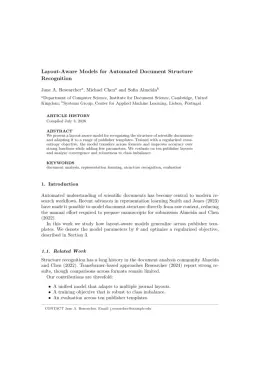
In DocuGuru you write your manuscript in a normal editor — no LaTeX setup required — and select the Expert Review of Molecular Diagnostics template. When you export, DocuGuru compiles the paper into the official Taylor & Francis format and hands you a submission-ready PDF along with the editable LaTeX source.
What reference style does Expert Review of Molecular Diagnostics use?
Expert Review of Molecular Diagnostics uses Numbered (Vancouver/NLM) references, shown as numbered [1], [2] markers in the text. DocuGuru formats every in-text citation and the reference list in this exact style automatically. A reference appears like this: 1. Smith A, Jones B, Lee C. A representative article title. Expert Review of Molecular Diagnostics. 2023;12(3):45–58.
Do I need to know LaTeX to submit to Expert Review of Molecular Diagnostics?
No. DocuGuru generates the interact LaTeX class and compiles the PDF for you in the background, so you get a Taylor & Francis-ready Expert Review of Molecular Diagnostics document without writing any LaTeX. If you do want it, the LaTeX source is included in the export.
Can I import an existing draft into the Expert Review of Molecular Diagnostics template?
Yes. Paste or upload your current manuscript — Word, LaTeX, Markdown, or plain text — and DocuGuru reflows it into the Expert Review of Molecular Diagnostics format with correct headings, figures, tables, and numbered citations.
Who publishes Expert Review of Molecular Diagnostics?
Expert Review of Molecular Diagnostics is a multidisciplinary journal published by Taylor & Francis. DocuGuru's Expert Review of Molecular Diagnostics template matches Taylor & Francis's official submission format.
Can I export a submission-ready Expert Review of Molecular Diagnostics PDF?
Yes — DocuGuru produces a PDF built with the official Expert Review of Molecular Diagnostics template (the interact class) that is ready to submit to Taylor & Francis, together with the matching LaTeX source files.
How much does the Expert Review of Molecular Diagnostics template cost?
You can start writing in the Expert Review of Molecular Diagnostics template for free. Exporting the final submission-ready Expert Review of Molecular Diagnostics PDF and LaTeX source is part of DocuGuru's paid plans — see the app for current pricing.
Use the Expert Review of Molecular Diagnostics template