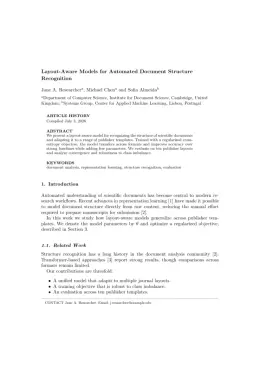
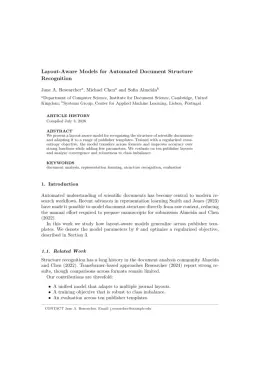
About the Expert Opinion on Orphan Drugs format
Expert Opinion on Orphan Drugs is a peer-reviewed journal published by Taylor & Francis, covering Lysosomal Storage Disorders Research, Genomics and Rare Diseases, Health Systems, Economic Evaluations, Quality of Life.
| Publisher | Taylor & Francis |
|---|
| Reference style | Author–year (Chicago, T&F) Author–year — (Smith, 2023) in the text
Smith, Ada, Ben Jones, and Cara Lee. 2023. "A Representative Article Title." Expert Opinion on Orphan Drugs 12 (3): 45–58.
Formats any DOI in Expert Opinion on Orphan Drugs style. No sign-up.
|
|---|
| Publishes research in | Lysosomal Storage Disorders Research Genomics and Rare Diseases Health Systems, Economic Evaluations, Quality of Life Lymphoma Diagnosis and Treatment Diverse Scientific and Economic Studies |
|---|
| ISSN | 2167-8707 |
|---|
| Citation impact (2-yr) | 13 |
|---|
| h-index | 34 |
|---|
| i10-index | 145 |
|---|
| Total citations | 5,362 |
|---|
| Top institutions publishing here | Weatherford College |
|---|
| Journal website | www.tandfonline.com |
|---|
| You get | A submission-ready PDF and the editable LaTeX source — ready to submit. |
|---|
Papers published in Expert Opinion on Orphan Drugs per year
Citation impact of Expert Opinion on Orphan Drugs by publication year
Citations each year’s papers have accumulated so far — the most recent years are still building up.
Most-cited papers in Expert Opinion on Orphan Drugs
Pseudoxanthoma elasticum: diagnostic features, classification and treatment options
Jouni Uitto, Qiujie Jiang, András Váradi et al. · 21 Apr 2014
Introduction: Pseudoxanthoma elasticum (PXE), a multisystem orphan disease, clinically affects the skin, the eyes and the cardiovascular system with considerable morbidity and mortality. The clinical manifestations reflect the underlying pathology consisting of ectopic mineralization of peripheral connective tissues. Areas covered: The diagnostic criteria of PXE include characteristic clinical findings, together with histopathology of accumulation of…
Pathogenesis, epidemiology, diagnosis and clinical aspects of Smith–Lemli–Opitz syndrome
Simona Bianconi, Joanna Cross, Christopher A. Wassif et al. · 16 Feb 2015
INTRODUCTION: Smith-Lemli-Opitz Syndrome (SLOS) is a malformation syndrome inherited in an autosomal recessive fashion. It is due to a metabolic defect in the conversion of 7-dehydrocholesterol to cholesterol, which leads to an accumulation of 7-dehydrocholesterol and frequently a deficiency of cholesterol. The syndrome is characterized by typical dysmorphic facial features, multiple malformations, and intellectual disability.…
Diagnosis, prevalence, and screening of familial dilated cardiomyopathy
Mary Sweet, Matthew R.G. Taylor, Luisa Mestroni · 22 Jun 2015
INTRODUCTION: Dilated cardiomyopathy (DCM) is the most common cardiomyopathy and occurs often in families. As an inherited disease, understanding the significance of diagnostic procedures and genetic screening within families is of utmost importance. AREAS COVERED: Genetic studies have shown that in 30-40% of familial DCM (FDC) cases a causative genetic mutation can be identified. Successful…
Leishmaniasis: treatment, drug resistance and emerging therapies
Shyam Sundar, Jaya Chakravarty, Lalit Prashant Meena · 5 Dec 2018
Introduction: Leishmaniasis is one of the most neglected tropical infectious diseases in the world. Emergence of drug resistance and toxicity and high cost of the available drugs with lack of new antileishmanial drugs highlight the need to search for newer molecules with antileishmanial activities.Areas covered: This article describes the currently available antileishmanial drugs and their…
Pathogenesis, emerging therapeutic targets and treatment in sialidosis
Alessandra d’Azzo, Eda Machado, Ida Annunziata · 13 Apr 2015
INTRODUCTION: gene, encoding the lysosomal sialidase NEU1. Deficient enzyme activity results in impaired processing/degradation of sialo-glycoproteins, and accumulation of oversialylated metabolites. Sialidosis is considered an orphan disorder for which no therapy is currently available. AREAS COVERED: mutations so far identified; NEU1 requirement to complex with the protective protein/cathepsin A for stability and activation; and the…