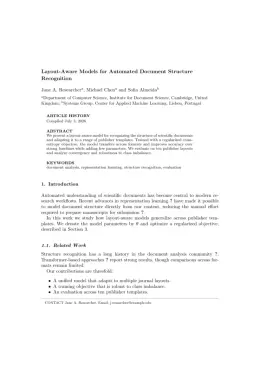
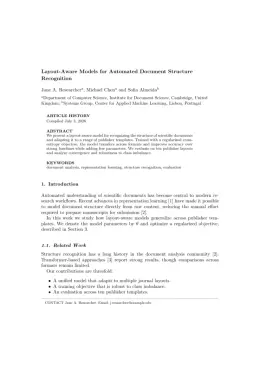
Taylor & Francis

Emerging Microbes & Infections Template

Write in a clean editor, then format for Emerging Microbes & Infections in one click — DocuGuru applies the official Taylor & Francis template with author–year references and exports a submission-ready PDF plus the editable LaTeX source. Free to start.

About the Emerging Microbes & Infections format

Emerging Microbes & Infections is a peer-reviewed journal published by Taylor & Francis, covering SARS-CoV-2 and COVID-19 Research, Viral Infections and Vectors, Viral gastroenteritis research and epidemiology.

PublisherTaylor & Francis
Reference styleAuthor–year (Chicago, T&F)
Author–year — (Smith, 2023) in the text
Smith, Ada, Ben Jones, and Cara Lee. 2023. "A Representative Article Title." Emerging Microbes & Infections 12 (3): 45–58.

Formats any DOI in Emerging Microbes & Infections style. No sign-up.

Publishes research inSARS-CoV-2 and COVID-19 Research Viral Infections and Vectors Viral gastroenteritis research and epidemiology Influenza Virus Research Studies Mosquito-borne diseases and control
ISSN2222-1751
Citation impact (2-yr)6.99
h-index132
i10-index1,746
Total citations104,137
Article processing charge$2,643
Open accessYes
Top institutions publishing hereChinese Academy of Sciences
Journal websitewww.tandfonline.com
You getA submission-ready PDF and the editable LaTeX source — ready to submit.

Papers published in Emerging Microbes & Infections per year

51
2014
49
2015
88
2016
117
2017
216
2018
177
2019
313
2020
248
2021
294
2022
235
2023
293
2024
251
2025

Citation impact of Emerging Microbes & Infections by publication year

3.8K
2014
2.1K
2015
4.5K
2016
5K
2017
11K
2018
7.9K
2019
35.5K
2020
10.2K
2021
9.6K
2022
4.7K
2023
3.6K
2024
1K
2025

Citations each year’s papers have accumulated so far — the most recent years are still building up.

Most-cited papers in Emerging Microbes & Infections

Genomic characterization of the 2019 novel human-pathogenic coronavirus isolated from a patient with atypical pneumonia after visiting Wuhan

Jasper Fuk‐Woo Chan, Kin‐Hang Kok, Zheng Zhu et al. · 1 Jan 2020

A mysterious outbreak of atypical pneumonia in late 2019 was traced to a seafood wholesale market in Wuhan of China. Within a few weeks, a novel coronavirus tentatively named as 2019 novel coronavirus (2019-nCoV) was announced by the World Health Organization. We performed bioinformatics analysis on a virus genome from a patient with 2019-nCoV infection…

3,282 citations Cite SaveGo to paper →
Molecular and serological investigation of 2019-nCoV infected patients: implication of multiple shedding routes

Wei Zhang, Ronghui Du, Bei Li et al. · 1 Jan 2020

In December 2019, a novel coronavirus (2019-nCoV) caused an outbreak in Wuhan, China, and soon spread to other parts of the world. It was believed that 2019-nCoV was transmitted through respiratory tract and then induced pneumonia, thus molecular diagnosis based on oral swabs was used for confirmation of this disease. Likewise, patient will be released…

1,901 citations Cite SaveGo to paper →
Potent binding of 2019 novel coronavirus spike protein by a SARS coronavirus-specific human monoclonal antibody

Xiaolong Tian, Cheng Li, Ailing Huang et al. · 1 Jan 2020

The newly identified 2019 novel coronavirus (2019-nCoV) has caused more than 11,900 laboratory-confirmed human infections, including 259 deaths, posing a serious threat to human health. Currently, however, there is no specific antiviral treatment or vaccine. Considering the relatively high identity of receptor-binding domain (RBD) in 2019-nCoV and SARS-CoV, it is urgent to assess the cross-reactivity…

1,278 citations Cite SaveGo to paper →
Profiling serum cytokines in COVID-19 patients reveals IL-6 and IL-10 are disease severity predictors

Huan Han, Qingfeng Ma, Cong Li et al. · 1 Jan 2020

Since the outbreak of coronavirus disease 2019 (COVID-19) in Wuhan, China, it has rapidly spread across many other countries. While the majority of patients were considered mild, critically ill patients involving respiratory failure and multiple organ dysfunction syndrome are not uncommon, which could result death. We hypothesized that cytokine storm is associated with severe outcome.…

1,208 citations Cite SaveGo to paper →
Transcriptomic characteristics of bronchoalveolar lavage fluid and peripheral blood mononuclear cells in COVID-19 patients

Yong Xiong, Yuan Liu, Liu Cao et al. · 1 Jan 2020

Circulating in China and 158 other countries and areas, the ongoing COVID-19 outbreak has caused devastating mortality and posed a great threat to public health. However, efforts to identify effectively supportive therapeutic drugs and treatments has been hampered by our limited understanding of host immune response for this fatal disease. To characterize the transcriptional signatures…

1,190 citations Cite SaveGo to paper →

Emerging Microbes & Infections template — frequently asked questions

How do I write a paper in the Emerging Microbes & Infections format?
In DocuGuru you write your manuscript in a normal editor — no LaTeX setup required — and select the Emerging Microbes & Infections template. When you export, DocuGuru compiles the paper into the official Taylor & Francis format and hands you a submission-ready PDF along with the editable LaTeX source.
What reference style does Emerging Microbes & Infections use?
Emerging Microbes & Infections uses Author–year (Chicago, T&F) references, shown as author–year markers such as (Smith, 2023) in the text. DocuGuru formats every in-text citation and the reference list in this exact style automatically. A reference appears like this: Smith, Ada, Ben Jones, and Cara Lee. 2023. "A Representative Article Title." Emerging Microbes & Infections 12 (3): 45–58.
Do I need to know LaTeX to submit to Emerging Microbes & Infections?
No. DocuGuru generates the interact LaTeX class and compiles the PDF for you in the background, so you get a Taylor & Francis-ready Emerging Microbes & Infections document without writing any LaTeX. If you do want it, the LaTeX source is included in the export.
Can I import an existing draft into the Emerging Microbes & Infections template?
Yes. Paste or upload your current manuscript — Word, LaTeX, Markdown, or plain text — and DocuGuru reflows it into the Emerging Microbes & Infections format with correct headings, figures, tables, and author–year citations.
Who publishes Emerging Microbes & Infections?
Emerging Microbes & Infections is a multidisciplinary journal published by Taylor & Francis. DocuGuru's Emerging Microbes & Infections template matches Taylor & Francis's official submission format.
Can I export a submission-ready Emerging Microbes & Infections PDF?
Yes — DocuGuru produces a PDF built with the official Emerging Microbes & Infections template (the interact class) that is ready to submit to Taylor & Francis, together with the matching LaTeX source files.
How much does the Emerging Microbes & Infections template cost?
You can start writing in the Emerging Microbes & Infections template for free. Exporting the final submission-ready Emerging Microbes & Infections PDF and LaTeX source is part of DocuGuru's paid plans — see the app for current pricing.
Use the Emerging Microbes & Infections template