Taylor & Francis

Emerging Health Threats Journal Template

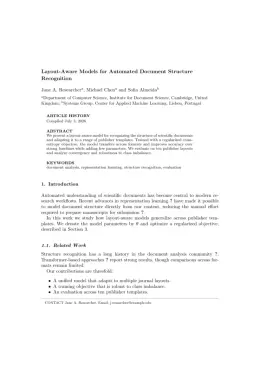
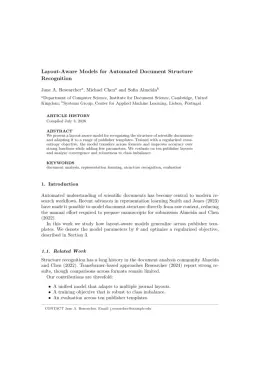
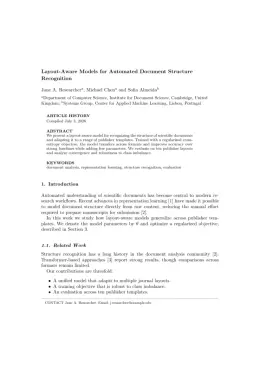
Write in a clean editor, then format for Emerging Health Threats Journal in one click — DocuGuru applies the official Taylor & Francis template with author–year references and exports a submission-ready PDF plus the editable LaTeX source. Free to start.

About the Emerging Health Threats Journal format

Emerging Health Threats Journal is a peer-reviewed journal published by Taylor & Francis, covering Data-Driven Disease Surveillance, Influenza Virus Research Studies, Zoonotic diseases and public health.

PublisherTaylor & Francis
Reference styleAuthor–year (Chicago, T&F)
Author–year — (Smith, 2023) in the text
Smith, Ada, Ben Jones, and Cara Lee. 2023. "A Representative Article Title." Emerging Health Threats Journal 12 (3): 45–58.

Formats any DOI in Emerging Health Threats Journal style. No sign-up.

Publishes research inData-Driven Disease Surveillance Influenza Virus Research Studies Zoonotic diseases and public health Viral Infections and Outbreaks Research COVID-19 epidemiological studies
ISSN1752-8550
h-index30
i10-index64
Total citations3,095
Top institutions publishing hereRockefeller Foundation
Journal websitewww.tandfonline.com
You getA submission-ready PDF and the editable LaTeX source — ready to submit.

Papers published in Emerging Health Threats Journal per year

29
2008
15
2009
8
2010
178
2011
11
2012
17
2013
3
2014
2
2015
1
2016
1
2018

Citation impact of Emerging Health Threats Journal by publication year

504
2008
485
2009
221
2010
969
2011
266
2012
462
2013
95
2014
66
2015
3
2016
13
2018

Citations each year’s papers have accumulated so far — the most recent years are still building up.

Most-cited papers in Emerging Health Threats Journal

The epidemiology and patterns of acute and chronic toxicity associated with recreational ketamine use

Sarbjeet S. Kalsi, David M. Wood, Paul I. Dargan · 1 Jan 2011

Ketamine was originally synthesised for use as a dissociative anaesthetic, and it remains widely used legitimately for this indication. However, there is increasing evidence of non-medical recreational use of ketamine, particularly in individuals who frequent the night-time economy. The population-level and sub-population (clubbers) prevalence of recreational use of ketamine is not known but is likely…

Human enterovirus 71 epidemics: what's next?

Cyril Chik‐Yan Yip, Susanna K. P. Lau, Patrick C. Y. Woo et al. · 1 Jan 2013

Human enterovirus 71 (EV71) epidemics have affected various countries in the past 40 years. EV71 commonly causes hand, foot and mouth disease (HFMD) in children, but can result in neurological and cardiorespiratory complications in severe cases. Genotypic changes of EV71 have been observed in different places over time, with the emergence of novel genotypes or…

Host defence peptides: antimicrobial and immunomodulatory activity and potential applications for tackling antibiotic-resistant infections

Anastasia Nijnik, R Hancock · 1 Jan 2009

The rapidly increasing incidence of multidrug-resistant infections and the alarmingly low rate of discovery of conventional antibiotics create an urgent need for alternative strategies to treat bacterial infections. Host defence peptides are short cationic molecules produced by the immune systems of most multicellular organisms; they are a class of compounds being actively researched. In this…

Environmental risk factors for autism

Rodney R. Dietert, Janice M. Dietert, Jamie C. DeWitt · 1 Jan 2011

Autism is a devastating childhood condition that has emerged as an increasing social concern just as it has increased in prevalence in recent decades. Autism and the broader category of autism spectrum disorders are among the increasingly seen examples in which there is a fetal basis for later disease or disorder. Environmental, genetic, and epigenetic…

Migrants and emerging public health issues in a globalized world: threats, risks and challenges, an evidence-based framework

B. D. Gushulak, Jacqueline Weekers, D. W. MacPherson · 11 Apr 2009

International population mobility is an underlying factor in the emergence of public health threats and risks that must be managed globally. These risks are often related, but not limited, to transmissible pathogens. Mobile populations can link zones of disease emergence to lowprevalence or nonendemic areas through rapid or high-volume international movements, or both. Against this…

Emerging Health Threats Journal template — frequently asked questions

How do I write a paper in the Emerging Health Threats Journal format?
In DocuGuru you write your manuscript in a normal editor — no LaTeX setup required — and select the Emerging Health Threats Journal template. When you export, DocuGuru compiles the paper into the official Taylor & Francis format and hands you a submission-ready PDF along with the editable LaTeX source.
What reference style does Emerging Health Threats Journal use?
Emerging Health Threats Journal uses Author–year (Chicago, T&F) references, shown as author–year markers such as (Smith, 2023) in the text. DocuGuru formats every in-text citation and the reference list in this exact style automatically. A reference appears like this: Smith, Ada, Ben Jones, and Cara Lee. 2023. "A Representative Article Title." Emerging Health Threats Journal 12 (3): 45–58.
Do I need to know LaTeX to submit to Emerging Health Threats Journal?
No. DocuGuru generates the interact LaTeX class and compiles the PDF for you in the background, so you get a Taylor & Francis-ready Emerging Health Threats Journal document without writing any LaTeX. If you do want it, the LaTeX source is included in the export.
Can I import an existing draft into the Emerging Health Threats Journal template?
Yes. Paste or upload your current manuscript — Word, LaTeX, Markdown, or plain text — and DocuGuru reflows it into the Emerging Health Threats Journal format with correct headings, figures, tables, and author–year citations.
Who publishes Emerging Health Threats Journal?
Emerging Health Threats Journal is a multidisciplinary journal published by Taylor & Francis. DocuGuru's Emerging Health Threats Journal template matches Taylor & Francis's official submission format.
Can I export a submission-ready Emerging Health Threats Journal PDF?
Yes — DocuGuru produces a PDF built with the official Emerging Health Threats Journal template (the interact class) that is ready to submit to Taylor & Francis, together with the matching LaTeX source files.
How much does the Emerging Health Threats Journal template cost?
You can start writing in the Emerging Health Threats Journal template for free. Exporting the final submission-ready Emerging Health Threats Journal PDF and LaTeX source is part of DocuGuru's paid plans — see the app for current pricing.

Use the Emerging Health Threats Journal template