Taylor & Francis

Cutaneous and Ocular Toxicology Template

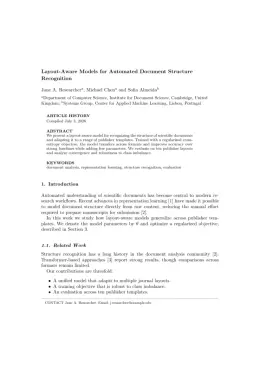
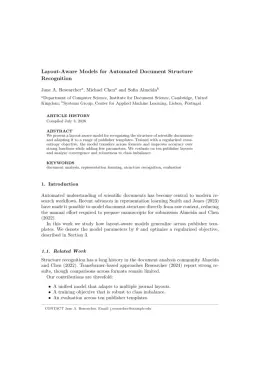
Write in a clean editor, then format for Cutaneous and Ocular Toxicology in one click — DocuGuru applies the official Taylor & Francis template with author–year references and exports a submission-ready PDF plus the editable LaTeX source. Free to start.

About the Cutaneous and Ocular Toxicology format

Cutaneous and Ocular Toxicology is a peer-reviewed journal published by Taylor & Francis, covering Retinal Diseases and Treatments, Contact Dermatitis and Allergies, Glaucoma and retinal disorders.

PublisherTaylor & Francis
Reference styleAuthor–year (Chicago, T&F)
Author–year — (Smith, 2023) in the text
Smith, Ada, Ben Jones, and Cara Lee. 2023. "A Representative Article Title." Cutaneous and Ocular Toxicology 12 (3): 45–58.

Formats any DOI in Cutaneous and Ocular Toxicology style. No sign-up.

Publishes research inRetinal Diseases and Treatments Contact Dermatitis and Allergies Glaucoma and retinal disorders Ocular Surface and Contact Lens Advancements in Transdermal Drug Delivery
ISSN1556-9527
Citation impact (2-yr)1.33
h-index46
i10-index533
Total citations15,359
Top institutions publishing hereUniversity of California, San Francisco
Journal websitewww.informapharmascience.com
You getA submission-ready PDF and the editable LaTeX source — ready to submit.

Papers published in Cutaneous and Ocular Toxicology per year

83
2014
69
2015
56
2016
63
2017
51
2018
48
2019
54
2020
53
2021
41
2022
51
2023
52
2024
61
2025

Citation impact of Cutaneous and Ocular Toxicology by publication year

991
2014
988
2015
795
2016
841
2017
768
2018
682
2019
549
2020
453
2021
327
2022
191
2023
136
2024
75
2025

Citations each year’s papers have accumulated so far — the most recent years are still building up.

Most-cited papers in Cutaneous and Ocular Toxicology

Structural Characteristics of the Aging Skin: A Review

Miranda A. Farage, Kenneth W. Miller, Peter Elsner et al. · 1 Jan 2007

As life expectancy in industrialized countries increases, appropriate care of elderly skin looms as a dermatologic priority. Skin aging is a complex, multifactorial process whose baseline rate is genetically determined but that may be accelerated by environmental, mechanical, or socioeconomic factors. The intrinsic structural changes that occur with the aging of the skin increase skin…

Neutrophil to lymphocyte ratio as a measure of systemic inflammation in psoriasis

Bilge Bülbül Şen, Emine Nur Rifaioğlu, Özlem Ekiz et al. · 22 Oct 2013

OBJECTIVE: Psoriasis is a chronic systemic inflammatory disorder. The neutrophil to lymphocyte ratio (N/L ratio) has been used as a marker for systemic inflammatory status. In our study, we aimed to evaluate N/L ratio in patients with psoriasis. METHODS: This cross-sectional study population consisted of 138 patients with psoriasis and 120 age- and sex-matched control…

A new<i>in vitro</i>method for identifying chemical sensitizers combining peptide binding with ARE/EpRE-mediated gene expression in human skin cells

James M. McKim, Don J. Keller, Joel R. Gorski · 24 May 2010

Allergic contact dermatitis (ACD) is a significant safety concern for developers of cosmetic, personal care, chemical, pharmaceutical, and medical device products. The guinea pig maximization test (GMPT) and the murine local lymph node assay (LLNA) are accepted methods for determining chemical sensitization. Recent legislative initiatives in Europe require the development of new in vitro alternatives…

Textiles and Human Skin, Microclimate, Cutaneous Reactions: An Overview

Wen Zhong, Malcolm Xing, Ning Pan et al. · 1 Jan 2006

This article overviews research in the interdisciplinary area of textile/skin interaction and related cutaneous intolerance. Microclimate in the skin/clothing system and especially the skin responses relates to the moisture and heat transfer within this system and plays a critical role in skin irritation from textiles. A discussion is then given on skin irritation reactions to…

The toxic effect of different concentrations of povidone iodine on the rabbit’s cornea

Jin Jiang, Miaoqin Wu, Ting Shen · 1 Jan 2009

OBJECTIVES: To investigate the effects of polyvinylpyrrolidone (i.e., povidone) iodine (PVP-I) in different concentrations on the rabbit's cornea. METHODS: PVP-I in various concentrations was instilled into the conjunctival sac and injected into the anterior chamber independently. The toxicity to the cornea was assessed by fluorescence dye, specular microscopy, and corneal pachymetry. RESULTS: After conjunctival sac…

Cutaneous and Ocular Toxicology template — frequently asked questions

How do I write a paper in the Cutaneous and Ocular Toxicology format?
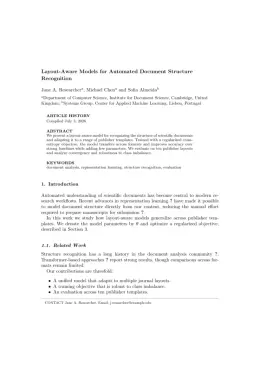
In DocuGuru you write your manuscript in a normal editor — no LaTeX setup required — and select the Cutaneous and Ocular Toxicology template. When you export, DocuGuru compiles the paper into the official Taylor & Francis format and hands you a submission-ready PDF along with the editable LaTeX source.
What reference style does Cutaneous and Ocular Toxicology use?
Cutaneous and Ocular Toxicology uses Author–year (Chicago, T&F) references, shown as author–year markers such as (Smith, 2023) in the text. DocuGuru formats every in-text citation and the reference list in this exact style automatically. A reference appears like this: Smith, Ada, Ben Jones, and Cara Lee. 2023. "A Representative Article Title." Cutaneous and Ocular Toxicology 12 (3): 45–58.
Do I need to know LaTeX to submit to Cutaneous and Ocular Toxicology?
No. DocuGuru generates the interact LaTeX class and compiles the PDF for you in the background, so you get a Taylor & Francis-ready Cutaneous and Ocular Toxicology document without writing any LaTeX. If you do want it, the LaTeX source is included in the export.
Can I import an existing draft into the Cutaneous and Ocular Toxicology template?
Yes. Paste or upload your current manuscript — Word, LaTeX, Markdown, or plain text — and DocuGuru reflows it into the Cutaneous and Ocular Toxicology format with correct headings, figures, tables, and author–year citations.
Who publishes Cutaneous and Ocular Toxicology?
Cutaneous and Ocular Toxicology is a multidisciplinary journal published by Taylor & Francis. DocuGuru's Cutaneous and Ocular Toxicology template matches Taylor & Francis's official submission format.
Can I export a submission-ready Cutaneous and Ocular Toxicology PDF?
Yes — DocuGuru produces a PDF built with the official Cutaneous and Ocular Toxicology template (the interact class) that is ready to submit to Taylor & Francis, together with the matching LaTeX source files.
How much does the Cutaneous and Ocular Toxicology template cost?
You can start writing in the Cutaneous and Ocular Toxicology template for free. Exporting the final submission-ready Cutaneous and Ocular Toxicology PDF and LaTeX source is part of DocuGuru's paid plans — see the app for current pricing.
Use the Cutaneous and Ocular Toxicology template