Taylor & Francis

Critical Reviews in Biochemistry and Molecular Biology Template

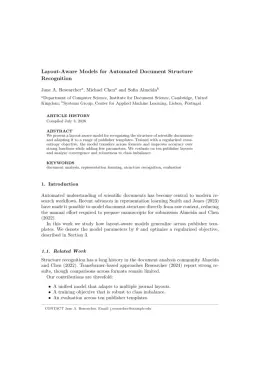
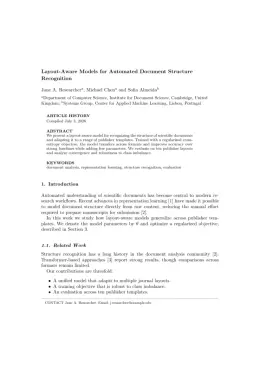
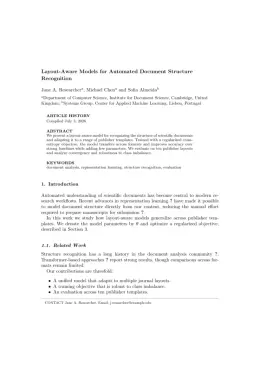
Write in a clean editor, then format for Critical Reviews in Biochemistry and Molecular Biology in one click — DocuGuru applies the official Taylor & Francis template with author–year references and exports a submission-ready PDF plus the editable LaTeX source. Free to start.

About the Critical Reviews in Biochemistry and Molecular Biology format

Critical Reviews in Biochemistry and Molecular Biology is a peer-reviewed journal published by Taylor & Francis, covering RNA and protein synthesis mechanisms, DNA Repair Mechanisms, RNA modifications and cancer.

PublisherTaylor & Francis
Reference styleAuthor–year (Chicago, T&F)
Author–year — (Smith, 2023) in the text
Smith, Ada, Ben Jones, and Cara Lee. 2023. "A Representative Article Title." Critical Reviews in Biochemistry and Molecular Biology 12 (3): 45–58.

Formats any DOI in Critical Reviews in Biochemistry and Molecular Biology style. No sign-up.

Publishes research inRNA and protein synthesis mechanisms DNA Repair Mechanisms RNA modifications and cancer Bacterial Genetics and Biotechnology RNA Research and Splicing
ISSN1040-9238
Citation impact (2-yr)8.42
h-index166
i10-index703
Total citations100,145
Top institutions publishing hereNational Institutes of Health
Journal websitewww.tandfonline.com
You getA submission-ready PDF and the editable LaTeX source — ready to submit.

Papers published in Critical Reviews in Biochemistry and Molecular Biology per year

29
2014
34
2015
32
2016
39
2017
27
2018
27
2019
36
2020
41
2021
11
2022
8
2023
18
2024
13
2025

Citation impact of Critical Reviews in Biochemistry and Molecular Biology by publication year

3.3K
2014
2.7K
2015
2.6K
2016
3.6K
2017
2.4K
2018
2.1K
2019
2.1K
2020
1.7K
2021
293
2022
266
2023
223
2024
59
2025

Citations each year’s papers have accumulated so far — the most recent years are still building up.

Most-cited papers in Critical Reviews in Biochemistry and Molecular Biology

The Glut athione S-Transferase Supergene Family: Regulation of GST and the Contribution of the lsoenzymes to Cancer Chemoprotection and Drug Resistance Part I

John D. Hayes, David Pulford · 1 Jan 1995

The glutathione S-transferases (GST) represent a major group of detoxification enzymes. All eukaryotic species possess multiple cytosolic and membrane-bound GST isoenzymes, each of which displays distinct catalytic as well as noncatalytic binding properties: the cytosolic enzymes are encoded by at least five distantly related gene families (designated class alpha, mu, pi, sigma, and theta GST),…

3,486 citations Cite SaveGo to paper →
The Use and Misuse of FTIR Spectroscopy in the Determination of Protein Structure

Michael Jackson, Henry H. Mantsch · 1 Jan 1995

Fourier transform infrared (FTIR) spectroscopy is an established tool for the structural characterization of proteins. However, many potential pitfalls exist for the unwary investigator. In this review we critically assess the application of FTIR spectroscopy to the determination of protein structure by (1) outlining the principles underlying protein secondary structure determination by FTIR spectroscopy, (2)…

2,011 citations Cite SaveGo to paper →
Prebiotic Chemistry and the Origin of the RNA World

Robyn E. O’Hehir · 1 Jan 2004

The demonstration that ribosomal peptide synthesis is a ribozyme-catalyzed reaction makes it almost certain that there was once an RNA World. The central problem for origin-of-life studies, therefore, is to understand how a protein-free RNA World became established on the primitive Earth. We first review the literature on the prebiotic synthesis of the nucleotides, the…

1,137 citations Cite SaveGo to paper →
Evolution and Taxonomy of Positive-Strand RNA Viruses: Implications of Comparative Analysis of Amino Acid Sequences

Eugene V. Koonin, Valerian V. Dolja, T.J. Morris · 1 Jan 1993

Despite the rapid mutational change that is typical of positive-strand RNA viruses, enzymes mediating the replication and expression of virus genomes contain arrays of conserved sequence motifs. Proteins with such motifs include RNA-dependent RNA polymerase, putative RNA helicase, chymotrypsin-like and papain-like proteases, and methyltransferases. The genes for these proteins form partially conserved modules in large…

1,102 citations Cite SaveGo to paper →
Cold Denaturation of Protein

Peter L. Privalov · 1 Jan 1990

This article summarizes all experimental facts concerning the cold denaturation of single-domain, multi-domain, and multimeric globular proteins in aqueous solutions with and without urea and guanidine hydrochloride. The facts obtained by various experimental techniques are analyzed thermodynamically and it is shown that the cold denaturation is a general phenomenon caused by the very specific and…

1,088 citations Cite SaveGo to paper →

Critical Reviews in Biochemistry and Molecular Biology template — frequently asked questions

How do I write a paper in the Critical Reviews in Biochemistry and Molecular Biology format?
In DocuGuru you write your manuscript in a normal editor — no LaTeX setup required — and select the Critical Reviews in Biochemistry and Molecular Biology template. When you export, DocuGuru compiles the paper into the official Taylor & Francis format and hands you a submission-ready PDF along with the editable LaTeX source.
What reference style does Critical Reviews in Biochemistry and Molecular Biology use?
Critical Reviews in Biochemistry and Molecular Biology uses Author–year (Chicago, T&F) references, shown as author–year markers such as (Smith, 2023) in the text. DocuGuru formats every in-text citation and the reference list in this exact style automatically. A reference appears like this: Smith, Ada, Ben Jones, and Cara Lee. 2023. "A Representative Article Title." Critical Reviews in Biochemistry and Molecular Biology 12 (3): 45–58.
Do I need to know LaTeX to submit to Critical Reviews in Biochemistry and Molecular Biology?
No. DocuGuru generates the interact LaTeX class and compiles the PDF for you in the background, so you get a Taylor & Francis-ready Critical Reviews in Biochemistry and Molecular Biology document without writing any LaTeX. If you do want it, the LaTeX source is included in the export.
Can I import an existing draft into the Critical Reviews in Biochemistry and Molecular Biology template?
Yes. Paste or upload your current manuscript — Word, LaTeX, Markdown, or plain text — and DocuGuru reflows it into the Critical Reviews in Biochemistry and Molecular Biology format with correct headings, figures, tables, and author–year citations.
Who publishes Critical Reviews in Biochemistry and Molecular Biology?
Critical Reviews in Biochemistry and Molecular Biology is a multidisciplinary journal published by Taylor & Francis. DocuGuru's Critical Reviews in Biochemistry and Molecular Biology template matches Taylor & Francis's official submission format.
Can I export a submission-ready Critical Reviews in Biochemistry and Molecular Biology PDF?
Yes — DocuGuru produces a PDF built with the official Critical Reviews in Biochemistry and Molecular Biology template (the interact class) that is ready to submit to Taylor & Francis, together with the matching LaTeX source files.
How much does the Critical Reviews in Biochemistry and Molecular Biology template cost?
You can start writing in the Critical Reviews in Biochemistry and Molecular Biology template for free. Exporting the final submission-ready Critical Reviews in Biochemistry and Molecular Biology PDF and LaTeX source is part of DocuGuru's paid plans — see the app for current pricing.

Use the Critical Reviews in Biochemistry and Molecular Biology template