Taylor & Francis

Cancer Investigation Template

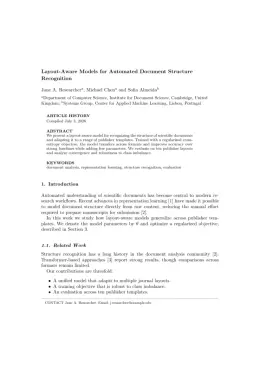
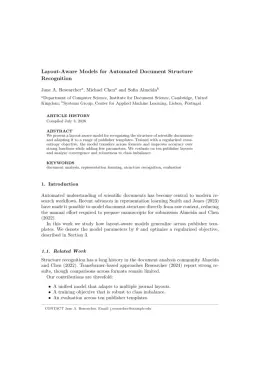
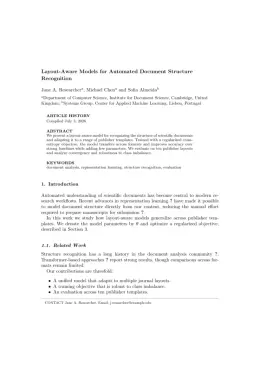
Write in a clean editor, then format for Cancer Investigation in one click — DocuGuru applies the official Taylor & Francis template with author–year references and exports a submission-ready PDF plus the editable LaTeX source. Free to start.

About the Cancer Investigation format

Cancer Investigation is a peer-reviewed journal published by Taylor & Francis, covering Cancer Treatment and Pharmacology, Lung Cancer Treatments and Mutations, Colorectal Cancer Treatments and Studies.

PublisherTaylor & Francis
Reference styleAuthor–year (Chicago, T&F)
Author–year — (Smith, 2023) in the text
Smith, Ada, Ben Jones, and Cara Lee. 2023. "A Representative Article Title." Cancer Investigation 12 (3): 45–58.

Formats any DOI in Cancer Investigation style. No sign-up.

Publishes research inCancer Treatment and Pharmacology Lung Cancer Treatments and Mutations Colorectal Cancer Treatments and Studies Lymphoma Diagnosis and Treatment Breast Cancer Treatment Studies
ISSN0735-7907
Citation impact (2-yr)1.78
h-index114
i10-index2,053
Total citations87,799
Top institutions publishing hereMemorial Sloan Kettering Cancer Center
Journal websiteinformahealthcare.com
You getA submission-ready PDF and the editable LaTeX source — ready to submit.

Papers published in Cancer Investigation per year

72
2014
71
2015
67
2016
66
2017
52
2018
62
2019
83
2020
109
2021
73
2022
67
2023
73
2024
92
2025

Citation impact of Cancer Investigation by publication year

1.7K
2014
1.5K
2015
1.5K
2016
1.2K
2017
922
2018
764
2019
1.1K
2020
1K
2021
564
2022
264
2023
268
2024
96
2025

Citations each year’s papers have accumulated so far — the most recent years are still building up.

Most-cited papers in Cancer Investigation

Development of the Proteasome Inhibitor Velcade™ (Bortezomib)

Julian Adams, Michael Kauffman · 1 Jan 2004

The dipeptide boronic acid analogue VELCADE (Bortezomib; formerly known as PS-341, LDP-341 and MLM341) is a potent and selective inhibitor of the proteasome, a multicatalytic enzyme that mediates many cellular regulatory signals by degrading regulatory proteins or their inhibitors. The proteasome is, thus, a potential target for pharmacological agents. Bortezomib, the first proteasome inhibitor to…

Pegylated Liposomal Doxorubicin: Metamorphosis of an Old Drug into a New Form of Chemotherapy

Alberto Gabizón · 1 Jan 2001

Pegylated liposomal doxorubicin (Doxil, Caelyx) is a formulation of doxorubicin in poly(ethylene glycol)-coated (stealth) liposomes with a prolonged circulation time and unique toxicity profile. We review the preclinical and clinical pharmacology as well as recent clinical data obtained in specific cancer types. Doxil liposomes retain the drug payload during circulation and accumulate preferentially in tissues…

Spontaneously Occurring Tumors of Companion Animals as Models for Human Cancer

David M. Vail, E. Gregory MacEwen · 1 Jan 2000

Spontaneous tumors in companion animals (dog and cat) offer a unique opportunity as models for human cancer biology and translational cancer therapeutics. The relatively high incidence of some cancers, similar biologic behavior, large body size, comparable responses to cytotoxic agents, and shorter overall lifespan are the factors that contribute to the advantages of the companion…

Carcinoembryonic Antigen in the Staging and Follow-up of Patients with Colorectal Cancer

Mitchell J. Goldstein, Edith P. Mitchell · 1 Jan 2005

CEA is a complex glycoprotein produced by 90% of colorectal cancers and contributes to the malignant characteristics of a tumor. It can be measured in serum quantitatively, and its level in plasma can be useful as a marker of disease. Because of its lack of sensitivity in the early stages of colorectal cancer, CEA measurement…

The Etiology of Treatment-related Lymphopenia in Patients with Malignant Gliomas: Modeling Radiation Dose to Circulating Lymphocytes Explains Clinical Observations and Suggests Methods of Modifying the Impact of Radiation on Immune Cells

Susannah Yovino, Lawrence Kleinberg, Stuart A. Grossman et al. · 30 Jan 2013

PURPOSE: Severe treatment-related lymphopenia (TRL) occurs in 40% of patients with high grade gliomas (HGG) receiving glucocorticoids, temozolomide, and radiation. This occurs following radiation, persists for months, and is associated with reduced survival. As all three treatment modalities are lymphotoxic, this study was conducted to estimate the radiation dose that lymphocytes receive passing through the…

Cancer Investigation template — frequently asked questions

How do I write a paper in the Cancer Investigation format?
In DocuGuru you write your manuscript in a normal editor — no LaTeX setup required — and select the Cancer Investigation template. When you export, DocuGuru compiles the paper into the official Taylor & Francis format and hands you a submission-ready PDF along with the editable LaTeX source.
What reference style does Cancer Investigation use?
Cancer Investigation uses Author–year (Chicago, T&F) references, shown as author–year markers such as (Smith, 2023) in the text. DocuGuru formats every in-text citation and the reference list in this exact style automatically. A reference appears like this: Smith, Ada, Ben Jones, and Cara Lee. 2023. "A Representative Article Title." Cancer Investigation 12 (3): 45–58.
Do I need to know LaTeX to submit to Cancer Investigation?
No. DocuGuru generates the interact LaTeX class and compiles the PDF for you in the background, so you get a Taylor & Francis-ready Cancer Investigation document without writing any LaTeX. If you do want it, the LaTeX source is included in the export.
Can I import an existing draft into the Cancer Investigation template?
Yes. Paste or upload your current manuscript — Word, LaTeX, Markdown, or plain text — and DocuGuru reflows it into the Cancer Investigation format with correct headings, figures, tables, and author–year citations.
Who publishes Cancer Investigation?
Cancer Investigation is a multidisciplinary journal published by Taylor & Francis. DocuGuru's Cancer Investigation template matches Taylor & Francis's official submission format.
Can I export a submission-ready Cancer Investigation PDF?
Yes — DocuGuru produces a PDF built with the official Cancer Investigation template (the interact class) that is ready to submit to Taylor & Francis, together with the matching LaTeX source files.
How much does the Cancer Investigation template cost?
You can start writing in the Cancer Investigation template for free. Exporting the final submission-ready Cancer Investigation PDF and LaTeX source is part of DocuGuru's paid plans — see the app for current pricing.

Use the Cancer Investigation template