Taylor & Francis

African Zoology Template

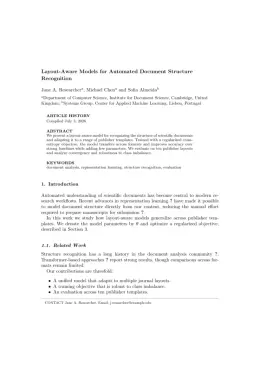
Write in a clean editor, then format for African Zoology in one click — DocuGuru applies the official Taylor & Francis template with author–year references and exports a submission-ready PDF plus the editable LaTeX source. Free to start.

About the African Zoology format

African Zoology is a peer-reviewed journal published by Taylor & Francis, covering Wildlife Ecology and Conservation, Fish Biology and Ecology Studies, Fish Ecology and Management Studies.

PublisherTaylor & Francis
Reference styleAuthor–year (Chicago, T&F)
Author–year — (Smith, 2023) in the text
Smith, Ada, Ben Jones, and Cara Lee. 2023. "A Representative Article Title." African Zoology 12 (3): 45–58.

Formats any DOI in African Zoology style. No sign-up.

Publishes research inWildlife Ecology and Conservation Fish Biology and Ecology Studies Fish Ecology and Management Studies Amphibian and Reptile Biology Animal Ecology and Behavior Studies
ISSN1562-7020
Citation impact (2-yr)1.02
h-index44
i10-index466
Total citations14,891
Top institutions publishing hereUniversity of Pretoria
Journal websitewww.zssa.co.za
You getA submission-ready PDF and the editable LaTeX source — ready to submit.

Papers published in African Zoology per year

74
2014
45
2015
27
2016
29
2017
19
2018
23
2019
40
2020
31
2021
23
2022
12
2023
26
2024
15
2025

Citation impact of African Zoology by publication year

372
2014
778
2015
278
2016
363
2017
169
2018
225
2019
351
2020
151
2021
71
2022
34
2023
35
2024
15
2025

Citations each year’s papers have accumulated so far — the most recent years are still building up.

Most-cited papers in African Zoology

Bee food: the chemistry and nutritional value of nectar, pollen and mixtures of the two

Sue W. Nicolson · 1 Oct 2011

Bees are herbivorous insects, consuming nectar and pollen throughout their life cycles. This paper is a brief review of the chemistry of these two floral resources and the implications for bee nutrition. Nectar is primarily an energy source, but in addition to sugars contains various minor constituents that may, directly or indirectly, have nutritional significance.…

Bee Food: The Chemistry and Nutritional Value of Nectar, Pollen and Mixtures of the Two

Sue W. Nicolson · 1 Oct 2011

Bees are herbivorous insects, consuming nectar and pollen throughout their life cycles. This paper is a brief review of the chemistry of these two floral resources and the implications for bee nutrition. Nectar is primarily an energy source, but in addition to sugars contains various minor constituents that may, directly or indirectly, have nutritional significance.…

The role of estuarine type in characterizing early stage fish assemblages in warm temperate estuaries, South Africa

Nadine A. Strydom, Alan K. Whitfield, T. Wooldridge · 1 Apr 2003

Assemblages of early stage fishes (larval and early juvenile stages) were investigated and compared in seven permanently open and five intermittently open estuarine systems on the warm temperate Eastern Cape coast of South Africa. Estuarine type, by virtue of mouth state and prevailing physico chemical conditions, played a defining role in the structure of these…

The effects of fences and lions on the ecology of African wild dogs reintroduced to Pilanesberg National Park, South Africa

Gus van Dyk, Rob Slotow · 1 Apr 2003

Wild dogs have been eradicated from most of South Africa. However, a large number of smaller isolated reserves offer the potential for metapopulation conservation management of this species through continued translocations among reserves. Wild dogs were released into the Pilanesberg National Park (500 km2), South Africa, in June 1999 from a combination of wild captured…

African Zoology template — frequently asked questions

How do I write a paper in the African Zoology format?
In DocuGuru you write your manuscript in a normal editor — no LaTeX setup required — and select the African Zoology template. When you export, DocuGuru compiles the paper into the official Taylor & Francis format and hands you a submission-ready PDF along with the editable LaTeX source.
What reference style does African Zoology use?
African Zoology uses Author–year (Chicago, T&F) references, shown as author–year markers such as (Smith, 2023) in the text. DocuGuru formats every in-text citation and the reference list in this exact style automatically. A reference appears like this: Smith, Ada, Ben Jones, and Cara Lee. 2023. "A Representative Article Title." African Zoology 12 (3): 45–58.
Do I need to know LaTeX to submit to African Zoology?
No. DocuGuru generates the interact LaTeX class and compiles the PDF for you in the background, so you get a Taylor & Francis-ready African Zoology document without writing any LaTeX. If you do want it, the LaTeX source is included in the export.
Can I import an existing draft into the African Zoology template?
Yes. Paste or upload your current manuscript — Word, LaTeX, Markdown, or plain text — and DocuGuru reflows it into the African Zoology format with correct headings, figures, tables, and author–year citations.
Who publishes African Zoology?
African Zoology is a multidisciplinary journal published by Taylor & Francis. DocuGuru's African Zoology template matches Taylor & Francis's official submission format.
Can I export a submission-ready African Zoology PDF?
Yes — DocuGuru produces a PDF built with the official African Zoology template (the interact class) that is ready to submit to Taylor & Francis, together with the matching LaTeX source files.
How much does the African Zoology template cost?
You can start writing in the African Zoology template for free. Exporting the final submission-ready African Zoology PDF and LaTeX source is part of DocuGuru's paid plans — see the app for current pricing.

Use the African Zoology template