
1,721 citations
Cite
SaveGo to paper →
Springer Nature
Wood Science and Technology Template
Write in a clean editor, then format for Wood Science and Technology in one click — DocuGuru applies the official Springer Nature template with numbered references and exports a submission-ready PDF plus the editable LaTeX source. Free to start.
About the Wood Science and Technology format
Wood Science and Technology is a peer-reviewed journal published by Springer Nature, covering Wood Treatment and Properties, Lignin and Wood Chemistry, Tree Root and Stability Studies.
| Publisher | Springer Nature |
|---|---|
| Reference style | Numbered (Springer Basic) Numbered — [1], [2] in the text 1. Smith A, Jones B, Lee C (2023) A representative article title. Wood Science and Technology 12:45–58
Formats any DOI in Wood Science and Technology style. No sign-up. |
| Publishes research in | Wood Treatment and Properties Lignin and Wood Chemistry Tree Root and Stability Studies Natural Fiber Reinforced Composites Advanced Cellulose Research Studies |
| ISSN | 0043-7719 |
| Citation impact (2-yr) | 3 |
| h-index | 121 |
| i10-index | 1,987 |
| Total citations | 90,241 |
| Article processing charge | $3,490 |
| Top institutions publishing here | Forest Products Laboratory |
| Journal website | link.springer.com |
| You get | A submission-ready PDF and the editable LaTeX source — ready to submit. |
Papers published in Wood Science and Technology per year
Citation impact of Wood Science and Technology by publication year
Citations each year’s papers have accumulated so far — the most recent years are still building up.
Most-cited papers in Wood Science and Technology
854 citations
Cite
SaveGo to paper →
Abstract Bark from trees is considered a worthless raw material. However, this resource could be economically beneficial if utilized efficiently due to its rich chemical compounds. In this study, an ethanol toluene-soluble extractive, alpha-cellulose and lignin obtained from Leucaena leucocephala bark were characterized to determine their chemical functional groups. Based on FTIR spectral analysis, the…
581 citations
Cite
SaveGo to paper →
Abstract This paper reviews recent findings on wood–water interaction and puts them into context of established knowledge in the field. Several new findings challenge prevalent theories and are critically discussed in an attempt to advance current knowledge and highlight gaps. The focus of this review is put on water in the broadest concept of wood…
567 citations
Cite
SaveGo to paper →
538 citations
Cite
SaveGo to paper →
Related journal templates
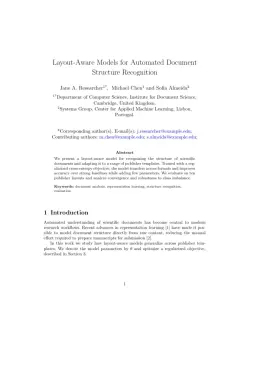
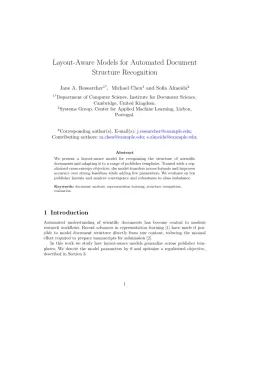
Wood Science and Technology template — frequently asked questions
How do I write a paper in the Wood Science and Technology format?
In DocuGuru you write your manuscript in a normal editor — no LaTeX setup required — and select the Wood Science and Technology template. When you export, DocuGuru compiles the paper into the official Springer Nature format and hands you a submission-ready PDF along with the editable LaTeX source.
What reference style does Wood Science and Technology use?
Wood Science and Technology uses Numbered (Springer Basic) references, shown as numbered [1], [2] markers in the text. DocuGuru formats every in-text citation and the reference list in this exact style automatically. A reference appears like this: 1. Smith A, Jones B, Lee C (2023) A representative article title. Wood Science and Technology 12:45–58
Do I need to know LaTeX to submit to Wood Science and Technology?
No. DocuGuru generates the sn-jnl LaTeX class and compiles the PDF for you in the background, so you get a Springer Nature-ready Wood Science and Technology document without writing any LaTeX. If you do want it, the LaTeX source is included in the export.
Can I import an existing draft into the Wood Science and Technology template?
Yes. Paste or upload your current manuscript — Word, LaTeX, Markdown, or plain text — and DocuGuru reflows it into the Wood Science and Technology format with correct headings, figures, tables, and numbered citations.
Who publishes Wood Science and Technology?
Wood Science and Technology is a multidisciplinary journal published by Springer Nature. DocuGuru's Wood Science and Technology template matches Springer Nature's official submission format.
Can I export a submission-ready Wood Science and Technology PDF?
Yes — DocuGuru produces a PDF built with the official Wood Science and Technology template (the sn-jnl class) that is ready to submit to Springer Nature, together with the matching LaTeX source files.
How much does the Wood Science and Technology template cost?
You can start writing in the Wood Science and Technology template for free. Exporting the final submission-ready Wood Science and Technology PDF and LaTeX source is part of DocuGuru's paid plans — see the app for current pricing.