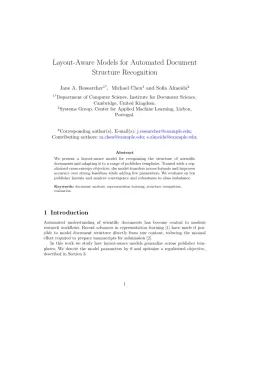
Springer Nature

The Journal of Microbiology Template

Write in a clean editor, then format for The Journal of Microbiology in one click — DocuGuru applies the official Springer Nature template with superscript references and exports a submission-ready PDF plus the editable LaTeX source. Free to start.

About the The Journal of Microbiology format

The Journal of Microbiology is a peer-reviewed journal published by Springer Nature, covering Genomics and Phylogenetic Studies, Microbial Community Ecology and Physiology, Fungal Biology and Applications.

PublisherSpringer Nature
Reference styleSuperscript numbered (Nature)
Superscript — small raised numerals in the text
1. Smith, A., Jones, B. & Lee, C. A representative article title. The Journal of Microbiology 12, 45–58 (2023).

Formats any DOI in The Journal of Microbiology style. No sign-up.

Publishes research inGenomics and Phylogenetic Studies Microbial Community Ecology and Physiology Fungal Biology and Applications Bacteriophages and microbial interactions Enzyme Production and Characterization
ISSN1225-8873
Citation impact (2-yr)3.97
h-index87
i10-index1,470
Total citations59,387
Top institutions publishing hereSeoul National University
Journal websitelink.springer.com
You getA submission-ready PDF and the editable LaTeX source — ready to submit.

Papers published in The Journal of Microbiology per year

200
2014
125
2015
116
2016
119
2017
134
2018
129
2019
119
2020
126
2021
109
2022
93
2023
93
2024
96
2025

Citation impact of The Journal of Microbiology by publication year

5K
2014
3.9K
2015
4K
2016
3.1K
2017
5.7K
2018
2.8K
2019
2K
2020
3K
2021
1.1K
2022
846
2023
609
2024
257
2025

Citations each year’s papers have accumulated so far — the most recent years are still building up.

Most-cited papers in The Journal of Microbiology

UBCG: Up-to-date bacterial core gene set and pipeline for phylogenomic tree reconstruction

Seong-In Na, Yeong Ouk Kim, Seok-Hwan Yoon et al. · 28 Feb 2018

Genome-based phylogeny plays a central role in the future taxonomy and phylogenetics of Bacteria and Archaea by replacing 16S rRNA gene phylogeny. The concatenated core gene alignments are frequently used for such a purpose. The bacterial core genes are defined as single-copy, homologous genes that are present in most of the known bacterial species. There…

1,406 citations Cite SaveGo to paper →
Loop-mediated isothermal amplification (LAMP): principle, features, and future prospects

Tsugunori Notomi, Yasuyoshi Mori, Norihiro Tomita et al. · 1 Jan 2015

Loop-mediated isothermal amplification (LAMP), a newly developed gene amplification method, combines rapidity, simplicity, and high specificity. Several tests have been developed based on this method, and simplicity is maintained throughout all steps, from extraction of nucleic acids to detection of amplification. In the LAMP reaction, samples are amplified at a fixed temperature through a repetition…

Introducing EzAAI: a pipeline for high throughput calculations of prokaryotic average amino acid identity

Dongwook Kim, Sein Park, Jongsik Chun · 28 Apr 2021

The average amino acid identity (AAI) is an index of pairwise genomic relatedness, and multiple studies have proposed its application in prokaryotic taxonomy and related disciplines. AAI demonstrates better resolution in elucidating taxonomic structure beyond the species rank when compared with average nucleotide identity (ANI), which is a standard criterion in species delineation. However, an…

Bacterial endophyte Sphingomonas sp. LK11 produces gibberellins and IAA and promotes tomato plant growth

Abdul Latif Khan, Muhammad Waqas, Sang‐Mo Kang et al. · 3 Jul 2014

Plant growth promoting endophytic bacteria have been identified as potential growth regulators of crops. Endophytic bacterium, Sphingomonas sp. LK11, was isolated from the leaves of Tephrosia apollinea. The pure culture of Sphingomonas sp. LK11 was subjected to advance chromatographic and spectroscopic techniques to extract and isolate gibberellins (GAs). Deuterated standards of [17, 17-(2)H2]-GA4, [17, 17-(2)H2]-GA9…

Candida albicans, a major human fungal pathogen

Joon Kim, Peter E. Sudbery · 1 Apr 2011

Candida albicans is the most common human fungal pathogen (Beck-Sague and Jarvis, 1993). It is normally a harmless commensal organism. However, it is a opportunistic pathogen for some immunologically weak and immunocompromised people. It is responsible for painful mucosal infections such as the vaginitis in women and oral-pharangeal thrush in AIDS patients. In certain groups…

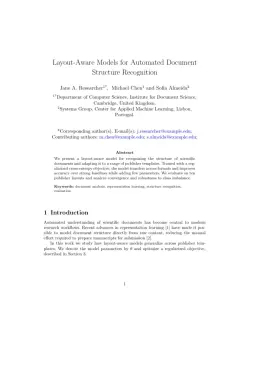
The Journal of Microbiology template — frequently asked questions

How do I write a paper in the The Journal of Microbiology format?
In DocuGuru you write your manuscript in a normal editor — no LaTeX setup required — and select the The Journal of Microbiology template. When you export, DocuGuru compiles the paper into the official Springer Nature format and hands you a submission-ready PDF along with the editable LaTeX source.
What reference style does The Journal of Microbiology use?
The Journal of Microbiology uses Superscript numbered (Nature) references, shown as superscript numerals in the text. DocuGuru formats every in-text citation and the reference list in this exact style automatically. A reference appears like this: 1. Smith, A., Jones, B. & Lee, C. A representative article title. The Journal of Microbiology 12, 45–58 (2023).
Do I need to know LaTeX to submit to The Journal of Microbiology?
No. DocuGuru generates the sn-jnl LaTeX class and compiles the PDF for you in the background, so you get a Springer Nature-ready The Journal of Microbiology document without writing any LaTeX. If you do want it, the LaTeX source is included in the export.
Can I import an existing draft into the The Journal of Microbiology template?
Yes. Paste or upload your current manuscript — Word, LaTeX, Markdown, or plain text — and DocuGuru reflows it into the The Journal of Microbiology format with correct headings, figures, tables, and superscript citations.
Who publishes The Journal of Microbiology?
The Journal of Microbiology is a multidisciplinary journal published by Springer Nature. DocuGuru's The Journal of Microbiology template matches Springer Nature's official submission format.
Can I export a submission-ready The Journal of Microbiology PDF?
Yes — DocuGuru produces a PDF built with the official The Journal of Microbiology template (the sn-jnl class) that is ready to submit to Springer Nature, together with the matching LaTeX source files.
How much does the The Journal of Microbiology template cost?
You can start writing in the The Journal of Microbiology template for free. Exporting the final submission-ready The Journal of Microbiology PDF and LaTeX source is part of DocuGuru's paid plans — see the app for current pricing.
Use the The Journal of Microbiology template