
546 citations
Cite
SaveGo to paper →
Springer Nature
The Journal of Indian Prosthodontic Society Template
Write in a clean editor, then format for The Journal of Indian Prosthodontic Society in one click — DocuGuru applies the official Springer Nature template with superscript references and exports a submission-ready PDF plus the editable LaTeX source. Free to start.
About the The Journal of Indian Prosthodontic Society format
The Journal of Indian Prosthodontic Society is a peer-reviewed journal published by Springer Nature, covering Dental Implant Techniques and Outcomes, Dental materials and restorations, Temporomandibular Joint Disorders.
| Publisher | Springer Nature |
|---|---|
| Reference style | Superscript numbered (Nature) Superscript — small raised numerals in the text 1. Smith, A., Jones, B. & Lee, C. A representative article title. The Journal of Indian Prosthodontic Society 12, 45–58 (2023).
Formats any DOI in The Journal of Indian Prosthodontic Society style. No sign-up. |
| Publishes research in | Dental Implant Techniques and Outcomes Dental materials and restorations Temporomandibular Joint Disorders Orthodontics and Dentofacial Orthopedics Dental Research and COVID-19 |
| ISSN | 0972-4052 |
| Citation impact (2-yr) | 1.39 |
| h-index | 50 |
| i10-index | 500 |
| Total citations | 17,280 |
| Open access | Yes |
| Top institutions publishing here | Creative Commons |
| Journal website | www.j-ips.org |
| You get | A submission-ready PDF and the editable LaTeX source — ready to submit. |
Papers published in The Journal of Indian Prosthodontic Society per year
Citation impact of The Journal of Indian Prosthodontic Society by publication year
Citations each year’s papers have accumulated so far — the most recent years are still building up.
Most-cited papers in The Journal of Indian Prosthodontic Society
Successful osseo integration is a prerequisite for functional dental implants. Implant stability is measured at two stages : primary and secondary. Primary stability comes from mechanical engagement with cortical bone. Secondary stability is developed from regeneration and remodeling of bone and tissues around implant after insertion and is affected by primary stability, bone formation and…
383 citations
Cite
SaveGo to paper →
Osseointegration, defined as a direct structural and functional connection between ordered, living bone and the surface of a load-carrying implant, is critical for implant stability, and is considered a prerequisite for implant loading and long-term clinical success of end osseous dental implants. The implant-tissue interface is an extremely dynamic region of interaction. This complex interaction…
300 citations
Cite
SaveGo to paper →
Bruxism is a movement disorder characterized by grinding and clenching of teeth. Awake bruxism is found more in females as compared to males while sleep bruxism shows no such gender prevalence. Etiology of bruxism can be divided into three groups psychosocial factors, peripheral factors and pathophysiological factors. Treatment modalities involve occlusal correction, behavioural changes and…
253 citations
Cite
SaveGo to paper →
Degenerative joint disease (DJD), a common osteoarthritic problem encountered in clinical practice presents as a chronic debilitating disease resulting in altered joint structure due to degradation and loss of articular cartilage, along with changes in the subchondral bone and other soft tissues. DJD is a frequent finding in the Temporomandibular joints (TMJs). Consequently, a good…
242 citations
Cite
SaveGo to paper →
Related journal templates
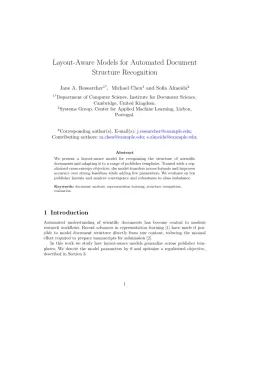
The Journal of Indian Prosthodontic Society template — frequently asked questions
How do I write a paper in the The Journal of Indian Prosthodontic Society format?
In DocuGuru you write your manuscript in a normal editor — no LaTeX setup required — and select the The Journal of Indian Prosthodontic Society template. When you export, DocuGuru compiles the paper into the official Springer Nature format and hands you a submission-ready PDF along with the editable LaTeX source.
What reference style does The Journal of Indian Prosthodontic Society use?
The Journal of Indian Prosthodontic Society uses Superscript numbered (Nature) references, shown as superscript numerals in the text. DocuGuru formats every in-text citation and the reference list in this exact style automatically. A reference appears like this: 1. Smith, A., Jones, B. & Lee, C. A representative article title. The Journal of Indian Prosthodontic Society 12, 45–58 (2023).
Do I need to know LaTeX to submit to The Journal of Indian Prosthodontic Society?
No. DocuGuru generates the sn-jnl LaTeX class and compiles the PDF for you in the background, so you get a Springer Nature-ready The Journal of Indian Prosthodontic Society document without writing any LaTeX. If you do want it, the LaTeX source is included in the export.
Can I import an existing draft into the The Journal of Indian Prosthodontic Society template?
Yes. Paste or upload your current manuscript — Word, LaTeX, Markdown, or plain text — and DocuGuru reflows it into the The Journal of Indian Prosthodontic Society format with correct headings, figures, tables, and superscript citations.
Who publishes The Journal of Indian Prosthodontic Society?
The Journal of Indian Prosthodontic Society is a multidisciplinary journal published by Springer Nature. DocuGuru's The Journal of Indian Prosthodontic Society template matches Springer Nature's official submission format.
Can I export a submission-ready The Journal of Indian Prosthodontic Society PDF?
Yes — DocuGuru produces a PDF built with the official The Journal of Indian Prosthodontic Society template (the sn-jnl class) that is ready to submit to Springer Nature, together with the matching LaTeX source files.
How much does the The Journal of Indian Prosthodontic Society template cost?
You can start writing in the The Journal of Indian Prosthodontic Society template for free. Exporting the final submission-ready The Journal of Indian Prosthodontic Society PDF and LaTeX source is part of DocuGuru's paid plans — see the app for current pricing.