
340 citations
Cite
SaveGo to paper →
Springer Nature
Rare Metals Template
Write in a clean editor, then format for Rare Metals in one click — DocuGuru applies the official Springer Nature template with superscript references and exports a submission-ready PDF plus the editable LaTeX source. Free to start.
About the Rare Metals format
Rare Metals is a peer-reviewed journal published by Springer Nature, covering Advancements in Battery Materials, Advanced Battery Materials and Technologies, Aluminum Alloys Composites Properties.
| Publisher | Springer Nature |
|---|---|
| Reference style | Superscript numbered (Nature) Superscript — small raised numerals in the text 1. Smith, A., Jones, B. & Lee, C. A representative article title. Rare Metals 12, 45–58 (2023).
Formats any DOI in Rare Metals style. No sign-up. |
| Publishes research in | Advancements in Battery Materials Advanced Battery Materials and Technologies Aluminum Alloys Composites Properties Electrocatalysts for Energy Conversion Advanced Photocatalysis Techniques |
| ISSN | 1001-0521 |
| Citation impact (2-yr) | 10.67 |
| h-index | 94 |
| i10-index | 2,901 |
| Total citations | 98,450 |
| Article processing charge | $2,890 |
| Top institutions publishing here | University of Science and Technology Beijing |
| Journal website | link.springer.com |
| You get | A submission-ready PDF and the editable LaTeX source — ready to submit. |
Papers published in Rare Metals per year
Citation impact of Rare Metals by publication year
Citations each year’s papers have accumulated so far — the most recent years are still building up.
Most-cited papers in Rare Metals
Abstract Perovskite solar cells (PSCs) have been brought into sharp focus in the photovoltaic field due to their excellent performance in recent years. The power conversion efficiency (PCE) has reached to be 25.2% in state‐of‐the‐art PSCs due to the outstanding intrinsic properties of perovskite materials as well as progressive optimization of each functional layer, especially…
333 citations
Cite
SaveGo to paper →
Abstract Water electrolysis has been considered as a sustainable way for producing renewable energy of hydrogen. However, this process requires a low‐cost and high‐efficient hydrogen evolution reaction (HER) catalyst to improve the overall reaction efficiency. Molybdenum (Mo)‐based electrocatalysts are regarded as the promising candidates to replace the benchmark but expensive Pt‐based HER catalysts, due to…
319 citations
Cite
SaveGo to paper →
Abstract Titanium and its alloys have been widely used for biomedical applications due to their better biomechanical and biochemical compatibility than other metallic materials such as stainless steels and Co‐based alloys. A brief review on the development of the β‐type titanium alloys with high strength and low elastic modulus is given, and the use of…
269 citations
Cite
SaveGo to paper →
Abstract Stir casting is an economical process for the fabrication of aluminum matrix composites. There are many parameters in this process, which affect the final microstructure and mechanical properties of the composites. In this study, micron‐sized SiC particles were used as reinforcement to fabricate Al‐3 wt% SiC composites at two casting temperatures (680 and 850…
259 citations
Cite
SaveGo to paper →
Related journal templates
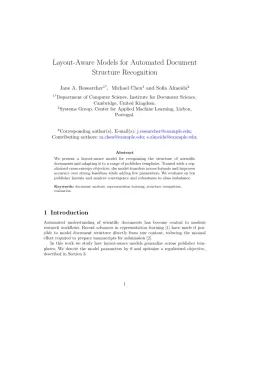
Rare Metals template — frequently asked questions
How do I write a paper in the Rare Metals format?
In DocuGuru you write your manuscript in a normal editor — no LaTeX setup required — and select the Rare Metals template. When you export, DocuGuru compiles the paper into the official Springer Nature format and hands you a submission-ready PDF along with the editable LaTeX source.
What reference style does Rare Metals use?
Rare Metals uses Superscript numbered (Nature) references, shown as superscript numerals in the text. DocuGuru formats every in-text citation and the reference list in this exact style automatically. A reference appears like this: 1. Smith, A., Jones, B. & Lee, C. A representative article title. Rare Metals 12, 45–58 (2023).
Do I need to know LaTeX to submit to Rare Metals?
No. DocuGuru generates the sn-jnl LaTeX class and compiles the PDF for you in the background, so you get a Springer Nature-ready Rare Metals document without writing any LaTeX. If you do want it, the LaTeX source is included in the export.
Can I import an existing draft into the Rare Metals template?
Yes. Paste or upload your current manuscript — Word, LaTeX, Markdown, or plain text — and DocuGuru reflows it into the Rare Metals format with correct headings, figures, tables, and superscript citations.
Who publishes Rare Metals?
Rare Metals is a multidisciplinary journal published by Springer Nature. DocuGuru's Rare Metals template matches Springer Nature's official submission format.
Can I export a submission-ready Rare Metals PDF?
Yes — DocuGuru produces a PDF built with the official Rare Metals template (the sn-jnl class) that is ready to submit to Springer Nature, together with the matching LaTeX source files.
How much does the Rare Metals template cost?
You can start writing in the Rare Metals template for free. Exporting the final submission-ready Rare Metals PDF and LaTeX source is part of DocuGuru's paid plans — see the app for current pricing.