
391 citations
Cite
SaveGo to paper →
Springer Nature
Pituitary Template
Write in a clean editor, then format for Pituitary in one click — DocuGuru applies the official Springer Nature template with numbered references and exports a submission-ready PDF plus the editable LaTeX source. Free to start.
About the Pituitary format
Pituitary is a peer-reviewed journal published by Springer Nature, covering Pituitary Gland Disorders and Treatments, Growth Hormone and Insulin-like Growth Factors, Adrenal and Paraganglionic Tumors.
| Publisher | Springer Nature |
|---|---|
| Reference style | Numbered (Springer Basic) Numbered — [1], [2] in the text 1. Smith A, Jones B, Lee C (2023) A representative article title. Pituitary 12:45–58
Formats any DOI in Pituitary style. No sign-up. |
| Publishes research in | Pituitary Gland Disorders and Treatments Growth Hormone and Insulin-like Growth Factors Adrenal and Paraganglionic Tumors Adrenal Hormones and Disorders Glioma Diagnosis and Treatment |
| ISSN | 1386-341X |
| Citation impact (2-yr) | 2.93 |
| h-index | 99 |
| i10-index | 1,338 |
| Total citations | 60,942 |
| Article processing charge | $3,990 |
| Top institutions publishing here | Neurological Surgery |
| Journal website | www.springer.com |
| You get | A submission-ready PDF and the editable LaTeX source — ready to submit. |
Papers published in Pituitary per year
Citation impact of Pituitary by publication year
Citations each year’s papers have accumulated so far — the most recent years are still building up.
Most-cited papers in Pituitary
374 citations
Cite
SaveGo to paper →
Acromegaly is a rare condition necessitating large population studies for the generation of reliable epidemiological data. In this review, we systematically analysed the epidemiological profile of this condition based on recently published population studies from various geographical areas. The total prevalence ranges between 2.8 and 13.7 cases per 100,000 people and the annual incidence rates…
349 citations
Cite
SaveGo to paper →
To study the currently available data of recurrence rates of functioning and nonfunctioning pituitary adenomas following surgical cure and to analyze associated predisposing factors, which are not well established. A systematic literature search was conducted using Medline, Embase, Web of Science and the Cochran Library for studies reporting data on recurrence of pituitary adenoma after…
344 citations
Cite
SaveGo to paper →
In March 2011, the Acromegaly Consensus Group met to revise and update the guidelines on the diagnosis and treatment of acromegaly complications. The meeting was sponsored by the Pituitary Society and the European Neuroendocrinology Association and included experts skilled in the management of acromegaly. Complications considered included cardiovascular, endocrine and metabolic, sleep apnea, bone diseases,…
325 citations
Cite
SaveGo to paper →
Related journal templates
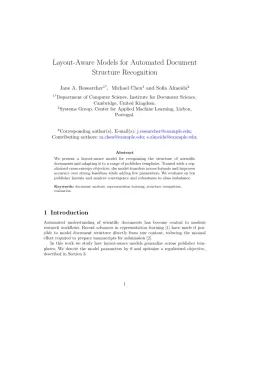
Pituitary template — frequently asked questions
How do I write a paper in the Pituitary format?
In DocuGuru you write your manuscript in a normal editor — no LaTeX setup required — and select the Pituitary template. When you export, DocuGuru compiles the paper into the official Springer Nature format and hands you a submission-ready PDF along with the editable LaTeX source.
What reference style does Pituitary use?
Pituitary uses Numbered (Springer Basic) references, shown as numbered [1], [2] markers in the text. DocuGuru formats every in-text citation and the reference list in this exact style automatically. A reference appears like this: 1. Smith A, Jones B, Lee C (2023) A representative article title. Pituitary 12:45–58
Do I need to know LaTeX to submit to Pituitary?
No. DocuGuru generates the sn-jnl LaTeX class and compiles the PDF for you in the background, so you get a Springer Nature-ready Pituitary document without writing any LaTeX. If you do want it, the LaTeX source is included in the export.
Can I import an existing draft into the Pituitary template?
Yes. Paste or upload your current manuscript — Word, LaTeX, Markdown, or plain text — and DocuGuru reflows it into the Pituitary format with correct headings, figures, tables, and numbered citations.
Who publishes Pituitary?
Pituitary is a multidisciplinary journal published by Springer Nature. DocuGuru's Pituitary template matches Springer Nature's official submission format.
Can I export a submission-ready Pituitary PDF?
Yes — DocuGuru produces a PDF built with the official Pituitary template (the sn-jnl class) that is ready to submit to Springer Nature, together with the matching LaTeX source files.
How much does the Pituitary template cost?
You can start writing in the Pituitary template for free. Exporting the final submission-ready Pituitary PDF and LaTeX source is part of DocuGuru's paid plans — see the app for current pricing.