Springer Nature

Nano-Micro Letters Template

Write in a clean editor, then format for Nano-Micro Letters in one click — DocuGuru applies the official Springer Nature template with superscript references and exports a submission-ready PDF plus the editable LaTeX source. Free to start.

About the Nano-Micro Letters format

Nano-Micro Letters is a peer-reviewed journal published by Springer Nature, covering Advancements in Battery Materials, Advanced Battery Materials and Technologies, Advanced battery technologies research.

PublisherSpringer Nature
Reference styleSuperscript numbered (Nature)
Superscript — small raised numerals in the text
1. Smith, A., Jones, B. & Lee, C. A representative article title. Nano-Micro Letters 12, 45–58 (2023).

Formats any DOI in Nano-Micro Letters style. No sign-up.

Publishes research inAdvancements in Battery Materials Advanced Battery Materials and Technologies Advanced battery technologies research Advanced Sensor and Energy Harvesting Materials Supercapacitor Materials and Fabrication
ISSN2150-5551
Citation impact (2-yr)29.82
h-index200
i10-index1,977
Total citations192,830
Open accessYes
Top institutions publishing hereChinese Academy of Sciences
Journal websitewww.springer.com
You getA submission-ready PDF and the editable LaTeX source — ready to submit.

Papers published in Nano-Micro Letters per year

83
2014
49
2015
42
2016
62
2017
46
2018
118
2019
200
2020
228
2021
213
2022
276
2023
319
2024
320
2025

Citation impact of Nano-Micro Letters by publication year

3.6K
2014
7.5K
2015
2.5K
2016
7K
2017
5.9K
2018
15.6K
2019
26.6K
2020
31.5K
2021
27.3K
2022
27.7K
2023
19.8K
2024
7.2K
2025

Citations each year’s papers have accumulated so far — the most recent years are still building up.

Most-cited papers in Nano-Micro Letters

Review on Zinc Oxide Nanoparticles: Antibacterial Activity and Toxicity Mechanism

Amna Sirelkhatim, Shahrom Mahmud, Azman Seeni et al. · 18 Apr 2015

Antibacterial activity of zinc oxide nanoparticles (ZnO-NPs) has received significant interest worldwide particularly by the implementation of nanotechnology to synthesize particles in the nanometer region. Many microorganisms exist in the range from hundreds of nanometers to tens of micrometers. ZnO-NPs exhibit attractive antibacterial properties due to increased specific surface area as the reduced particle size…

4,488 citations Cite SaveGo to paper →
Enhanced Potassium-Ion Storage of the 3D Carbon Superstructure by Manipulating the Nitrogen-Doped Species and Morphology

Yanhua Li, Kui Xiao, Cong Huang et al. · 27 Oct 2020

Abstract Potassium-ion batteries (PIBs) are attractive for grid-scale energy storage due to the abundant potassium resource and high energy density. The key to achieving high-performance and large-scale energy storage technology lies in seeking eco-efficient synthetic processes to the design of suitable anode materials. Herein, a spherical sponge-like carbon superstructure (NCS) assembled by 2D nanosheets is…

Zinc Oxide Nanostructures for NO2 Gas–Sensor Applications: A Review

Rajesh Kumar, Omar M. Al-Dossary, Girish Kumar et al. · 14 Dec 2014

Because of the interesting and multifunctional properties, recently, ZnO nanostructures are considered as excellent material for fabrication of highly sensitive and selective gas sensors. Thus, ZnO nanomaterials are widely used to fabricate efficient gas sensors for the detection of various hazardous and toxic gases. The presented review article is focusing on the recent developments of…

Conductive Biomaterials as Bioactive Wound Dressing for Wound Healing and Skin Tissue Engineering

Rui Yu, Hualei Zhang, Baolin Guo · 2 Dec 2021

Conductive biomaterials based on conductive polymers, carbon nanomaterials, or conductive inorganic nanomaterials demonstrate great potential in wound healing and skin tissue engineering, owing to the similar conductivity to human skin, good antioxidant and antibacterial activities, electrically controlled drug delivery, and photothermal effect. However, a review highlights the design and application of conductive biomaterials for wound…

Dendritic Nanostructured Waste Copper Wires for High-Energy Alkaline Battery

Nilesh R. Chodankar, Su‐Hyeon Ji, Young‐Kyu Han et al. · 12 Dec 2019

Abstract Rechargeable alkaline batteries (RABs) have received remarkable attention in the past decade for their high energy, low cost, safe operation, facile manufacture, and eco-friendly nature. To date, expensive electrode materials and current collectors were predominantly applied for RABs, which have limited their real-world efficacy. In the present work, we propose a scalable process to…

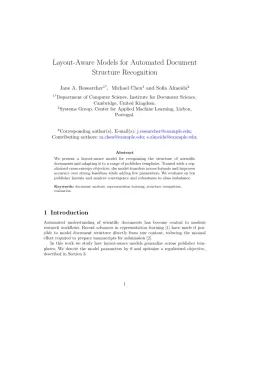
Nano-Micro Letters template — frequently asked questions

How do I write a paper in the Nano-Micro Letters format?
In DocuGuru you write your manuscript in a normal editor — no LaTeX setup required — and select the Nano-Micro Letters template. When you export, DocuGuru compiles the paper into the official Springer Nature format and hands you a submission-ready PDF along with the editable LaTeX source.
What reference style does Nano-Micro Letters use?
Nano-Micro Letters uses Superscript numbered (Nature) references, shown as superscript numerals in the text. DocuGuru formats every in-text citation and the reference list in this exact style automatically. A reference appears like this: 1. Smith, A., Jones, B. & Lee, C. A representative article title. Nano-Micro Letters 12, 45–58 (2023).
Do I need to know LaTeX to submit to Nano-Micro Letters?
No. DocuGuru generates the sn-jnl LaTeX class and compiles the PDF for you in the background, so you get a Springer Nature-ready Nano-Micro Letters document without writing any LaTeX. If you do want it, the LaTeX source is included in the export.
Can I import an existing draft into the Nano-Micro Letters template?
Yes. Paste or upload your current manuscript — Word, LaTeX, Markdown, or plain text — and DocuGuru reflows it into the Nano-Micro Letters format with correct headings, figures, tables, and superscript citations.
Who publishes Nano-Micro Letters?
Nano-Micro Letters is a multidisciplinary journal published by Springer Nature. DocuGuru's Nano-Micro Letters template matches Springer Nature's official submission format.
Can I export a submission-ready Nano-Micro Letters PDF?
Yes — DocuGuru produces a PDF built with the official Nano-Micro Letters template (the sn-jnl class) that is ready to submit to Springer Nature, together with the matching LaTeX source files.
How much does the Nano-Micro Letters template cost?
You can start writing in the Nano-Micro Letters template for free. Exporting the final submission-ready Nano-Micro Letters PDF and LaTeX source is part of DocuGuru's paid plans — see the app for current pricing.
Use the Nano-Micro Letters template