Springer Nature

Low-carbon Materials and Green Construction Template

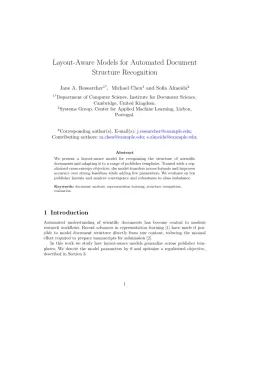
Write in a clean editor, then format for Low-carbon Materials and Green Construction in one click — DocuGuru applies the official Springer Nature template with superscript references and exports a submission-ready PDF plus the editable LaTeX source. Free to start.

About the Low-carbon Materials and Green Construction format

Low-carbon Materials and Green Construction is a peer-reviewed journal published by Springer Nature, covering Concrete and Cement Materials Research, Innovative concrete reinforcement materials, Recycled Aggregate Concrete Performance.

PublisherSpringer Nature
Reference styleSuperscript numbered (Nature)
Superscript — small raised numerals in the text
1. Smith, A., Jones, B. & Lee, C. A representative article title. Low-carbon Materials and Green Construction 12, 45–58 (2023).

Formats any DOI in Low-carbon Materials and Green Construction style. No sign-up.

Publishes research inConcrete and Cement Materials Research Innovative concrete reinforcement materials Recycled Aggregate Concrete Performance Innovations in Concrete and Construction Materials Recycling and utilization of industrial and municipal waste in materials production
ISSN2731-6319
Citation impact (2-yr)3.85
h-index15
i10-index24
Total citations689
Open accessYes
Top institutions publishing hereTongji University
You getA submission-ready PDF and the editable LaTeX source — ready to submit.

Papers published in Low-carbon Materials and Green Construction per year

30
2023
30
2024
34
2025

Citation impact of Low-carbon Materials and Green Construction by publication year

373
2023
223
2024
61
2025

Citations each year’s papers have accumulated so far — the most recent years are still building up.

Most-cited papers in Low-carbon Materials and Green Construction

Carbon emissions from buildings based on a life cycle analysis: carbon reduction measures and effects of green building standards in China

Zhenwei Guo, Qingqin Wang, Na Zhao et al. · 27 Feb 2023

Abstract Carbon emissions from buildings account for approximately half of China's total social carbon emissions. Focusing only on the carbon emissions of building operation tends to neglect the carbon emissions of other related parts of the building sector, thus slowing down the progress of carbon peaking in the building sector. By applying life-cycle analysis to…

Where are demolition wastes going: reflection and analysis of the February 6, 2023 earthquake disaster in Turkey

Jianzhuang Xiao, Qi Deng, Minjie Hou et al. · 26 May 2023

Abstract On 6 February 2023 at 09.17 BST, an earthquake measuring 7.8 on the Richter scale struck the southern border of Turkey near Syria, causing massive casualties and building damage. Badly damaged buildings need to be demolished, bringing a large amount of demolition waste, which, if not properly disposed of, can be a burden on…

Recovery of metallic oxide rich biochar from waste chicken feather

Adewale George Adeniyi, Sulyman A. Abdulkareem, Comfort Abidemi Adeyanju et al. · 13 Feb 2023

Abstract Over the years, the devastating impact of climate change has become pronounced due to inadequate regulation for waste disposal in a developing country like Nigeria. The chicken feather-based metal oxide-rich (MOR) biochar was produced using a top-lit updraft reactor at a peak temperature of 417.2 °C to give a yield of 28.19%. The results…

Value-added recycling of sludge and sludge ash into low-carbon construction materials: current status and perspectives

Yan Xia, Yue Liu, Lei Wang et al. · 11 Sep 2023

Abstract Sludge as the by-product of wastewater treatment usually accumulates toxic substances that require specific treatment before disposal. With the increase of sludge production, the safe and economic treatment of sludge has become a global issue. Construction filed provides a solution for consuming huge volumes of sludge and sludge ash owing to the similar chemical…

Thermochemical recycling of waste disposable facemasks in a non-electrically powered system

Kingsley O. Iwuozor, Ebuka Chizitere Emenike, Agbana Abiodun Stephen et al. · 4 Apr 2023

The COVID-19 pandemic encouraged the use of plastic-based personal protective equipment (PPE), which aided greatly in its management. However, the increased production and usage of these PPEs put a strain on the environment, especially in developing and underdeveloped countries. This has led various researchers to study low-cost and effective technologies for the recycling of these…

Low-carbon Materials and Green Construction template — frequently asked questions

How do I write a paper in the Low-carbon Materials and Green Construction format?
In DocuGuru you write your manuscript in a normal editor — no LaTeX setup required — and select the Low-carbon Materials and Green Construction template. When you export, DocuGuru compiles the paper into the official Springer Nature format and hands you a submission-ready PDF along with the editable LaTeX source.
What reference style does Low-carbon Materials and Green Construction use?
Low-carbon Materials and Green Construction uses Superscript numbered (Nature) references, shown as superscript numerals in the text. DocuGuru formats every in-text citation and the reference list in this exact style automatically. A reference appears like this: 1. Smith, A., Jones, B. & Lee, C. A representative article title. Low-carbon Materials and Green Construction 12, 45–58 (2023).
Do I need to know LaTeX to submit to Low-carbon Materials and Green Construction?
No. DocuGuru generates the sn-jnl LaTeX class and compiles the PDF for you in the background, so you get a Springer Nature-ready Low-carbon Materials and Green Construction document without writing any LaTeX. If you do want it, the LaTeX source is included in the export.
Can I import an existing draft into the Low-carbon Materials and Green Construction template?
Yes. Paste or upload your current manuscript — Word, LaTeX, Markdown, or plain text — and DocuGuru reflows it into the Low-carbon Materials and Green Construction format with correct headings, figures, tables, and superscript citations.
Who publishes Low-carbon Materials and Green Construction?
Low-carbon Materials and Green Construction is a multidisciplinary journal published by Springer Nature. DocuGuru's Low-carbon Materials and Green Construction template matches Springer Nature's official submission format.
Can I export a submission-ready Low-carbon Materials and Green Construction PDF?
Yes — DocuGuru produces a PDF built with the official Low-carbon Materials and Green Construction template (the sn-jnl class) that is ready to submit to Springer Nature, together with the matching LaTeX source files.
How much does the Low-carbon Materials and Green Construction template cost?
You can start writing in the Low-carbon Materials and Green Construction template for free. Exporting the final submission-ready Low-carbon Materials and Green Construction PDF and LaTeX source is part of DocuGuru's paid plans — see the app for current pricing.

Use the Low-carbon Materials and Green Construction template