
75 citations
Cite
SaveGo to paper →
Springer Nature
Journal of Sedimentary Environments Template
Write in a clean editor, then format for Journal of Sedimentary Environments in one click — DocuGuru applies the official Springer Nature template with superscript references and exports a submission-ready PDF plus the editable LaTeX source. Free to start.
About the Journal of Sedimentary Environments format
Journal of Sedimentary Environments is a peer-reviewed journal published by Springer Nature, covering Geochemistry and Elemental Analysis, Geological formations and processes, Geochemistry and Geologic Mapping.
| Publisher | Springer Nature |
|---|---|
| Reference style | Superscript numbered (Nature) Superscript — small raised numerals in the text 1. Smith, A., Jones, B. & Lee, C. A representative article title. Journal of Sedimentary Environments 12, 45–58 (2023).
Formats any DOI in Journal of Sedimentary Environments style. No sign-up. |
| Publishes research in | Geochemistry and Elemental Analysis Geological formations and processes Geochemistry and Geologic Mapping Hydrocarbon exploration and reservoir analysis Geological and Geochemical Analysis |
| ISSN | 2447-9462 |
| Citation impact (2-yr) | 1.84 |
| h-index | 23 |
| i10-index | 84 |
| Total citations | 2,579 |
| Article processing charge | $2,890 |
| Top institutions publishing here | Universidade do Estado do Rio de Janeiro |
| Journal website | link.springer.com |
| You get | A submission-ready PDF and the editable LaTeX source — ready to submit. |
Papers published in Journal of Sedimentary Environments per year
Citation impact of Journal of Sedimentary Environments by publication year
Citations each year’s papers have accumulated so far — the most recent years are still building up.
Most-cited papers in Journal of Sedimentary Environments
54 citations
Cite
SaveGo to paper →
The nature of sedimentation and sediment accumulation rates in Sepetiba Bay, Brazil were interpreted from grain-size patterns, natural radiochemical distributions and seismic stratigraphy. The grain-size analyses showed progressive upward fining of sediment in cores, and a higher percentage of clay in surficial deposits in 1996 than observed during a previous spatial survey in the 1970s.…
46 citations
Cite
SaveGo to paper →
Abstract The erosion of soil is one of the most difficult and ongoing problems caused by deforestation, improper cultivation, uncontrolled grazing, and other anthropogenic activities. As a result, assessing the level and quantity of soil erosion is essential for agricultural productivity and natural resource management. Thus, the goal of this study was to quantify soil…
42 citations
Cite
SaveGo to paper →
34 citations
Cite
SaveGo to paper →
Related journal templates
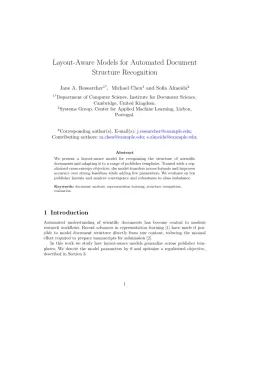
Journal of Sedimentary Environments template — frequently asked questions
How do I write a paper in the Journal of Sedimentary Environments format?
In DocuGuru you write your manuscript in a normal editor — no LaTeX setup required — and select the Journal of Sedimentary Environments template. When you export, DocuGuru compiles the paper into the official Springer Nature format and hands you a submission-ready PDF along with the editable LaTeX source.
What reference style does Journal of Sedimentary Environments use?
Journal of Sedimentary Environments uses Superscript numbered (Nature) references, shown as superscript numerals in the text. DocuGuru formats every in-text citation and the reference list in this exact style automatically. A reference appears like this: 1. Smith, A., Jones, B. & Lee, C. A representative article title. Journal of Sedimentary Environments 12, 45–58 (2023).
Do I need to know LaTeX to submit to Journal of Sedimentary Environments?
No. DocuGuru generates the sn-jnl LaTeX class and compiles the PDF for you in the background, so you get a Springer Nature-ready Journal of Sedimentary Environments document without writing any LaTeX. If you do want it, the LaTeX source is included in the export.
Can I import an existing draft into the Journal of Sedimentary Environments template?
Yes. Paste or upload your current manuscript — Word, LaTeX, Markdown, or plain text — and DocuGuru reflows it into the Journal of Sedimentary Environments format with correct headings, figures, tables, and superscript citations.
Who publishes Journal of Sedimentary Environments?
Journal of Sedimentary Environments is a multidisciplinary journal published by Springer Nature. DocuGuru's Journal of Sedimentary Environments template matches Springer Nature's official submission format.
Can I export a submission-ready Journal of Sedimentary Environments PDF?
Yes — DocuGuru produces a PDF built with the official Journal of Sedimentary Environments template (the sn-jnl class) that is ready to submit to Springer Nature, together with the matching LaTeX source files.
How much does the Journal of Sedimentary Environments template cost?
You can start writing in the Journal of Sedimentary Environments template for free. Exporting the final submission-ready Journal of Sedimentary Environments PDF and LaTeX source is part of DocuGuru's paid plans — see the app for current pricing.