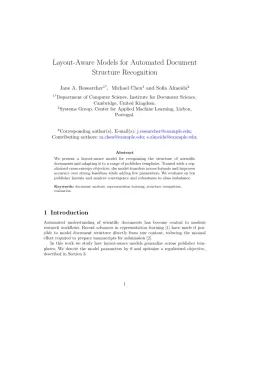
About the Journal of Flow Chemistry format
Journal of Flow Chemistry is a peer-reviewed journal published by Springer Nature, covering Innovative Microfluidic and Catalytic Techniques Innovation, Microfluidic and Capillary Electrophoresis Applications, Nanomaterials for catalytic reactions.
| Publisher | Springer Nature |
|---|
| Reference style | Superscript numbered (Nature) Superscript — small raised numerals in the text
1. Smith, A., Jones, B. & Lee, C. A representative article title. Journal of Flow Chemistry 12, 45–58 (2023).
Formats any DOI in Journal of Flow Chemistry style. No sign-up.
|
|---|
| Publishes research in | Innovative Microfluidic and Catalytic Techniques Innovation Microfluidic and Capillary Electrophoresis Applications Nanomaterials for catalytic reactions Oxidative Organic Chemistry Reactions Chemical Synthesis and Analysis |
|---|
| ISSN | 2062-249X |
|---|
| Citation impact (2-yr) | 3.23 |
|---|
| h-index | 40 |
|---|
| i10-index | 262 |
|---|
| Total citations | 7,945 |
|---|
| Article processing charge | $2,990 |
|---|
| Top institutions publishing here | University of Graz |
|---|
| Journal website | link.springer.com |
|---|
| You get | A submission-ready PDF and the editable LaTeX source — ready to submit. |
|---|
Papers published in Journal of Flow Chemistry per year
Citation impact of Journal of Flow Chemistry by publication year
Citations each year’s papers have accumulated so far — the most recent years are still building up.
Most-cited papers in Journal of Flow Chemistry
Scalability of photochemical reactions in continuous flow mode
Kian Donnelly, Marcus Baumann · 17 May 2021
Abstract Continuous flow photochemistry as a field has witnessed an increasing popularity over the last decade in both academia and industry. Key drivers for this development are safety, practicality as well as the ability to rapidly access complex chemical structures. Continuous flow reactors, whether home-built or from commercial suppliers, additionally allow for creating valuable target…
Translating batch electrochemistry to single-pass continuous flow conditions: an organic chemist’s guide
Snjezana Maljuric, Wolfgang Jud, C. Oliver Kappe et al. · 17 Feb 2020
Abstract The recent renaissance of electrochemical methods for organic synthesis has also attracted increased interest towards flow electrochemistry as the most suitable scale-up strategy. Many electrochemical methods using flow cells are based on recirculation of the electrolyte solution. However, single-pass processing is very attractive as it permits integration of the electrochemical reaction with other synthetic…
Electrochemical Synthesis in Microreactors
Kevin Watts, Alastair Baker, Thomas Wirth · 1 Jan 2014
Oscillatory flow reactors for synthetic chemistry applications
Pauline Bianchi, Jason D. Williams, C. Oliver Kappe · 28 Jul 2020
Abstract Oscillatory flow reactors (OFRs) superimpose an oscillatory flow to the net movement through a flow reactor. OFRs have been engineered to enable improved mixing, excellent heat- and mass transfer and good plug flow character under a broad range of operating conditions. Such features render these reactors appealing, since they are suitable for reactions that…
Design and application of a modular and scalable electrochemical flow microreactor
Gabriele Laudadio, Wouter Smet, Lisa Struik et al. · 22 Nov 2018
Electrochemistry constitutes a mild, green and versatile activation method of organic molecules. Despite these innate advantages, its widespread use in organic chemistry has been hampered due to technical limitations, such as mass and heat transfer limitations which restraints the scalability of electrochemical methods. Herein, we describe an undivided-cell electrochemical flow reactor with a flexible reactor…