
97 citations
Go to paper →
Springer Nature
Journal of Applied Youth Studies Template
Write in a clean editor, then format for Journal of Applied Youth Studies in one click — DocuGuru applies the official Springer Nature template with superscript references and exports a submission-ready PDF plus the editable LaTeX source. Free to start.
About the Journal of Applied Youth Studies format
Journal of Applied Youth Studies is a peer-reviewed journal published by Springer Nature, covering Youth Education and Societal Dynamics, Employment and Welfare Studies, Youth Development and Social Support.
| Publisher | Springer Nature |
|---|---|
| Reference style | Superscript numbered (Nature) Superscript — small raised numerals in the text 1. Smith, A., Jones, B. & Lee, C. A representative article title. Journal of Applied Youth Studies 12, 45–58 (2023).
Formats any DOI in Journal of Applied Youth Studies style. No sign-up. |
| Publishes research in | Youth Education and Societal Dynamics Employment and Welfare Studies Youth Development and Social Support Social Media and Politics Children's Rights and Participation |
| ISSN | 2204-9193 |
| Citation impact (2-yr) | 1.59 |
| h-index | 18 |
| i10-index | 38 |
| Total citations | 1,227 |
| Article processing charge | $2,890 |
| Top institutions publishing here | The University of Melbourne |
| Journal website | link.springer.com |
| You get | A submission-ready PDF and the editable LaTeX source — ready to submit. |
Papers published in Journal of Applied Youth Studies per year
Citation impact of Journal of Applied Youth Studies by publication year
Citations each year’s papers have accumulated so far — the most recent years are still building up.
Most-cited papers in Journal of Applied Youth Studies
Abstract Over the past decade, the number of young people neither in employment, education, or training (NEET) has reached a seriously high level in many European countries. Previous studies have illustrated the heterogeneity of this group and that they differ considerably across Europe. However, the reasons of these cross-country differences have hardly been investigated so…
45 citations
Cite
SaveGo to paper →
43 citations
Cite
SaveGo to paper →
Young adults tend to be more optimistic about the future than older people, even during social and economic crises such as those created by the COVID pandemic. In this paper, we analyse survey data from a previous economic crisis to examine why young adults remain optimistic about their personal futures, and to consider what lessons,…
35 citations
Cite
SaveGo to paper →
Abstract The current young generation are living through socio-historically situated intersecting crises, including precarity and climate change. In these times of crisis, young people are also bearing witness to a distinctive global wave of youth-led activism involving protest actions. Much of this activism can be deemed dissent because many young activists are calling for systemic…
32 citations
Cite
SaveGo to paper →
Related journal templates
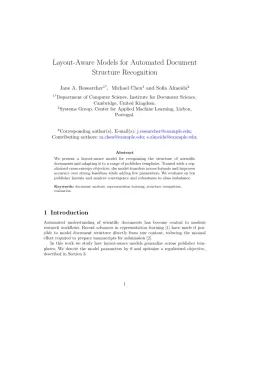
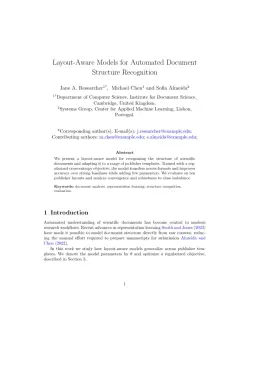
Journal of Applied Youth Studies template — frequently asked questions
How do I write a paper in the Journal of Applied Youth Studies format?
In DocuGuru you write your manuscript in a normal editor — no LaTeX setup required — and select the Journal of Applied Youth Studies template. When you export, DocuGuru compiles the paper into the official Springer Nature format and hands you a submission-ready PDF along with the editable LaTeX source.
What reference style does Journal of Applied Youth Studies use?
Journal of Applied Youth Studies uses Superscript numbered (Nature) references, shown as superscript numerals in the text. DocuGuru formats every in-text citation and the reference list in this exact style automatically. A reference appears like this: 1. Smith, A., Jones, B. & Lee, C. A representative article title. Journal of Applied Youth Studies 12, 45–58 (2023).
Do I need to know LaTeX to submit to Journal of Applied Youth Studies?
No. DocuGuru generates the sn-jnl LaTeX class and compiles the PDF for you in the background, so you get a Springer Nature-ready Journal of Applied Youth Studies document without writing any LaTeX. If you do want it, the LaTeX source is included in the export.
Can I import an existing draft into the Journal of Applied Youth Studies template?
Yes. Paste or upload your current manuscript — Word, LaTeX, Markdown, or plain text — and DocuGuru reflows it into the Journal of Applied Youth Studies format with correct headings, figures, tables, and superscript citations.
Who publishes Journal of Applied Youth Studies?
Journal of Applied Youth Studies is a multidisciplinary journal published by Springer Nature. DocuGuru's Journal of Applied Youth Studies template matches Springer Nature's official submission format.
Can I export a submission-ready Journal of Applied Youth Studies PDF?
Yes — DocuGuru produces a PDF built with the official Journal of Applied Youth Studies template (the sn-jnl class) that is ready to submit to Springer Nature, together with the matching LaTeX source files.
How much does the Journal of Applied Youth Studies template cost?
You can start writing in the Journal of Applied Youth Studies template for free. Exporting the final submission-ready Journal of Applied Youth Studies PDF and LaTeX source is part of DocuGuru's paid plans — see the app for current pricing.