Springer Nature

Horticulture Advances Template

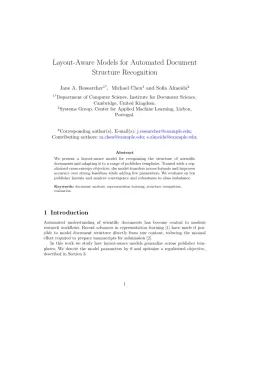
Write in a clean editor, then format for Horticulture Advances in one click — DocuGuru applies the official Springer Nature template with superscript references and exports a submission-ready PDF plus the editable LaTeX source. Free to start.

About the Horticulture Advances format

Horticulture Advances is a peer-reviewed journal published by Springer Nature, covering Plant Gene Expression Analysis, Plant Molecular Biology Research, Plant Physiology and Cultivation Studies.

PublisherSpringer Nature
Reference styleSuperscript numbered (Nature)
Superscript — small raised numerals in the text
1. Smith, A., Jones, B. & Lee, C. A representative article title. Horticulture Advances 12, 45–58 (2023).

Formats any DOI in Horticulture Advances style. No sign-up.

Publishes research inPlant Gene Expression Analysis Plant Molecular Biology Research Plant Physiology and Cultivation Studies Plant Stress Responses and Tolerance Postharvest Quality and Shelf Life Management
ISSN2948-1104
Citation impact (2-yr)5.49
h-index16
i10-index29
Total citations774
Open accessYes
Top institutions publishing hereHuazhong Agricultural University
You getA submission-ready PDF and the editable LaTeX source — ready to submit.

Papers published in Horticulture Advances per year

18
2023
32
2024
35
2025

Citation impact of Horticulture Advances by publication year

275
2023
333
2024
114
2025

Citations each year’s papers have accumulated so far — the most recent years are still building up.

Most-cited papers in Horticulture Advances

Overlapping responses to multiple abiotic stresses in citrus: from mechanism understanding to genetic improvement

Bachar Dahro, Chunlong Li, Ji‐Hong Liu · 6 Jun 2023

Abstract Citrus plants routinely experience a broad range of biotic and abiotic stress that occur either concurrently or sequentially in the field, causing huge losses in yield. Hence, cultivated citrus plants that tolerate only one type of abiotic stress are insufficient to maintain citrus productivity as the climate changes. Plants primarily develop delicate regulatory mechanisms…

Coordination among flower pigments, scents and pollinators in ornamental plants

Yuxiao Shen, Yufei Rao, Mengni Ma et al. · 6 Feb 2024

Abstract Flower color and scent, crucial qualitative characteristics of ornamental plants, display extensive variation. These distinct pigments and scents play a key role in attracting specific pollinators. While previous research primarily delved into the synthetic regulatory mechanisms of individual traits and their respective attraction to insects, recent studies unveil an interconnectedness between flower color and…

A NAC transcription factor, PpNAC1, regulates the expression of PpMYB10.1 to promote anthocyanin biosynthesis in the leaves of peach trees in autumn

Junren Meng, Shihang Sun, Ang Li et al. · 30 Sep 2023

Abstract Red leaves in autumn are characteristic of a very early-maturing ripening variety of peach ( Prunus persica ). Analysis of the genetic factors and molecular mechanisms associated with the red-leaf phenotype can help breed peach very early maturing peach varieties. This study investigated the mechanisms underlying the red- and green-leaf phenotypes in autumn. Red…

Influence of sugar metabolism on the dialogue between arbuscular mycorrhizal fungi and plants

Yujuan Wang, Qiang‐Sheng Wu · 6 Jun 2023

Abstract Arbuscular mycorrhizal (AM) symbioses in plants are broadly significant because of their capacity to facilitate water and nutrient acquisition and thus, to promote vigorous growth and development among host plants. Many horticultural plants, especially citrus plants, are highly dependent on AM fungi. In return, AM fungi receive sugars and lipids from their host plants.…

WUSCHEL-related homeobox (WOX) transcription factors: key regulators in combating abiotic stresses in plants

Faiza Shafique Khan, Farhan Goher, Chun Gen Hu et al. · 11 Jan 2024

Abstract The WUSCHEL -related homeobox ( WOX ) transcription factors (TFs) belong to the homeodomain (HD) family. WOX TFs are involved in various regulatory pathways related to plant growth and development. In addition to their recognized role in various development processes, many reports suggest that they play a key role in abiotic stress perception in…

Horticulture Advances template — frequently asked questions

How do I write a paper in the Horticulture Advances format?
In DocuGuru you write your manuscript in a normal editor — no LaTeX setup required — and select the Horticulture Advances template. When you export, DocuGuru compiles the paper into the official Springer Nature format and hands you a submission-ready PDF along with the editable LaTeX source.
What reference style does Horticulture Advances use?
Horticulture Advances uses Superscript numbered (Nature) references, shown as superscript numerals in the text. DocuGuru formats every in-text citation and the reference list in this exact style automatically. A reference appears like this: 1. Smith, A., Jones, B. & Lee, C. A representative article title. Horticulture Advances 12, 45–58 (2023).
Do I need to know LaTeX to submit to Horticulture Advances?
No. DocuGuru generates the sn-jnl LaTeX class and compiles the PDF for you in the background, so you get a Springer Nature-ready Horticulture Advances document without writing any LaTeX. If you do want it, the LaTeX source is included in the export.
Can I import an existing draft into the Horticulture Advances template?
Yes. Paste or upload your current manuscript — Word, LaTeX, Markdown, or plain text — and DocuGuru reflows it into the Horticulture Advances format with correct headings, figures, tables, and superscript citations.
Who publishes Horticulture Advances?
Horticulture Advances is a multidisciplinary journal published by Springer Nature. DocuGuru's Horticulture Advances template matches Springer Nature's official submission format.
Can I export a submission-ready Horticulture Advances PDF?
Yes — DocuGuru produces a PDF built with the official Horticulture Advances template (the sn-jnl class) that is ready to submit to Springer Nature, together with the matching LaTeX source files.
How much does the Horticulture Advances template cost?
You can start writing in the Horticulture Advances template for free. Exporting the final submission-ready Horticulture Advances PDF and LaTeX source is part of DocuGuru's paid plans — see the app for current pricing.

Use the Horticulture Advances template