Springer Nature

High Temperature Corrosion of Materials Template

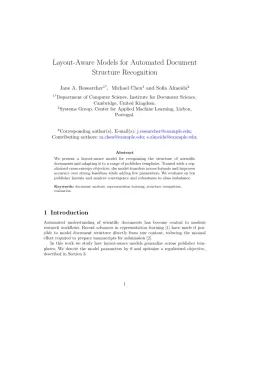
Write in a clean editor, then format for High Temperature Corrosion of Materials in one click — DocuGuru applies the official Springer Nature template with superscript references and exports a submission-ready PDF plus the editable LaTeX source. Free to start.

About the High Temperature Corrosion of Materials format

High Temperature Corrosion of Materials is a peer-reviewed journal published by Springer Nature, covering High-Temperature Coating Behaviors, Nuclear Materials and Properties, High Temperature Alloys and Creep.

PublisherSpringer Nature
Reference styleSuperscript numbered (Nature)
Superscript — small raised numerals in the text
1. Smith, A., Jones, B. & Lee, C. A representative article title. High Temperature Corrosion of Materials 12, 45–58 (2023).

Formats any DOI in High Temperature Corrosion of Materials style. No sign-up.

Publishes research inHigh-Temperature Coating Behaviors Nuclear Materials and Properties High Temperature Alloys and Creep Metallurgical Processes and Thermodynamics Advanced materials and composites
ISSN2731-8397
Citation impact (2-yr)2.51
h-index14
i10-index24
Total citations1,005
Top institutions publishing hereCentre National de la Recherche Scientifique
You getA submission-ready PDF and the editable LaTeX source — ready to submit.

Papers published in High Temperature Corrosion of Materials per year

5
2022
73
2023
108
2024
43
2025

Citation impact of High Temperature Corrosion of Materials by publication year

43
2022
415
2023
439
2024
55
2025

Citations each year’s papers have accumulated so far — the most recent years are still building up.

Most-cited papers in High Temperature Corrosion of Materials

An Overview of Mechanisms of the Degradation of Promising ATF Cladding Materials During Oxidation at High Temperatures

Martin Steinbrueck, M. Große, Chongchong Tang et al. · 16 Mar 2024

Abstract Accident tolerant fuel (ATF) cladding is a new type of nuclear fuel cladding designed to improve the safety and performance of nuclear reactors. In this paper, the kinetics and degradation mechanisms during high-temperature oxidation in steam of the three most promising ATF cladding materials, i.e., chromium-coated zirconium alloys, FeCrAl alloys, and silicon carbide-based composites,…

Evaluating Wagner Oxidation Criteria for Protective Al2O3 Scale Formation in Ni-Based Superalloys

J. W. X. Wo, Mark Hardy, H.J. Stone · 26 Jun 2023

Abstract An assessment is made of the Wagner transition criteria for predicting the formation of a continuous Al 2 O 3 scale in Ni-based superalloys. Predictions are compared with data from an experimental Ni-based superalloy as well as commercial superalloys for which published data are available. The methodology was generally successful in predicting the transition…

High Temperature Corrosion Resistant and Anti-slagging Coatings for Boilers: A Review

Kritkasem Khantisopon, Surinder Singh, Jaturong Jitputti et al. · 10 Jul 2024

Abstract High temperature corrosion and slag deposition significantly reduce the thermal efficiency and lifespan of biomass-fired boilers. Surface modification with protective coatings can enhance boiler performance and prevent commercial losses due to maintenance and damage. This review focuses on the development of corrosion-resistant coatings (CRCs) and anti-slagging coatings (ASCs) over the past decade. CRCs are…

High Temperature Corrosion of Materials template — frequently asked questions

How do I write a paper in the High Temperature Corrosion of Materials format?
In DocuGuru you write your manuscript in a normal editor — no LaTeX setup required — and select the High Temperature Corrosion of Materials template. When you export, DocuGuru compiles the paper into the official Springer Nature format and hands you a submission-ready PDF along with the editable LaTeX source.
What reference style does High Temperature Corrosion of Materials use?
High Temperature Corrosion of Materials uses Superscript numbered (Nature) references, shown as superscript numerals in the text. DocuGuru formats every in-text citation and the reference list in this exact style automatically. A reference appears like this: 1. Smith, A., Jones, B. & Lee, C. A representative article title. High Temperature Corrosion of Materials 12, 45–58 (2023).
Do I need to know LaTeX to submit to High Temperature Corrosion of Materials?
No. DocuGuru generates the sn-jnl LaTeX class and compiles the PDF for you in the background, so you get a Springer Nature-ready High Temperature Corrosion of Materials document without writing any LaTeX. If you do want it, the LaTeX source is included in the export.
Can I import an existing draft into the High Temperature Corrosion of Materials template?
Yes. Paste or upload your current manuscript — Word, LaTeX, Markdown, or plain text — and DocuGuru reflows it into the High Temperature Corrosion of Materials format with correct headings, figures, tables, and superscript citations.
Who publishes High Temperature Corrosion of Materials?
High Temperature Corrosion of Materials is a multidisciplinary journal published by Springer Nature. DocuGuru's High Temperature Corrosion of Materials template matches Springer Nature's official submission format.
Can I export a submission-ready High Temperature Corrosion of Materials PDF?
Yes — DocuGuru produces a PDF built with the official High Temperature Corrosion of Materials template (the sn-jnl class) that is ready to submit to Springer Nature, together with the matching LaTeX source files.
How much does the High Temperature Corrosion of Materials template cost?
You can start writing in the High Temperature Corrosion of Materials template for free. Exporting the final submission-ready High Temperature Corrosion of Materials PDF and LaTeX source is part of DocuGuru's paid plans — see the app for current pricing.

Use the High Temperature Corrosion of Materials template