
437 citations
Cite
SaveGo to paper →
Springer Nature
EURASIP Journal on Bioinformatics and Systems Biology Template
Write in a clean editor, then format for EURASIP Journal on Bioinformatics and Systems Biology in one click — DocuGuru applies the official Springer Nature template with superscript references and exports a submission-ready PDF plus the editable LaTeX source. Free to start.
About the EURASIP Journal on Bioinformatics and Systems Biology format
EURASIP Journal on Bioinformatics and Systems Biology is a peer-reviewed journal published by Springer Nature, covering Gene Regulatory Network Analysis, Bioinformatics and Genomic Networks, Gene expression and cancer classification.
| Publisher | Springer Nature |
|---|---|
| Reference style | Superscript numbered (Nature) Superscript — small raised numerals in the text 1. Smith, A., Jones, B. & Lee, C. A representative article title. EURASIP Journal on Bioinformatics and Systems Biology 12, 45–58 (2023).
Formats any DOI in EURASIP Journal on Bioinformatics and Systems Biology style. No sign-up. |
| Publishes research in | Gene Regulatory Network Analysis Bioinformatics and Genomic Networks Gene expression and cancer classification RNA and protein synthesis mechanisms Machine Learning in Bioinformatics |
| ISSN | 1687-4145 |
| h-index | 28 |
| i10-index | 117 |
| Total citations | 3,782 |
| Top institutions publishing here | Texas A&M University |
| Journal website | link.springer.com |
| You get | A submission-ready PDF and the editable LaTeX source — ready to submit. |
Papers published in EURASIP Journal on Bioinformatics and Systems Biology per year
Citation impact of EURASIP Journal on Bioinformatics and Systems Biology by publication year
Citations each year’s papers have accumulated so far — the most recent years are still building up.
Most-cited papers in EURASIP Journal on Bioinformatics and Systems Biology
The reductionist approach of dissecting biological systems into their constituents has been successful in the first stage of the molecular biology to elucidate the chemical basis of several biological processes. This knowledge helped biologists to understand the complexity of the biological systems evidencing that most biological functions do not arise from individual molecules; thus, realizing…
105 citations
Cite
SaveGo to paper →
103 citations
Cite
SaveGo to paper →
Modeling stochasticity in gene regulatory networks is an important and complex problem in molecular systems biology. To elucidate intrinsic noise, several modeling strategies such as the Gillespie algorithm have been used successfully. This article contributes an approach as an alternative to these classical settings. Within the discrete paradigm, where genes, proteins, and other molecular components…
101 citations
Cite
SaveGo to paper →
Biological network alignment aims to find regions of topological and functional (dis)similarities between molecular networks of different species. Then, network alignment can guide the transfer of biological knowledge from well-studied model species to less well-studied species between conserved (aligned) network regions, thus complementing valuable insights that have already been provided by genomic sequence alignment. Here,…
86 citations
Cite
SaveGo to paper →
Related journal templates
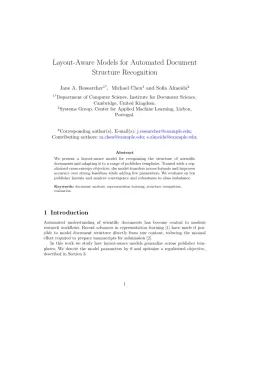
EURASIP Journal on Bioinformatics and Systems Biology template — frequently asked questions
How do I write a paper in the EURASIP Journal on Bioinformatics and Systems Biology format?
In DocuGuru you write your manuscript in a normal editor — no LaTeX setup required — and select the EURASIP Journal on Bioinformatics and Systems Biology template. When you export, DocuGuru compiles the paper into the official Springer Nature format and hands you a submission-ready PDF along with the editable LaTeX source.
What reference style does EURASIP Journal on Bioinformatics and Systems Biology use?
EURASIP Journal on Bioinformatics and Systems Biology uses Superscript numbered (Nature) references, shown as superscript numerals in the text. DocuGuru formats every in-text citation and the reference list in this exact style automatically. A reference appears like this: 1. Smith, A., Jones, B. & Lee, C. A representative article title. EURASIP Journal on Bioinformatics and Systems Biology 12, 45–58 (2023).
Do I need to know LaTeX to submit to EURASIP Journal on Bioinformatics and Systems Biology?
No. DocuGuru generates the sn-jnl LaTeX class and compiles the PDF for you in the background, so you get a Springer Nature-ready EURASIP Journal on Bioinformatics and Systems Biology document without writing any LaTeX. If you do want it, the LaTeX source is included in the export.
Can I import an existing draft into the EURASIP Journal on Bioinformatics and Systems Biology template?
Yes. Paste or upload your current manuscript — Word, LaTeX, Markdown, or plain text — and DocuGuru reflows it into the EURASIP Journal on Bioinformatics and Systems Biology format with correct headings, figures, tables, and superscript citations.
Who publishes EURASIP Journal on Bioinformatics and Systems Biology?
EURASIP Journal on Bioinformatics and Systems Biology is a multidisciplinary journal published by Springer Nature. DocuGuru's EURASIP Journal on Bioinformatics and Systems Biology template matches Springer Nature's official submission format.
Can I export a submission-ready EURASIP Journal on Bioinformatics and Systems Biology PDF?
Yes — DocuGuru produces a PDF built with the official EURASIP Journal on Bioinformatics and Systems Biology template (the sn-jnl class) that is ready to submit to Springer Nature, together with the matching LaTeX source files.
How much does the EURASIP Journal on Bioinformatics and Systems Biology template cost?
You can start writing in the EURASIP Journal on Bioinformatics and Systems Biology template for free. Exporting the final submission-ready EURASIP Journal on Bioinformatics and Systems Biology PDF and LaTeX source is part of DocuGuru's paid plans — see the app for current pricing.