
3,909 citations
Cite
SaveGo to paper →
Springer Nature
Environmental Chemistry Letters Template
Write in a clean editor, then format for Environmental Chemistry Letters in one click — DocuGuru applies the official Springer Nature template with numbered references and exports a submission-ready PDF plus the editable LaTeX source. Free to start.
About the Environmental Chemistry Letters format
Environmental Chemistry Letters is a peer-reviewed journal published by Springer Nature, covering Advanced Photocatalysis Techniques, Pharmaceutical and Antibiotic Environmental Impacts, Advanced oxidation water treatment.
| Publisher | Springer Nature |
|---|---|
| Reference style | Numbered (Springer Basic) Numbered — [1], [2] in the text 1. Smith A, Jones B, Lee C (2023) A representative article title. Environmental Chemistry Letters 12:45–58
Formats any DOI in Environmental Chemistry Letters style. No sign-up. |
| Publishes research in | Advanced Photocatalysis Techniques Pharmaceutical and Antibiotic Environmental Impacts Advanced oxidation water treatment Adsorption and biosorption for pollutant removal Microplastics and Plastic Pollution |
| ISSN | 1610-3653 |
| Citation impact (2-yr) | 28.86 |
| h-index | 187 |
| i10-index | 1,662 |
| Total citations | 159,405 |
| Article processing charge | $4,590 |
| Top institutions publishing here | Centre National de la Recherche Scientifique |
| Journal website | link.springer.com |
| You get | A submission-ready PDF and the editable LaTeX source — ready to submit. |
Papers published in Environmental Chemistry Letters per year
Citation impact of Environmental Chemistry Letters by publication year
Citations each year’s papers have accumulated so far — the most recent years are still building up.
Most-cited papers in Environmental Chemistry Letters
2,843 citations
Cite
SaveGo to paper →
1,586 citations
Cite
SaveGo to paper →
Abstract Climate change is defined as the shift in climate patterns mainly caused by greenhouse gas emissions from natural systems and human activities. So far, anthropogenic activities have caused about 1.0 °C of global warming above the pre-industrial level and this is likely to reach 1.5 °C between 2030 and 2052 if the current emission…
1,463 citations
Cite
SaveGo to paper →
1,425 citations
Cite
SaveGo to paper →
Related journal templates
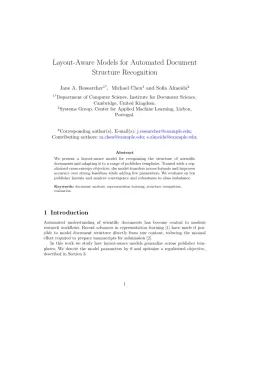
Environmental Chemistry Letters template — frequently asked questions
How do I write a paper in the Environmental Chemistry Letters format?
In DocuGuru you write your manuscript in a normal editor — no LaTeX setup required — and select the Environmental Chemistry Letters template. When you export, DocuGuru compiles the paper into the official Springer Nature format and hands you a submission-ready PDF along with the editable LaTeX source.
What reference style does Environmental Chemistry Letters use?
Environmental Chemistry Letters uses Numbered (Springer Basic) references, shown as numbered [1], [2] markers in the text. DocuGuru formats every in-text citation and the reference list in this exact style automatically. A reference appears like this: 1. Smith A, Jones B, Lee C (2023) A representative article title. Environmental Chemistry Letters 12:45–58
Do I need to know LaTeX to submit to Environmental Chemistry Letters?
No. DocuGuru generates the sn-jnl LaTeX class and compiles the PDF for you in the background, so you get a Springer Nature-ready Environmental Chemistry Letters document without writing any LaTeX. If you do want it, the LaTeX source is included in the export.
Can I import an existing draft into the Environmental Chemistry Letters template?
Yes. Paste or upload your current manuscript — Word, LaTeX, Markdown, or plain text — and DocuGuru reflows it into the Environmental Chemistry Letters format with correct headings, figures, tables, and numbered citations.
Who publishes Environmental Chemistry Letters?
Environmental Chemistry Letters is a multidisciplinary journal published by Springer Nature. DocuGuru's Environmental Chemistry Letters template matches Springer Nature's official submission format.
Can I export a submission-ready Environmental Chemistry Letters PDF?
Yes — DocuGuru produces a PDF built with the official Environmental Chemistry Letters template (the sn-jnl class) that is ready to submit to Springer Nature, together with the matching LaTeX source files.
How much does the Environmental Chemistry Letters template cost?
You can start writing in the Environmental Chemistry Letters template for free. Exporting the final submission-ready Environmental Chemistry Letters PDF and LaTeX source is part of DocuGuru's paid plans — see the app for current pricing.