
1,338 citations
Cite
SaveGo to paper →
Springer Nature
Energy Efficiency Template
Write in a clean editor, then format for Energy Efficiency in one click — DocuGuru applies the official Springer Nature template with superscript references and exports a submission-ready PDF plus the editable LaTeX source. Free to start.
About the Energy Efficiency format
Energy Efficiency is a peer-reviewed journal published by Springer Nature, covering Energy Efficiency and Management, Building Energy and Comfort Optimization, Energy, Environment, and Transportation Policies.
| Publisher | Springer Nature |
|---|---|
| Reference style | Superscript numbered (Nature) Superscript — small raised numerals in the text 1. Smith, A., Jones, B. & Lee, C. A representative article title. Energy Efficiency 12, 45–58 (2023).
Formats any DOI in Energy Efficiency style. No sign-up. |
| Publishes research in | Energy Efficiency and Management Building Energy and Comfort Optimization Energy, Environment, and Transportation Policies Environmental Impact and Sustainability Sustainable Building Design and Assessment |
| ISSN | 1570-646X |
| Citation impact (2-yr) | 3.37 |
| h-index | 73 |
| i10-index | 798 |
| Total citations | 33,616 |
| Article processing charge | $2,990 |
| Top institutions publishing here | Lawrence Berkeley National Laboratory |
| Journal website | link.springer.com |
| You get | A submission-ready PDF and the editable LaTeX source — ready to submit. |
Papers published in Energy Efficiency per year
Citation impact of Energy Efficiency by publication year
Citations each year’s papers have accumulated so far — the most recent years are still building up.
Most-cited papers in Energy Efficiency
617 citations
Cite
SaveGo to paper →
Industry contributes directly and indirectly (through consumed electricity) about 37% of the global greenhouse gas emissions, of which over 80% is from energy use. Total energy-related emissions, which were 9.9 GtCO2 in 2004, have grown by 65% since 1971. Even so, industry has almost continuously improved its energy efficiency over the past decades. In the…
428 citations
Cite
SaveGo to paper →
335 citations
Cite
SaveGo to paper →
Cool roofs—roofs that stay cool in the sun by minimizing solar absorption and maximizing thermal emission—lessen the flow of heat from the roof into the building, reducing the need for space cooling energy in conditioned buildings. Cool roofs may also increase the need for heating energy in cold climates. For a commercial building, the decrease…
260 citations
Cite
SaveGo to paper →
Related journal templates
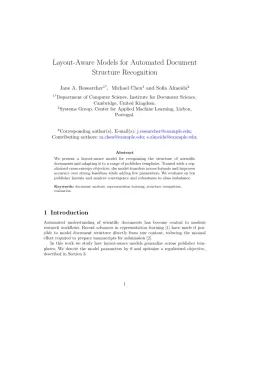
Energy Efficiency template — frequently asked questions
How do I write a paper in the Energy Efficiency format?
In DocuGuru you write your manuscript in a normal editor — no LaTeX setup required — and select the Energy Efficiency template. When you export, DocuGuru compiles the paper into the official Springer Nature format and hands you a submission-ready PDF along with the editable LaTeX source.
What reference style does Energy Efficiency use?
Energy Efficiency uses Superscript numbered (Nature) references, shown as superscript numerals in the text. DocuGuru formats every in-text citation and the reference list in this exact style automatically. A reference appears like this: 1. Smith, A., Jones, B. & Lee, C. A representative article title. Energy Efficiency 12, 45–58 (2023).
Do I need to know LaTeX to submit to Energy Efficiency?
No. DocuGuru generates the sn-jnl LaTeX class and compiles the PDF for you in the background, so you get a Springer Nature-ready Energy Efficiency document without writing any LaTeX. If you do want it, the LaTeX source is included in the export.
Can I import an existing draft into the Energy Efficiency template?
Yes. Paste or upload your current manuscript — Word, LaTeX, Markdown, or plain text — and DocuGuru reflows it into the Energy Efficiency format with correct headings, figures, tables, and superscript citations.
Who publishes Energy Efficiency?
Energy Efficiency is a multidisciplinary journal published by Springer Nature. DocuGuru's Energy Efficiency template matches Springer Nature's official submission format.
Can I export a submission-ready Energy Efficiency PDF?
Yes — DocuGuru produces a PDF built with the official Energy Efficiency template (the sn-jnl class) that is ready to submit to Springer Nature, together with the matching LaTeX source files.
How much does the Energy Efficiency template cost?
You can start writing in the Energy Efficiency template for free. Exporting the final submission-ready Energy Efficiency PDF and LaTeX source is part of DocuGuru's paid plans — see the app for current pricing.