
714 citations
Cite
SaveGo to paper →
Springer Nature
Drug Delivery and Translational Research Template
Write in a clean editor, then format for Drug Delivery and Translational Research in one click — DocuGuru applies the official Springer Nature template with superscript references and exports a submission-ready PDF plus the editable LaTeX source. Free to start.
About the Drug Delivery and Translational Research format
Drug Delivery and Translational Research is a peer-reviewed journal published by Springer Nature, covering Advanced Drug Delivery Systems, Advancements in Transdermal Drug Delivery, Nanoparticle-Based Drug Delivery.
| Publisher | Springer Nature |
|---|---|
| Reference style | Superscript numbered (Nature) Superscript — small raised numerals in the text 1. Smith, A., Jones, B. & Lee, C. A representative article title. Drug Delivery and Translational Research 12, 45–58 (2023).
Formats any DOI in Drug Delivery and Translational Research style. No sign-up. |
| Publishes research in | Advanced Drug Delivery Systems Advancements in Transdermal Drug Delivery Nanoparticle-Based Drug Delivery RNA Interference and Gene Delivery Drug Solubulity and Delivery Systems |
| ISSN | 2190-393X |
| Citation impact (2-yr) | 6.53 |
| h-index | 89 |
| i10-index | 1,296 |
| Total citations | 55,450 |
| Article processing charge | $4,190 |
| Top institutions publishing here | Queen's University Belfast |
| Journal website | link.springer.com |
| You get | A submission-ready PDF and the editable LaTeX source — ready to submit. |
Papers published in Drug Delivery and Translational Research per year
Citation impact of Drug Delivery and Translational Research by publication year
Citations each year’s papers have accumulated so far — the most recent years are still building up.
Most-cited papers in Drug Delivery and Translational Research
Transdermal drug delivery systems have become an intriguing research topic in pharmaceutical technology area and one of the most frequently developed pharmaceutical products in global market. The use of these systems can overcome associated drawbacks of other delivery routes, such as oral and parenteral. The authors will review current trends, and future applications of transdermal…
623 citations
Cite
SaveGo to paper →
Over the past 10 years, the interest in intranasal drug delivery in pharmaceutical R&D has increased. This review article summarises information on intranasal administration for local and systemic delivery, as well as for CNS indications. Nasal delivery offers many advantages over standard systemic delivery systems, such as its non-invasive character, a fast onset of action…
565 citations
Cite
SaveGo to paper →
The field of nanomedicine has significantly influenced research areas such as drug delivery, diagnostics, theranostics, and regenerative medicine; however, the further development of this field will face significant challenges at the regulatory level if related guidance remains unclear and unconsolidated. This review describes those features and pathways crucial to the clinical translation of nanomedicine and…
556 citations
Cite
SaveGo to paper →
Nasal delivery is the logical choice for topical treatment of local diseases in the nose and paranasal sinuses such as allergic and non-allergic rhinitis and sinusitis. The nose is also considered an attractive route for needle-free vaccination and for systemic drug delivery, especially when rapid absorption and effect are desired. In addition, nasal delivery may…
548 citations
Cite
SaveGo to paper →
Related journal templates
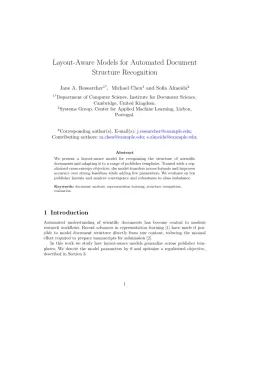
Drug Delivery and Translational Research template — frequently asked questions
How do I write a paper in the Drug Delivery and Translational Research format?
In DocuGuru you write your manuscript in a normal editor — no LaTeX setup required — and select the Drug Delivery and Translational Research template. When you export, DocuGuru compiles the paper into the official Springer Nature format and hands you a submission-ready PDF along with the editable LaTeX source.
What reference style does Drug Delivery and Translational Research use?
Drug Delivery and Translational Research uses Superscript numbered (Nature) references, shown as superscript numerals in the text. DocuGuru formats every in-text citation and the reference list in this exact style automatically. A reference appears like this: 1. Smith, A., Jones, B. & Lee, C. A representative article title. Drug Delivery and Translational Research 12, 45–58 (2023).
Do I need to know LaTeX to submit to Drug Delivery and Translational Research?
No. DocuGuru generates the sn-jnl LaTeX class and compiles the PDF for you in the background, so you get a Springer Nature-ready Drug Delivery and Translational Research document without writing any LaTeX. If you do want it, the LaTeX source is included in the export.
Can I import an existing draft into the Drug Delivery and Translational Research template?
Yes. Paste or upload your current manuscript — Word, LaTeX, Markdown, or plain text — and DocuGuru reflows it into the Drug Delivery and Translational Research format with correct headings, figures, tables, and superscript citations.
Who publishes Drug Delivery and Translational Research?
Drug Delivery and Translational Research is a multidisciplinary journal published by Springer Nature. DocuGuru's Drug Delivery and Translational Research template matches Springer Nature's official submission format.
Can I export a submission-ready Drug Delivery and Translational Research PDF?
Yes — DocuGuru produces a PDF built with the official Drug Delivery and Translational Research template (the sn-jnl class) that is ready to submit to Springer Nature, together with the matching LaTeX source files.
How much does the Drug Delivery and Translational Research template cost?
You can start writing in the Drug Delivery and Translational Research template for free. Exporting the final submission-ready Drug Delivery and Translational Research PDF and LaTeX source is part of DocuGuru's paid plans — see the app for current pricing.