Springer Nature

Carbon Neutrality Template

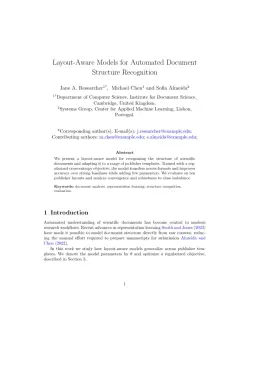
Write in a clean editor, then format for Carbon Neutrality in one click — DocuGuru applies the official Springer Nature template with superscript references and exports a submission-ready PDF plus the editable LaTeX source. Free to start.

About the Carbon Neutrality format

Carbon Neutrality is a peer-reviewed journal published by Springer Nature, covering Carbon Dioxide Capture Technologies, Integrated Energy Systems Optimization, Advancements in Battery Materials.

PublisherSpringer Nature
Reference styleSuperscript numbered (Nature)
Superscript — small raised numerals in the text
1. Smith, A., Jones, B. & Lee, C. A representative article title. Carbon Neutrality 12, 45–58 (2023).

Formats any DOI in Carbon Neutrality style. No sign-up.

Publishes research inCarbon Dioxide Capture Technologies Integrated Energy Systems Optimization Advancements in Battery Materials Hybrid Renewable Energy Systems Electrocatalysts for Energy Conversion
ISSN2731-3948
Citation impact (2-yr)11.87
h-index35
i10-index111
Total citations4,499
Open accessYes
Top institutions publishing hereShanghai Jiao Tong University
You getA submission-ready PDF and the editable LaTeX source — ready to submit.

Papers published in Carbon Neutrality per year

40
2022
35
2023
39
2024
40
2025

Citation impact of Carbon Neutrality by publication year

2K
2022
1.3K
2023
796
2024
317
2025

Citations each year’s papers have accumulated so far — the most recent years are still building up.

Most-cited papers in Carbon Neutrality

PEM water electrolysis for hydrogen production: fundamentals, advances, and prospects

Tongzhou Wang, Xuejie Cao, Lifang Jiao · 2 Jun 2022

Abstract Hydrogen, as a clean energy carrier, is of great potential to be an alternative fuel in the future. Proton exchange membrane (PEM) water electrolysis is hailed as the most desired technology for high purity hydrogen production and self-consistent with volatility of renewable energies, has ignited much attention in the past decades based on the…

China’s energy transitions for carbon neutrality: challenges and opportunities

Changying Zhao, Shenghong Ju, Yuan Xue et al. · 19 Apr 2022

Abstract The pledge of achieving carbon peak before 2030 and carbon neutrality before 2060 is a strategic decision that responds to the inherent needs of China’s sustainable and high-quality development, and is an important driving force for promoting China’s ecological civilization constructions. As the consumption of fossil fuel energy is responsible for more than 90%…

Recent progress of quantum dots for energy storage applications

Quan Xu, Yingchun Niu, Jiapeng Li et al. · 19 Apr 2022

Abstract The environmental problems of global warming and fossil fuel depletion are increasingly severe, and the demand for energy conversion and storage is increasing. Ecological issues such as global warming and fossil fuel depletion are increasingly stringent, increasing energy conversion and storage needs. The rapid development of clean energy, such as solar energy, wind energy…

Assessment of wind and photovoltaic power potential in China

Yang Wang, Qingchen Chao, Lin Zhao et al. · 6 May 2022

Abstract Decarbonization of the energy system is the key to China’s goal of achieving carbon neutrality by 2060. However, the potential of wind and photovoltaic (PV) to power China remains unclear, hindering the holistic layout of the renewable energy development plan. Here, we used the wind and PV power generation potential assessment system based on…

Ammonia combustion and emissions in practical applications: a review

Mohammad Alnajideen, Hao Shi, William F. Northrop et al. · 2 May 2024

Abstract Ammonia is emerging as a viable alternative to fossil fuels in combustion systems, aiding in the reduction of carbon emissions. However, its use faces challenges, including NOx emissions and low flame speed. Innovative approaches and technologies have significantly advanced the development and implementation of ammonia as a zero-carbon fuel. This review explores current advancements…

Carbon Neutrality template — frequently asked questions

How do I write a paper in the Carbon Neutrality format?
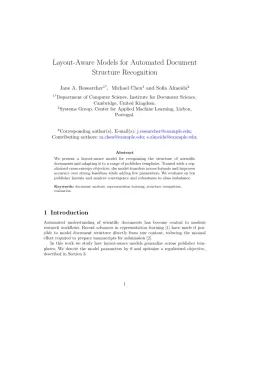
In DocuGuru you write your manuscript in a normal editor — no LaTeX setup required — and select the Carbon Neutrality template. When you export, DocuGuru compiles the paper into the official Springer Nature format and hands you a submission-ready PDF along with the editable LaTeX source.
What reference style does Carbon Neutrality use?
Carbon Neutrality uses Superscript numbered (Nature) references, shown as superscript numerals in the text. DocuGuru formats every in-text citation and the reference list in this exact style automatically. A reference appears like this: 1. Smith, A., Jones, B. & Lee, C. A representative article title. Carbon Neutrality 12, 45–58 (2023).
Do I need to know LaTeX to submit to Carbon Neutrality?
No. DocuGuru generates the sn-jnl LaTeX class and compiles the PDF for you in the background, so you get a Springer Nature-ready Carbon Neutrality document without writing any LaTeX. If you do want it, the LaTeX source is included in the export.
Can I import an existing draft into the Carbon Neutrality template?
Yes. Paste or upload your current manuscript — Word, LaTeX, Markdown, or plain text — and DocuGuru reflows it into the Carbon Neutrality format with correct headings, figures, tables, and superscript citations.
Who publishes Carbon Neutrality?
Carbon Neutrality is a multidisciplinary journal published by Springer Nature. DocuGuru's Carbon Neutrality template matches Springer Nature's official submission format.
Can I export a submission-ready Carbon Neutrality PDF?
Yes — DocuGuru produces a PDF built with the official Carbon Neutrality template (the sn-jnl class) that is ready to submit to Springer Nature, together with the matching LaTeX source files.
How much does the Carbon Neutrality template cost?
You can start writing in the Carbon Neutrality template for free. Exporting the final submission-ready Carbon Neutrality PDF and LaTeX source is part of DocuGuru's paid plans — see the app for current pricing.
Use the Carbon Neutrality template