
544 citations
Cite
SaveGo to paper →
Springer Nature
Carbon letters Template
Write in a clean editor, then format for Carbon letters in one click — DocuGuru applies the official Springer Nature template with superscript references and exports a submission-ready PDF plus the editable LaTeX source. Free to start.
About the Carbon letters format
Carbon letters is a peer-reviewed journal published by Springer Nature, covering Supercapacitor Materials and Fabrication, Graphene research and applications, Fiber-reinforced polymer composites.
| Publisher | Springer Nature |
|---|---|
| Reference style | Superscript numbered (Nature) Superscript — small raised numerals in the text 1. Smith, A., Jones, B. & Lee, C. A representative article title. Carbon letters 12, 45–58 (2023).
Formats any DOI in Carbon letters style. No sign-up. |
| Publishes research in | Supercapacitor Materials and Fabrication Graphene research and applications Fiber-reinforced polymer composites Advancements in Battery Materials Carbon Nanotubes in Composites |
| ISSN | 1976-4251 |
| Citation impact (2-yr) | 6.56 |
| h-index | 63 |
| i10-index | 759 |
| Total citations | 26,973 |
| Article processing charge | $2,890 |
| Top institutions publishing here | Chungnam National University |
| Journal website | www.springer.com |
| You get | A submission-ready PDF and the editable LaTeX source — ready to submit. |
Papers published in Carbon letters per year
Citation impact of Carbon letters by publication year
Citations each year’s papers have accumulated so far — the most recent years are still building up.
Most-cited papers in Carbon letters
The carbon nanotube (CNT) represents one of the most unique inventions in the field of nanotechnology. CNTs have been studied closely over the last two decades by many researchers around the world due to their great potential in different fields. CNTs are rolled graphene with <TEX>$SP^2$</TEX> hybridization. The important aspects of CNTs are their light…
498 citations
Cite
SaveGo to paper →
346 citations
Cite
SaveGo to paper →
284 citations
Cite
SaveGo to paper →
Copyright © Korean Carbon Society http://carbonlett.org Over the years, the furnace has been used as a common heating method to manufacture activated carbon. In a furnace, heat is transferred through conduction and convection. The outer surface of the sample is in contact with the generated heat, which slowly diffuses inwards as a result of the…
283 citations
Cite
SaveGo to paper →
Related journal templates
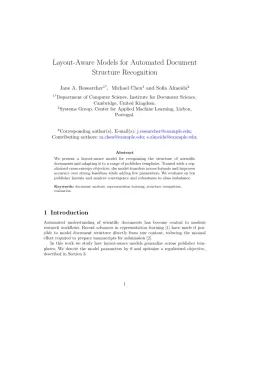
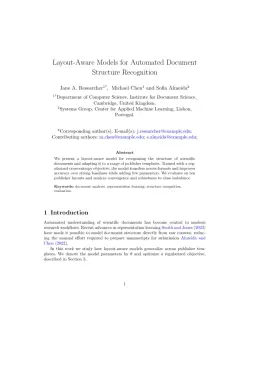
Carbon letters template — frequently asked questions
How do I write a paper in the Carbon letters format?
In DocuGuru you write your manuscript in a normal editor — no LaTeX setup required — and select the Carbon letters template. When you export, DocuGuru compiles the paper into the official Springer Nature format and hands you a submission-ready PDF along with the editable LaTeX source.
What reference style does Carbon letters use?
Carbon letters uses Superscript numbered (Nature) references, shown as superscript numerals in the text. DocuGuru formats every in-text citation and the reference list in this exact style automatically. A reference appears like this: 1. Smith, A., Jones, B. & Lee, C. A representative article title. Carbon letters 12, 45–58 (2023).
Do I need to know LaTeX to submit to Carbon letters?
No. DocuGuru generates the sn-jnl LaTeX class and compiles the PDF for you in the background, so you get a Springer Nature-ready Carbon letters document without writing any LaTeX. If you do want it, the LaTeX source is included in the export.
Can I import an existing draft into the Carbon letters template?
Yes. Paste or upload your current manuscript — Word, LaTeX, Markdown, or plain text — and DocuGuru reflows it into the Carbon letters format with correct headings, figures, tables, and superscript citations.
Who publishes Carbon letters?
Carbon letters is a multidisciplinary journal published by Springer Nature. DocuGuru's Carbon letters template matches Springer Nature's official submission format.
Can I export a submission-ready Carbon letters PDF?
Yes — DocuGuru produces a PDF built with the official Carbon letters template (the sn-jnl class) that is ready to submit to Springer Nature, together with the matching LaTeX source files.
How much does the Carbon letters template cost?
You can start writing in the Carbon letters template for free. Exporting the final submission-ready Carbon letters PDF and LaTeX source is part of DocuGuru's paid plans — see the app for current pricing.