
77 citations
Cite
SaveGo to paper →
Springer Nature
Biophysical Economics and Sustainability Template
Write in a clean editor, then format for Biophysical Economics and Sustainability in one click — DocuGuru applies the official Springer Nature template with superscript references and exports a submission-ready PDF plus the editable LaTeX source. Free to start.
About the Biophysical Economics and Sustainability format
Biophysical Economics and Sustainability is a peer-reviewed journal published by Springer Nature, covering Global Energy and Sustainability Research, Environmental Impact and Sustainability, Energy, Environment, and Transportation Policies.
| Publisher | Springer Nature |
|---|---|
| Reference style | Superscript numbered (Nature) Superscript — small raised numerals in the text 1. Smith, A., Jones, B. & Lee, C. A representative article title. Biophysical Economics and Sustainability 12, 45–58 (2023).
Formats any DOI in Biophysical Economics and Sustainability style. No sign-up. |
| Publishes research in | Global Energy and Sustainability Research Environmental Impact and Sustainability Energy, Environment, and Transportation Policies Energy, Environment, Economic Growth Market Dynamics and Volatility |
| ISSN | 2730-7190 |
| Citation impact (2-yr) | 4.3 |
| h-index | 15 |
| i10-index | 20 |
| Total citations | 638 |
| Article processing charge | $3,390 |
| Top institutions publishing here | University of Iceland |
| Journal website | link.springer.com |
| You get | A submission-ready PDF and the editable LaTeX source — ready to submit. |
Papers published in Biophysical Economics and Sustainability per year
Citation impact of Biophysical Economics and Sustainability by publication year
Citations each year’s papers have accumulated so far — the most recent years are still building up.
Most-cited papers in Biophysical Economics and Sustainability
54 citations
Cite
SaveGo to paper →
Abstract From typhoons to wildfires, as the visible impacts of climate change mount, calls for mitigation through carbon drawdown are escalating. Environmentalists and many climatologists are urging steps to enhance biological methods of carbon drawdown and sequestration. Market actors seeing avenues for profit have launched ventures in mechanical–chemical carbon dioxide removal (CDR), seeking government support…
52 citations
Cite
SaveGo to paper →
Abstract The sustainability of the helium production, supply and use was assessed using the WORLD7 integrated model. The use of helium is at present concluded to be unsustainable with respect to long-term supply security, because of lack of significant recycling. There is no risk for significant helium scarcity in the short term (before 2030), but…
35 citations
Cite
SaveGo to paper →
32 citations
Cite
SaveGo to paper →
Related journal templates
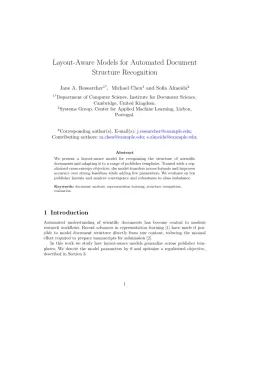
Biophysical Economics and Sustainability template — frequently asked questions
How do I write a paper in the Biophysical Economics and Sustainability format?
In DocuGuru you write your manuscript in a normal editor — no LaTeX setup required — and select the Biophysical Economics and Sustainability template. When you export, DocuGuru compiles the paper into the official Springer Nature format and hands you a submission-ready PDF along with the editable LaTeX source.
What reference style does Biophysical Economics and Sustainability use?
Biophysical Economics and Sustainability uses Superscript numbered (Nature) references, shown as superscript numerals in the text. DocuGuru formats every in-text citation and the reference list in this exact style automatically. A reference appears like this: 1. Smith, A., Jones, B. & Lee, C. A representative article title. Biophysical Economics and Sustainability 12, 45–58 (2023).
Do I need to know LaTeX to submit to Biophysical Economics and Sustainability?
No. DocuGuru generates the sn-jnl LaTeX class and compiles the PDF for you in the background, so you get a Springer Nature-ready Biophysical Economics and Sustainability document without writing any LaTeX. If you do want it, the LaTeX source is included in the export.
Can I import an existing draft into the Biophysical Economics and Sustainability template?
Yes. Paste or upload your current manuscript — Word, LaTeX, Markdown, or plain text — and DocuGuru reflows it into the Biophysical Economics and Sustainability format with correct headings, figures, tables, and superscript citations.
Who publishes Biophysical Economics and Sustainability?
Biophysical Economics and Sustainability is a multidisciplinary journal published by Springer Nature. DocuGuru's Biophysical Economics and Sustainability template matches Springer Nature's official submission format.
Can I export a submission-ready Biophysical Economics and Sustainability PDF?
Yes — DocuGuru produces a PDF built with the official Biophysical Economics and Sustainability template (the sn-jnl class) that is ready to submit to Springer Nature, together with the matching LaTeX source files.
How much does the Biophysical Economics and Sustainability template cost?
You can start writing in the Biophysical Economics and Sustainability template for free. Exporting the final submission-ready Biophysical Economics and Sustainability PDF and LaTeX source is part of DocuGuru's paid plans — see the app for current pricing.