Springer Nature

Biomechanics and Modeling in Mechanobiology Template

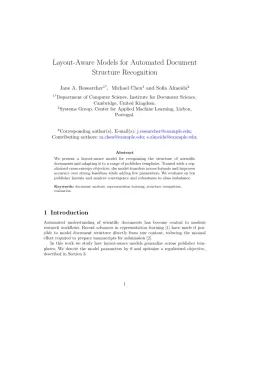
Write in a clean editor, then format for Biomechanics and Modeling in Mechanobiology in one click — DocuGuru applies the official Springer Nature template with numbered references and exports a submission-ready PDF plus the editable LaTeX source. Free to start.

About the Biomechanics and Modeling in Mechanobiology format

Biomechanics and Modeling in Mechanobiology is a peer-reviewed journal published by Springer Nature, covering Elasticity and Material Modeling, Cellular Mechanics and Interactions, Coronary Interventions and Diagnostics.

PublisherSpringer Nature
Reference styleNumbered (Springer Basic)
Numbered — [1], [2] in the text
1. Smith A, Jones B, Lee C (2023) A representative article title. Biomechanics and Modeling in Mechanobiology 12:45–58

Formats any DOI in Biomechanics and Modeling in Mechanobiology style. No sign-up.

Publishes research inElasticity and Material Modeling Cellular Mechanics and Interactions Coronary Interventions and Diagnostics Bone health and osteoporosis research Orthopaedic implants and arthroplasty
ISSN1617-7940
Citation impact (2-yr)3.09
h-index106
i10-index1,473
Total citations67,583
Article processing charge$3,590
Top institutions publishing hereCentre National de la Recherche Scientifique
Journal websitewww.springer.com
You getA submission-ready PDF and the editable LaTeX source — ready to submit.

Papers published in Biomechanics and Modeling in Mechanobiology per year

97
2014
110
2015
110
2016
127
2017
110
2018
172
2019
125
2020
132
2021
136
2022
122
2023
120
2024
122
2025

Citation impact of Biomechanics and Modeling in Mechanobiology by publication year

3.7K
2014
4.2K
2015
4.3K
2016
3.1K
2017
2.9K
2018
4.6K
2019
3.1K
2020
2.6K
2021
1.6K
2022
1.2K
2023
634
2024
249
2025

Citations each year’s papers have accumulated so far — the most recent years are still building up.

Most-cited papers in Biomechanics and Modeling in Mechanobiology

Experimental investigation of collagen waviness and orientation in the arterial adventitia using confocal laser scanning microscopy

Rana Rezakhaniha, Aristotelis Agianniotis, Jelle T. C. Schrauwen et al. · 9 Jul 2011

Mechanical properties of the adventitia are largely determined by the organization of collagen fibers. Measurements on the waviness and orientation of collagen, particularly at the zero-stress state, are necessary to relate the structural organization of collagen to the mechanical response of the adventitia. Using the fluorescence collagen marker CNA38-OG488 and confocal laser scanning microscopy, we…

1,113 citations Cite SaveGo to paper →
Mechanics of the brain: perspectives, challenges, and opportunities

Alain Goriely, M.G.D. Geers, Gerhard A. Holzapfel et al. · 25 Feb 2015

The human brain is the continuous subject of extensive investigation aimed at understanding its behavior and function. Despite a clear evidence that mechanical factors play an important role in regulating brain activity, current research efforts focus mainly on the biochemical or electrophysiological activity of the brain. Here, we show that classical mechanical concepts including deformations,…

Biomechanics and Modeling in Mechanobiology template — frequently asked questions

How do I write a paper in the Biomechanics and Modeling in Mechanobiology format?
In DocuGuru you write your manuscript in a normal editor — no LaTeX setup required — and select the Biomechanics and Modeling in Mechanobiology template. When you export, DocuGuru compiles the paper into the official Springer Nature format and hands you a submission-ready PDF along with the editable LaTeX source.
What reference style does Biomechanics and Modeling in Mechanobiology use?
Biomechanics and Modeling in Mechanobiology uses Numbered (Springer Basic) references, shown as numbered [1], [2] markers in the text. DocuGuru formats every in-text citation and the reference list in this exact style automatically. A reference appears like this: 1. Smith A, Jones B, Lee C (2023) A representative article title. Biomechanics and Modeling in Mechanobiology 12:45–58
Do I need to know LaTeX to submit to Biomechanics and Modeling in Mechanobiology?
No. DocuGuru generates the sn-jnl LaTeX class and compiles the PDF for you in the background, so you get a Springer Nature-ready Biomechanics and Modeling in Mechanobiology document without writing any LaTeX. If you do want it, the LaTeX source is included in the export.
Can I import an existing draft into the Biomechanics and Modeling in Mechanobiology template?
Yes. Paste or upload your current manuscript — Word, LaTeX, Markdown, or plain text — and DocuGuru reflows it into the Biomechanics and Modeling in Mechanobiology format with correct headings, figures, tables, and numbered citations.
Who publishes Biomechanics and Modeling in Mechanobiology?
Biomechanics and Modeling in Mechanobiology is a multidisciplinary journal published by Springer Nature. DocuGuru's Biomechanics and Modeling in Mechanobiology template matches Springer Nature's official submission format.
Can I export a submission-ready Biomechanics and Modeling in Mechanobiology PDF?
Yes — DocuGuru produces a PDF built with the official Biomechanics and Modeling in Mechanobiology template (the sn-jnl class) that is ready to submit to Springer Nature, together with the matching LaTeX source files.
How much does the Biomechanics and Modeling in Mechanobiology template cost?
You can start writing in the Biomechanics and Modeling in Mechanobiology template for free. Exporting the final submission-ready Biomechanics and Modeling in Mechanobiology PDF and LaTeX source is part of DocuGuru's paid plans — see the app for current pricing.

Use the Biomechanics and Modeling in Mechanobiology template