SAGE

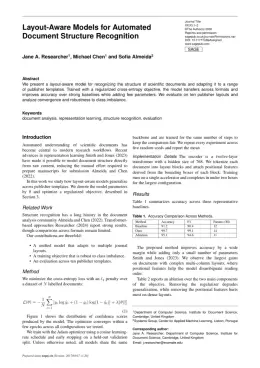
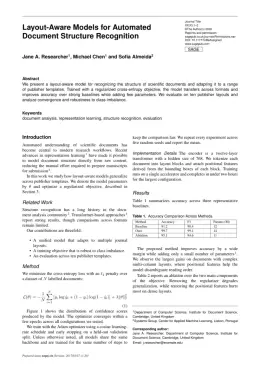
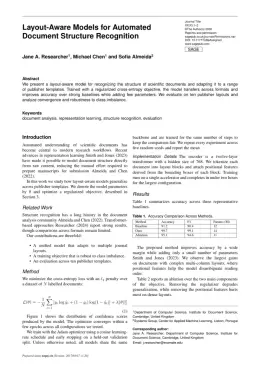
Biomedical Engineering and Computational Biology Template

Write in a clean editor, then format for Biomedical Engineering and Computational Biology in one click — DocuGuru applies the official SAGE template with author–year references and exports a submission-ready PDF plus the editable LaTeX source. Free to start.

About the Biomedical Engineering and Computational Biology format

Biomedical Engineering and Computational Biology is a peer-reviewed journal published by SAGE, covering AI in cancer detection, Computational Drug Discovery Methods, EEG and Brain-Computer Interfaces.

PublisherSAGE
Reference styleAuthor–year (Harvard)
Author–year — (Smith, 2023) in the text
Smith, A., Jones, B. and Lee, C. (2023) 'A representative article title', Biomedical Engineering and Computational Biology, 12(3), pp. 45–58.

Formats any DOI in Biomedical Engineering and Computational Biology style. No sign-up.

Publishes research inAI in cancer detection Computational Drug Discovery Methods EEG and Brain-Computer Interfaces Radiomics and Machine Learning in Medical Imaging Neuroscience and Neural Engineering
ISSN1179-5972
Citation impact (2-yr)2.31
h-index19
i10-index26
Total citations1,185
Article processing charge$1,848
Open accessYes
Top institutions publishing hereSaveetha University
Journal websitejournals.sagepub.com
You getA submission-ready PDF and the editable LaTeX source — ready to submit.

Papers published in Biomedical Engineering and Computational Biology per year

9
2013
2
2014
11
2016
3
2017
4
2018
2
2019
3
2020
2
2021
2
2022
8
2023
22
2024
22
2025

Citation impact of Biomedical Engineering and Computational Biology by publication year

84
2013
100
2014
355
2016
55
2017
30
2018
75
2019
81
2020
45
2021
25
2022
104
2023
100
2024
30
2025

Citations each year’s papers have accumulated so far — the most recent years are still building up.

Most-cited papers in Biomedical Engineering and Computational Biology

A Review of Imaging Methods for Prostate Cancer Detection

Saradwata Sarkar, Sudipta Das · 1 Jan 2016

Imaging is playing an increasingly important role in the detection of prostate cancer (PCa). This review summarizes the key imaging modalities-multiparametric ultrasound (US), multiparametric magnetic resonance imaging (MRI), MRI-US fusion imaging, and positron emission tomography (PET) imaging-used in the diagnosis and localization of PCa. Emphasis is laid on the biological and functional characteristics of tumors…

Lung-On-A-Chip Technologies for Disease Modeling and Drug Development

Dipasri Konar, Mahesh Devarasetty, Didem Venüs Yıldız et al. · 1 Jan 2016

Animal and two-dimensional cell culture models have had a profound impact on not only lung research but also medical research at large, despite inherent flaws and differences when compared with in vivo and clinical observations. Three-dimensional (3D) tissue models are a natural progression and extension of existing techniques that seek to plug the gaps and…

Artificial Neural Networks as Decision Support Tools in Cytopathology: Past, Present, and Future

Abraham Pouliakis, Efrossyni Karakitsou, Niki Margari et al. · 1 Jan 2016

OBJECTIVE: This study aims to analyze the role of artificial neural networks (ANNs) in cytopathology. More specifically, it aims to highlight the importance of employing ANNs in existing and future applications and in identifying unexplored or poorly explored research topics. STUDY DESIGN: A systematic search was conducted in scientific databases for articles related to cytopathology…

Design Strategies of Biodegradable Scaffolds for Tissue Regeneration

Khalil N. Bitar, Elie Zakhem · 1 Jan 2014

There are numerous available biodegradable materials that can be used as scaffolds in regenerative medicine. Currently, there is a huge emphasis on the designing phase of the scaffolds. Materials can be designed to have different properties in order to match the specific application. Modifying scaffolds enhances their bioactivity and improves the regeneration capacity. Modifications of…

Next-Generation Microfluidics for Biomedical Research and Healthcare Applications

Muhammedin Deliorman, Dima Ali, Mohammad A. Qasaimeh · 1 Jan 2023

Microfluidic systems offer versatile biomedical tools and methods to enhance human convenience and health. Advances in these systems enables next-generation microfluidics that integrates automation, manipulation, and smart readout systems, as well as design and three-dimensional (3D) printing for precise production of microchannels and other microstructures rapidly and with great flexibility. These 3D-printed microfluidic platforms not…

Biomedical Engineering and Computational Biology template — frequently asked questions

How do I write a paper in the Biomedical Engineering and Computational Biology format?
In DocuGuru you write your manuscript in a normal editor — no LaTeX setup required — and select the Biomedical Engineering and Computational Biology template. When you export, DocuGuru compiles the paper into the official SAGE format and hands you a submission-ready PDF along with the editable LaTeX source.
What reference style does Biomedical Engineering and Computational Biology use?
Biomedical Engineering and Computational Biology uses Author–year (Harvard) references, shown as author–year markers such as (Smith, 2023) in the text. DocuGuru formats every in-text citation and the reference list in this exact style automatically. A reference appears like this: Smith, A., Jones, B. and Lee, C. (2023) 'A representative article title', Biomedical Engineering and Computational Biology, 12(3), pp. 45–58.
Do I need to know LaTeX to submit to Biomedical Engineering and Computational Biology?
No. DocuGuru generates the sagej LaTeX class and compiles the PDF for you in the background, so you get a SAGE-ready Biomedical Engineering and Computational Biology document without writing any LaTeX. If you do want it, the LaTeX source is included in the export.
Can I import an existing draft into the Biomedical Engineering and Computational Biology template?
Yes. Paste or upload your current manuscript — Word, LaTeX, Markdown, or plain text — and DocuGuru reflows it into the Biomedical Engineering and Computational Biology format with correct headings, figures, tables, and author–year citations.
Who publishes Biomedical Engineering and Computational Biology?
Biomedical Engineering and Computational Biology is a multidisciplinary journal published by SAGE. DocuGuru's Biomedical Engineering and Computational Biology template matches SAGE's official submission format.
Can I export a submission-ready Biomedical Engineering and Computational Biology PDF?
Yes — DocuGuru produces a PDF built with the official Biomedical Engineering and Computational Biology template (the sagej class) that is ready to submit to SAGE, together with the matching LaTeX source files.
How much does the Biomedical Engineering and Computational Biology template cost?
You can start writing in the Biomedical Engineering and Computational Biology template for free. Exporting the final submission-ready Biomedical Engineering and Computational Biology PDF and LaTeX source is part of DocuGuru's paid plans — see the app for current pricing.

Use the Biomedical Engineering and Computational Biology template