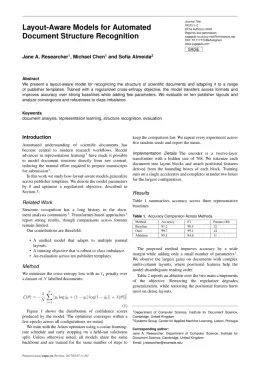
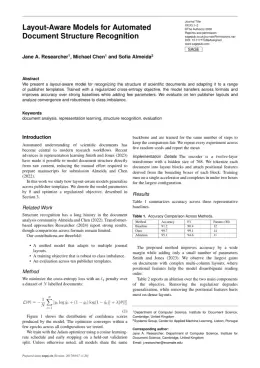
Oxford University Press

Toxicological Sciences Template

Write in a clean editor, then format for Toxicological Sciences in one click — DocuGuru applies the official Oxford University Press template with author–year references and exports a submission-ready PDF plus the editable LaTeX source. Free to start.

About the Toxicological Sciences format

Toxicological Sciences is a peer-reviewed journal published by Oxford University Press, covering Carcinogens and Genotoxicity Assessment, Effects and risks of endocrine disrupting chemicals, Toxic Organic Pollutants Impact. Over its lifetime it has published 10,562 papers, which have received 432,401 citations.

PublisherOxford University Press
Reference styleAuthor–year (OUP)
Author–year — (Smith, 2023) in the text
Smith, A., Jones, B. and Lee, C. (2023) 'A representative article title', Toxicological Sciences, 12(3), pp. 45–58.

Formats any DOI in the closest standard style — Toxicological Sciences has no published style definition, so this is an approximation. No sign-up.

Publishes research inCarcinogens and Genotoxicity Assessment Effects and risks of endocrine disrupting chemicals Toxic Organic Pollutants Impact Pesticide Exposure and Toxicity Air Quality and Health Impacts
ISSN1096-0929
Citation impact (2-yr)5.34
h-index239
i10-index6,314
Article processing charge$4,278
Top institutions publishing hereResearch Triangle Park Foundation
Journal websitetoxsci.oxfordjournals.org
You getA submission-ready PDF and the editable LaTeX source — ready to submit.

Papers published in Toxicological Sciences per year

287
2014
319
2015
319
2016
294
2017
315
2018
251
2019
191
2020
160
2021
140
2022
131
2023
165
2024
187
2025

Citation impact of Toxicological Sciences by publication year

13.2K
2014
13.4K
2015
10.6K
2016
9.2K
2017
11.9K
2018
6.9K
2019
4.7K
2020
3.3K
2021
2.4K
2022
1.7K
2023
1.8K
2024
404
2025

Citations each year’s papers have accumulated so far — the most recent years are still building up.

Most-cited papers in Toxicological Sciences

The 2005 World Health Organization Reevaluation of Human and Mammalian Toxic Equivalency Factors for Dioxins and Dioxin-Like Compounds

Martin van den Berg, Linda S. Birnbaum, Michael S. Denison et al. · 7 Jul 2006

In June 2005, a World Health Organization (WHO)-International Programme on Chemical Safety expert meeting was held in Geneva during which the toxic equivalency factors (TEFs) for dioxin-like compounds, including some polychlorinated biphenyls (PCBs), were reevaluated. For this reevaluation process, the refined TEF database recently published by Haws et al. (2006, Toxicol. Sci. 89, 4-30) was…

3,769 citations Cite SaveGo to paper →
Perfluoroalkyl Acids: A Review of Monitoring and Toxicological Findings

Christopher Lau, Katherine Anitole, Colette S. Hodes et al. · 22 May 2007

In recent years, human and wildlife monitoring studies have identified perfluoroalkyl acids (PFAA) worldwide. This has led to efforts to better understand the hazards that may be inherent in these compounds, as well as the global distribution of the PFAAs. Much attention has focused on understanding the toxicology of the two most widely known PFAAs,…

2,579 citations Cite SaveGo to paper →
Pulmonary Toxicity of Single-Wall Carbon Nanotubes in Mice 7 and 90 Days After Intratracheal Instillation

C. W.-K. Lam · 29 Sep 2003

Nanomaterials are part of an industrial revolution to develop lightweight but strong materials for a variety of purposes. Single-wall carbon nanotubes are an important member of this class of materials. They structurally resemble rolled-up graphite sheets, usually with one end capped; individually they are about 1 nm in diameter and several microns long, but they…

1,993 citations Cite SaveGo to paper →
Comparative Pulmonary Toxicity Assessment of Single-wall Carbon Nanotubes in Rats

David B. Warheit · 29 Sep 2003

The aim of this study was to evaluate the acute lung toxicity of intratracheally instilled single-wall carbon nanotubes (SWCNT) in rats. The lungs of rats were instilled either with 1 or 5 mg/kg of the following control or particle types: (1) SWCNT, (2) quartz particles (positive control), (3) carbonyl iron particles (negative control), (4) phosphate-buffered…

1,518 citations Cite SaveGo to paper →
Zebrafish as a Model Vertebrate for Investigating Chemical Toxicity

Adrian Hill, Hiroki Teraoka, Warren Heideman et al. · 9 Feb 2005

Zebrafish (Danio rerio) has been a prominent model vertebrate in a variety of biological disciplines. Substantial information gathered from developmental and genetic research, together with near-completion of the zebrafish genome project, has placed zebrafish in an attractive position for use as a toxicological model. Although still in its infancy, there is a clear potential for…

1,353 citations Cite SaveGo to paper →

Toxicological Sciences template — frequently asked questions

How do I write a paper in the Toxicological Sciences format?
In DocuGuru you write your manuscript in a normal editor — no LaTeX setup required — and select the Toxicological Sciences template. When you export, DocuGuru compiles the paper into the official Oxford University Press format and hands you a submission-ready PDF along with the editable LaTeX source.
What reference style does Toxicological Sciences use?
Toxicological Sciences uses Author–year (OUP) references, shown as author–year markers such as (Smith, 2023) in the text. DocuGuru formats every in-text citation and the reference list in this exact style automatically. A reference appears like this: Smith, A., Jones, B. and Lee, C. (2023) 'A representative article title', Toxicological Sciences, 12(3), pp. 45–58.
Do I need to know LaTeX to submit to Toxicological Sciences?
No. DocuGuru generates the oup-authoring-template LaTeX class and compiles the PDF for you in the background, so you get a Oxford University Press-ready Toxicological Sciences document without writing any LaTeX. If you do want it, the LaTeX source is included in the export.
Can I import an existing draft into the Toxicological Sciences template?
Yes. Paste or upload your current manuscript — Word, LaTeX, Markdown, or plain text — and DocuGuru reflows it into the Toxicological Sciences format with correct headings, figures, tables, and author–year citations.
What is Toxicological Sciences?
Oxford University Press journal. It is a multidisciplinary journal, published by Oxford University Press.
Can I export a submission-ready Toxicological Sciences PDF?
Yes — DocuGuru produces a PDF built with the official Toxicological Sciences template (the oup-authoring-template class) that is ready to submit to Oxford University Press, together with the matching LaTeX source files.
How much does the Toxicological Sciences template cost?
You can start writing in the Toxicological Sciences template for free. Exporting the final submission-ready Toxicological Sciences PDF and LaTeX source is part of DocuGuru's paid plans — see the app for current pricing.
Use the Toxicological Sciences template