MDPI

Fibers Template

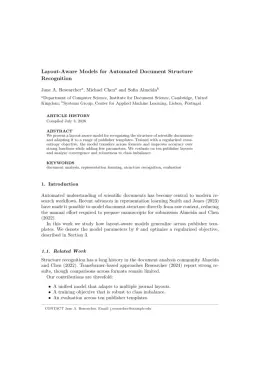
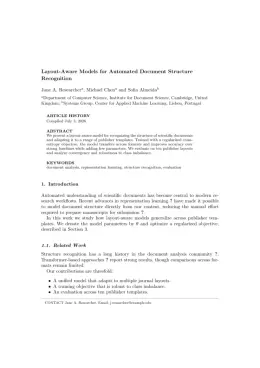
Write in a clean editor, then format for Fibers in one click — DocuGuru applies the official MDPI template with numbered references and exports a submission-ready PDF plus the editable LaTeX source. Free to start.

About the Fibers format

Fibers is a peer-reviewed journal published by MDPI, covering Natural Fiber Reinforced Composites, Innovative concrete reinforcement materials, Structural Behavior of Reinforced Concrete. Over its lifetime it has published 1,158 papers, which have received 20,622 citations.

PublisherMDPI
Reference styleNumbered (MDPI)
Numbered — [1], [2] in the text
1. Smith, A.; Jones, B.; Lee, C. A Representative Article Title. Fibers 2023, 12, 45–58.

Formats any DOI in Fibers style. No sign-up.

Publishes research inNatural Fiber Reinforced Composites Innovative concrete reinforcement materials Structural Behavior of Reinforced Concrete Electrospun Nanofibers in Biomedical Applications Textile materials and evaluations
ISSN2079-6439
Citation impact (2-yr)3.88
h-index63
i10-index528
Article processing charge$1,732
Open accessYes — indexed in DOAJ
Top institutions publishing hereCentre National de la Recherche Scientifique
Journal websitewww.mdpi.com
You getA submission-ready PDF and the editable LaTeX source — ready to submit.

Papers published in Fibers per year

22
2014
35
2015
30
2016
48
2017
99
2018
114
2019
73
2020
90
2021
161
2022
111
2023
110
2024
170
2025

Citation impact of Fibers by publication year

767
2014
988
2015
703
2016
1.2K
2017
3.5K
2018
4K
2019
1.8K
2020
2.1K
2021
2.3K
2022
1.4K
2023
828
2024
466
2025

Citations each year’s papers have accumulated so far — the most recent years are still building up.

Most-cited papers in Fibers

Corn and Rice Starch-Based Bio-Plastics as Alternative Packaging Materials

M.K. Marichelvam, Mohammad Jawaid, Mohammad Asim · 9 Apr 2019

Due to the negative environmental impacts of synthetic plastics, the development of biodegradable plastics for both industrial and commercial applications is essential today. Researchers have developed various starch-based composites for different applications. The present work investigates the corn and rice starch-based bioplastics for packaging applications. Various samples of bioplastics are produced, with different compositions of…

Industrial Hemp Fibers: An Overview

João P. Manaia, A. Manaia, Lúcia Rodriges · 2 Dec 2019

Industrial hemp (Cannabis sativa) is one of the most available and widely produced bast fibers with high cellulose content. Interest in these fibers is warranted due to environmental protection challenges as well as their inherent properties such as low density, high specific strength, and stiffness. In addition, advanced research and progress have gone into increasing…

High Strength and High Modulus Electrospun Nanofibers

Jian Yao, Cees M. W. Bastiaansen, Ton Peijs · 30 Apr 2014

Electrospinning is a rapidly growing polymer processing technology as it provides a viable and simple method to create ultra-fine continuous fibers. This paper presents an in-depth review of the mechanical properties of electrospun fibers and particularly focuses on methodologies to generate high strength and high modulus nanofibers. As such, it aims to provide some guidance…

Production of Nanocellulose from Pineapple Leaf Fibers via High-Shear Homogenization and Ultrasonication

Melbi Mahardika, Hairul Abral, Anwar Kasim et al. · 3 May 2018

In this study, the isolation and characterization of nanocellulose from pineapple leaf fibers (PLF) were carried out. Chemical pretreatment included pulping, bleaching, and acid hydrolysis to remove lignin, hemicellulose, and extractive substances were conducted. This was followed by high-shear homogenization and ultrasonication to produce nanocellulose. Morphological changes to the PLF due to treatment were investigated…

Structural Features, Modification, and Functionalities of Beta-Glucan

Ramandeep Kaur, Minaxi Sharma, Dawei Ji et al. · 20 Dec 2019

Β-glucan is a strongly hydrophilic non-starchy polysaccharide, which, when incorporated in food, is renowned for its ability to alter functional characteristics such as viscosity, rheology, texture, and sensory properties of the food product. The functional properties of β-glucans are directly linked to their origin/source, molecular weight, and structural features. The molecular weight and structural/conformational features…


Fibers template — frequently asked questions

How do I write a paper in the Fibers format?
In DocuGuru you write your manuscript in a normal editor — no LaTeX setup required — and select the Fibers template. When you export, DocuGuru compiles the paper into the official MDPI format and hands you a submission-ready PDF along with the editable LaTeX source.
What reference style does Fibers use?
Fibers uses Numbered (MDPI) references, shown as numbered [1], [2] markers in the text. DocuGuru formats every in-text citation and the reference list in this exact style automatically. A reference appears like this: 1. Smith, A.; Jones, B.; Lee, C. A Representative Article Title. Fibers 2023, 12, 45–58.
Do I need to know LaTeX to submit to Fibers?
No. DocuGuru generates the mdpi LaTeX class and compiles the PDF for you in the background, so you get a MDPI-ready Fibers document without writing any LaTeX. If you do want it, the LaTeX source is included in the export.
Can I import an existing draft into the Fibers template?
Yes. Paste or upload your current manuscript — Word, LaTeX, Markdown, or plain text — and DocuGuru reflows it into the Fibers format with correct headings, figures, tables, and numbered citations.
What is Fibers?
Fibers - MDPI Journal. It is a multidisciplinary journal, published by MDPI.
Can I export a submission-ready Fibers PDF?
Yes — DocuGuru produces a PDF built with the official Fibers template (the mdpi class) that is ready to submit to MDPI, together with the matching LaTeX source files.
How much does the Fibers template cost?
You can start writing in the Fibers template for free. Exporting the final submission-ready Fibers PDF and LaTeX source is part of DocuGuru's paid plans — see the app for current pricing.
Use the Fibers template