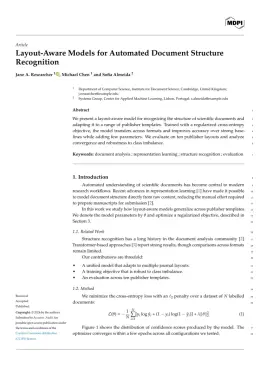
About the Chromatography format
Chromatography is a peer-reviewed journal published by MDPI, covering Analytical Chemistry and Chromatography, Analytical chemistry methods development, Microfluidic and Capillary Electrophoresis Applications.
| Publisher | MDPI |
|---|
| Reference style | Numbered (MDPI) Numbered — [1], [2] in the text
1. Smith, A.; Jones, B.; Lee, C. A Representative Article Title. Chromatography 2023, 12, 45–58.
Formats any DOI in Chromatography style. No sign-up.
|
|---|
| Publishes research in | Analytical Chemistry and Chromatography Analytical chemistry methods development Microfluidic and Capillary Electrophoresis Applications Field-Flow Fractionation Techniques Advanced Chemical Sensor Technologies |
|---|
| ISSN | 2227-9075 |
|---|
| h-index | 17 |
|---|
| i10-index | 29 |
|---|
| Total citations | 1,062 |
|---|
| Article processing charge | $378 |
|---|
| Open access | Yes |
|---|
| Top institutions publishing here | Universitat de València |
|---|
| Journal website | www.mdpi.com |
|---|
| You get | A submission-ready PDF and the editable LaTeX source — ready to submit. |
|---|
Papers published in Chromatography per year
Citation impact of Chromatography by publication year
Citations each year’s papers have accumulated so far — the most recent years are still building up.
Most-cited papers in Chromatography
Recent Developments and Applications of Solid Phase Microextraction (SPME) in Food and Environmental Analysis—A Review
Sybille Merkle, Kim Karen Kleeberg, Jan Fritsche · 30 Jun 2015
Solid-phase microextraction (SPME) is a simple, sensitive, rapid and solvent-free technique for the extraction of analytes from gaseous, liquid and solid samples and takes a leading position among microextraction methods. Application of SPME in sample preparation has been increasing continuously over the last decade. It is most often used as an automatized fiber injection system…
TLC-Direct Bioautography as a High Throughput Method for Detection of Antimicrobials in Plants
Irena Choma, Wioleta Jesionek · 18 May 2015
The richness of bioactive compounds in plant materials encourages continuous development of separation methods and bioassays for their isolation and identification. Thin-layer chromatography-direct bioautography links separation on the adsorbent layer with biological tests performed directly on it. Therefore, the method is very convenient for searching plant constituents with biological activity, such as antibiotics. Test bacteria…
A Longitudinal Study of Decomposition Odour in Soil Using Sorbent Tubes and Solid Phase Microextraction
Katelynn A. Perrault, Barbara H. Stuart, Shari L. Forbes · 30 Jul 2014
Odour profiling of decomposed remains is important for understanding the mechanisms that cadaver dogs and forensically-relevant insects use to locate decomposed remains. The decomposition odour profile is complex and has been documented in outdoor terrestrial environments. The purpose of this study was to perform longitudinal analysis of the volatile organic compound (VOC) profile in soils…
Fast Chromatographic Method for Explosive Profiling
Pierre‐Hugues Stefanuto, Katelynn A. Perrault, Jean‐François Focant et al. · 12 May 2015
Security control is becoming a major global issue in strategic locations, such as airports, official buildings, and transit stations. The agencies responsible for public security need powerful and sensitive tools to detect warfare agents and explosives. Volatile signature detection is one of the fastest and easiest ways to achieve this task. However, explosive chemicals have…
Determination of Sesquiterpenes in Wines by HS-SPME Coupled with GC-MS
Fabrizio Cincotta, Antonella Verzera, Gianluca Tripodi et al. · 9 Jul 2015
The sesquiterpene compounds present in red wines were characterized and quantified by Headspace Solid-Phase Microextraction in combination with Gas Chromatography–Mass Spectrometry (HS-SPME-GC-MS). Sixteen sesquiterpenes were identified, mainly hydrocarbons but also derived oxygenated compounds. Sesquiterpenes were acyclic, monocyclic, byciclic and tryciclic. Sesquiterpenes were detected in SIM (selected ion monitoring) mode using their characteristics ions. All the…