IOP Publishing

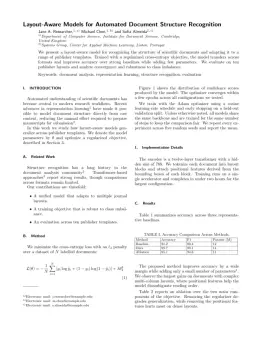
Journal of Physics: Condensed Matter Template

Write in a clean editor, then format for Journal of Physics: Condensed Matter in one click — DocuGuru applies the official IOP Publishing template with numbered references and exports a submission-ready PDF plus the editable LaTeX source. Free to start.

About the Journal of Physics: Condensed Matter format

Journal of Physics: Condensed Matter is a peer-reviewed journal published by IOP Publishing, covering Physics of Superconductivity and Magnetism, Quantum and electron transport phenomena, Advanced Condensed Matter Physics. Over its lifetime it has published 40,997 papers, which have received 1,027,870 citations.

PublisherIOP Publishing
Reference styleNumbered (IOP)
Numbered — [1], [2] in the text
[1] Smith A, Jones B and Lee C 2023 A representative article title Journal of Physics: Condensed Matter 12 45–58

Formats any DOI in Journal of Physics: Condensed Matter style. No sign-up.

Publishes research inPhysics of Superconductivity and Magnetism Quantum and electron transport phenomena Advanced Condensed Matter Physics Magnetic and transport properties of perovskites and related materials Rare-earth and actinide compounds
ISSN0953-8984
Citation impact (2-yr)2.23
h-index284
i10-index20,684
Top institutions publishing hereCentre National de la Recherche Scientifique
Journal websiteiopscience.org
You getA submission-ready PDF and the editable LaTeX source — ready to submit.

Papers published in Journal of Physics: Condensed Matter per year

842
2014
793
2015
1K
2016
913
2017
940
2018
921
2019
921
2020
913
2021
744
2022
597
2023
720
2024
571
2025

Citation impact of Journal of Physics: Condensed Matter by publication year

24.9K
2014
22.3K
2015
21.9K
2016
30.2K
2017
12.6K
2018
16.3K
2019
12.2K
2020
9.5K
2021
5.1K
2022
4.1K
2023
2.7K
2024
852
2025

Citations each year’s papers have accumulated so far — the most recent years are still building up.

Most-cited papers in Journal of Physics: Condensed Matter

QUANTUM ESPRESSO: a modular and open-source software project for quantum simulations of materials

Paolo Giannozzi, Stefano Baroni, Nicola Bonini et al. · 1 Sep 2009

QUANTUM ESPRESSO is an integrated suite of computer codes for electronic-structure calculations and materials modeling, based on density-functional theory, plane waves, and pseudopotentials (norm-conserving, ultrasoft, and projector-augmented wave). The acronym ESPRESSO stands for opEn Source Package for Research in Electronic Structure, Simulation, and Optimization. It is freely available to researchers around the world under the…

28,973 citations Cite SaveGo to paper →
First-principles simulation: ideas, illustrations and the CASTEP code

Matthew Segall, Philip J. D. Lindan, Matt Probert et al. · 8 Mar 2002

First-principles simulation, meaning density-functional theory calculations with plane waves and pseudopotentials, has become a prized technique in condensed-matter theory. Here I look at the basics of the suject, give a brief review of the theory, examining the strengths and weaknesses of its implementation, and illustrating some of the ways simulators approach problems through a small…

11,813 citations Cite SaveGo to paper →
Advanced capabilities for materials modelling with Q <scp>uantum</scp> ESPRESSO

P Giannozzi, O Andreussi, T Brumme et al. · 27 Sep 2017

Quantum EXPRESSO is an integrated suite of open-source computer codes for quantum simulations of materials using state-of-the-art electronic-structure techniques, based on density-functional theory, density-functional perturbation theory, and many-body perturbation theory, within the plane-wave pseudopotential and projector-augmented-wave approaches. Quantum EXPRESSO owes its popularity to the wide variety of properties and processes it allows to simulate, to…

7,575 citations Cite SaveGo to paper →
A grid-based Bader analysis algorithm without lattice bias

Wenjie Tang, Edward Sanville, Graeme Henkelman · 30 Jan 2009

A computational method for partitioning a charge density grid into Bader volumes is presented which is efficient, robust, and scales linearly with the number of grid points. The partitioning algorithm follows the steepest ascent paths along the charge density gradient from grid point to grid point until a charge density maximum is reached. In this…

7,560 citations Cite SaveGo to paper →

Journal of Physics: Condensed Matter template — frequently asked questions

How do I write a paper in the Journal of Physics: Condensed Matter format?
In DocuGuru you write your manuscript in a normal editor — no LaTeX setup required — and select the Journal of Physics: Condensed Matter template. When you export, DocuGuru compiles the paper into the official IOP Publishing format and hands you a submission-ready PDF along with the editable LaTeX source.
What reference style does Journal of Physics: Condensed Matter use?
Journal of Physics: Condensed Matter uses Numbered (IOP) references, shown as numbered [1], [2] markers in the text. DocuGuru formats every in-text citation and the reference list in this exact style automatically. A reference appears like this: [1] Smith A, Jones B and Lee C 2023 A representative article title Journal of Physics: Condensed Matter 12 45–58
Do I need to know LaTeX to submit to Journal of Physics: Condensed Matter?
No. DocuGuru generates the iopjournal LaTeX class and compiles the PDF for you in the background, so you get a IOP Publishing-ready Journal of Physics: Condensed Matter document without writing any LaTeX. If you do want it, the LaTeX source is included in the export.
Can I import an existing draft into the Journal of Physics: Condensed Matter template?
Yes. Paste or upload your current manuscript — Word, LaTeX, Markdown, or plain text — and DocuGuru reflows it into the Journal of Physics: Condensed Matter format with correct headings, figures, tables, and numbered citations.
What is Journal of Physics: Condensed Matter?
IOP Publishing journal. It is a physics journal, published by IOP Publishing.
Can I export a submission-ready Journal of Physics: Condensed Matter PDF?
Yes — DocuGuru produces a PDF built with the official Journal of Physics: Condensed Matter template (the iopjournal class) that is ready to submit to IOP Publishing, together with the matching LaTeX source files.
How much does the Journal of Physics: Condensed Matter template cost?
You can start writing in the Journal of Physics: Condensed Matter template for free. Exporting the final submission-ready Journal of Physics: Condensed Matter PDF and LaTeX source is part of DocuGuru's paid plans — see the app for current pricing.
Use the Journal of Physics: Condensed Matter template