IOP Publishing

Environmental Research Letters Template

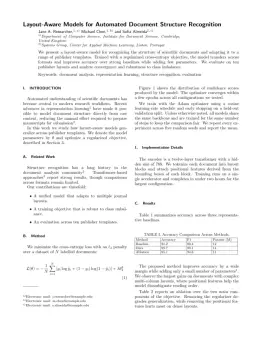
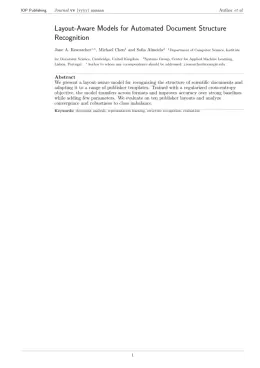
Write in a clean editor, then format for Environmental Research Letters in one click — DocuGuru applies the official IOP Publishing template with numbered references and exports a submission-ready PDF plus the editable LaTeX source. Free to start.

About the Environmental Research Letters format

Environmental Research Letters is a peer-reviewed journal published by IOP Publishing, covering Climate variability and models, Atmospheric and Environmental Gas Dynamics, Meteorological Phenomena and Simulations. Over its lifetime it has published 10,015 papers, which have received 489,285 citations.

PublisherIOP Publishing
Reference styleNumbered (IOP)
Numbered — [1], [2] in the text
[1] Smith A, Jones B and Lee C 2023 A representative article title Environmental Research Letters 12 45–58

Formats any DOI in Environmental Research Letters style. No sign-up.

Publishes research inClimate variability and models Atmospheric and Environmental Gas Dynamics Meteorological Phenomena and Simulations Climate change and permafrost Plant Water Relations and Carbon Dynamics
ISSN1748-9326
Citation impact (2-yr)4.3
h-index261
i10-index6,745
Article processing charge$1,901
Open accessYes — indexed in DOAJ
Top institutions publishing hereChinese Academy of Sciences
Journal websiteiopscience.org
You getA submission-ready PDF and the editable LaTeX source — ready to submit.

Papers published in Environmental Research Letters per year

337
2014
378
2015
426
2016
494
2017
561
2018
567
2019
987
2020
1K
2021
852
2022
759
2023
1K
2024
955
2025

Citation impact of Environmental Research Letters by publication year

31.5K
2014
34.2K
2015
37K
2016
40.8K
2017
47.8K
2018
37.4K
2019
54.4K
2020
41.9K
2021
22.6K
2022
11.9K
2023
7.6K
2024
2.3K
2025

Citations each year’s papers have accumulated so far — the most recent years are still building up.

Most-cited papers in Environmental Research Letters

A global inventory of small floating plastic debris

Erik van Sebille, Chris Wilcox, Laurent Lebreton et al. · 1 Dec 2015

Microplastic debris floating at the ocean surface can harm marine life. Understanding the severity of this harm requires knowledge of plastic abundance and distributions. Dozens of expeditions measuring microplastics have been carried out since the 1970s, but they have primarily focused on theNorth Atlantic and North Pacific accumulation zones, with much sparser coverage elsewhere. Here,…

1,698 citations Cite SaveGo to paper →
Monitoring and estimating tropical forest carbon stocks: making REDD a reality

Holly Gibbs, Sandra Brown, John O. Niles et al. · 1 Oct 2007

Reducing carbon emissions from deforestation and degradation in developing countries is of central importance in efforts to combat climate change. Key scientific challenges must be addressed to prevent any policy roadblocks. Foremost among the challenges is quantifying nations’ carbon emissions from deforestation and forest degradation, which requires information on forest clearing and carbon storage. Here…

1,658 citations Cite SaveGo to paper →
Negative emissions—Part 2: Costs, potentials and side effects

Sabine Fuss, William F. Lamb, Max Callaghan et al. · 21 May 2018

The most recent IPCC assessment has shown an important role for negative emissions technologies (NETs) in limiting global warming to 2 °C cost-effectively. However, a bottom-up, systematic, reproducible, and transparent literature assessment of the different options to remove CO2 from the atmosphere is currently missing. In part 1 of this three-part review on NETs, we…

1,561 citations Cite SaveGo to paper →
Shrub expansion in tundra ecosystems: dynamics, impacts and research priorities

Isla H. Myers‐Smith, Bruce C. Forbes, Martin Wilmking et al. · 1 Dec 2011

Abstract Recent research using repeat photography, long-term ecological monitoring and dendrochronology has documented shrub expansion in arctic, high-latitude and alpine tundra ecosystems. Here, we (1) synthesize these findings, (2) present a conceptual framework that identifies mechanisms and constraints on shrub increase, (3) explore causes, feedbacks and implications of the increased shrub cover in tundra ecosystems,…

1,520 citations Cite SaveGo to paper →
Robust negative impacts of climate change on African agriculture

Wolfram Schlenker, David B. Lobell · 1 Jan 2010

There is widespread interest in the impacts of climate change on agriculture in Sub-Saharan Africa (SSA), and on the most effective investments to assist adaptation to these changes, yet the scientific basis for estimating production risks and prioritizing investments has been quite limited. Here we show that by combining historical crop production and weather data…

1,485 citations Cite SaveGo to paper →

Environmental Research Letters template — frequently asked questions

How do I write a paper in the Environmental Research Letters format?
In DocuGuru you write your manuscript in a normal editor — no LaTeX setup required — and select the Environmental Research Letters template. When you export, DocuGuru compiles the paper into the official IOP Publishing format and hands you a submission-ready PDF along with the editable LaTeX source.
What reference style does Environmental Research Letters use?
Environmental Research Letters uses Numbered (IOP) references, shown as numbered [1], [2] markers in the text. DocuGuru formats every in-text citation and the reference list in this exact style automatically. A reference appears like this: [1] Smith A, Jones B and Lee C 2023 A representative article title Environmental Research Letters 12 45–58
Do I need to know LaTeX to submit to Environmental Research Letters?
No. DocuGuru generates the iopjournal LaTeX class and compiles the PDF for you in the background, so you get a IOP Publishing-ready Environmental Research Letters document without writing any LaTeX. If you do want it, the LaTeX source is included in the export.
Can I import an existing draft into the Environmental Research Letters template?
Yes. Paste or upload your current manuscript — Word, LaTeX, Markdown, or plain text — and DocuGuru reflows it into the Environmental Research Letters format with correct headings, figures, tables, and numbered citations.
What is Environmental Research Letters?
IOP Publishing journal. It is a physics journal, published by IOP Publishing.
Can I export a submission-ready Environmental Research Letters PDF?
Yes — DocuGuru produces a PDF built with the official Environmental Research Letters template (the iopjournal class) that is ready to submit to IOP Publishing, together with the matching LaTeX source files.
How much does the Environmental Research Letters template cost?
You can start writing in the Environmental Research Letters template for free. Exporting the final submission-ready Environmental Research Letters PDF and LaTeX source is part of DocuGuru's paid plans — see the app for current pricing.
Use the Environmental Research Letters template