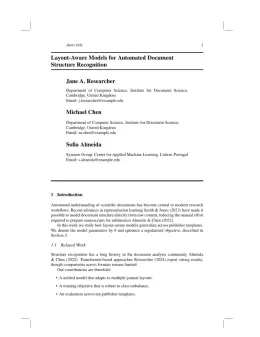
About the International Journal of Electronic Security and Digital Forensics format
International Journal of Electronic Security and Digital Forensics is a peer-reviewed journal published by Inderscience, covering Advanced Malware Detection Techniques, Digital and Cyber Forensics, Chaos-based Image/Signal Encryption.
| Publisher | Inderscience |
|---|
| Reference style | Author–year (Harvard/AGSM) Author–year — (Smith, 2023) in the text
Smith, A., Jones, B. and Lee, C. (2023) 'A representative article title', International Journal of Electronic Security and Digital Forensics, 12(3), pp. 45–58.
Formats any DOI in International Journal of Electronic Security and Digital Forensics style. No sign-up.
|
|---|
| Publishes research in | Advanced Malware Detection Techniques Digital and Cyber Forensics Chaos-based Image/Signal Encryption Network Security and Intrusion Detection Digital Media Forensic Detection |
|---|
| ISSN | 1751-911X |
|---|
| Citation impact (2-yr) | 0.85 |
|---|
| h-index | 21 |
|---|
| i10-index | 73 |
|---|
| Total citations | 3,089 |
|---|
| Top institutions publishing here | National Forensic Sciences University |
|---|
| You get | A submission-ready PDF and the editable LaTeX source — ready to submit. |
|---|
Papers published in International Journal of Electronic Security and Digital Forensics per year
Citation impact of International Journal of Electronic Security and Digital Forensics by publication year
Citations each year’s papers have accumulated so far — the most recent years are still building up.
Most-cited papers in International Journal of Electronic Security and Digital Forensics
Opcodes as predictor for malware
Daniel Bilar · 1 Jan 2007
Abstract: This paper discusses a detection mechanism for malicious code through statistical analysis of opcode distributions. A total of 67 malware executables were sampled statically disassembled and their statistical opcode frequency distribution compared with the aggregate statistics of 20 non-malicious samples. We find that malware opcode distributions differ statistically significantly from non-malicious software. Furthermore, rare…
Integrating security and usability into the requirements and design process
Ivan Fléchais, Cecilia Mascolo, M. Angela Sasse · 1 Jan 2007
According to Ross Anderson, 'Many systems fail because their designers protect the wrong things or protect the right things in the wrong way'. Surveys also show that security incidents in industry are rising, which highlights the difficulty of designing good security. Some recent approaches have targeted security from the technological perspective, others from the humancomputer…
Radio frequency fingerprinting commercial communication devices to enhance electronic security
William Suski, Michael A. Temple, Michael J. Mendenhall et al. · 1 Jan 2008
There is a current shift toward protecting against unauthorised network access at the open systems interconnection physical layer by exploiting radio frequency characteristics that are difficult to mimic. This work addresses the use of RF 'fingerprints' to uniquely identify emissions from commercial devices. The goal is to exploit inherent signal features using a four step…
Improved wireless security for GMSK-based devices using RF fingerprinting
Donald R. Reising, Michael A. Temple, Michael J. Mendenhall · 1 Jan 2010
Gaussian minimum shift keying (GMSK) is employed in current global system for mobile (GSM) networks and remains a viable option for future wireless systems. Physical layer (PHY) security is demonstrated using RF fingerprints from GSM-GMSK signals to thwart malicious activities that are commonly orchestrated through unauthorised use of digital identities. Enhanced security is provided through…
A machine learning approach to keystroke dynamics based user authentication
Kenneth Revett, Florin Gorunescu, Marina Gorunescu et al. · 1 Jan 2007
The majority of computer systems employ a login ID and password as the principal method for access security. In stand-alone situations, this level of security may be adequate, but when computers are connected to the internet, the vulnerability to a security breach is increased. In order to reduce vulnerability to attack, biometric solutions have been…