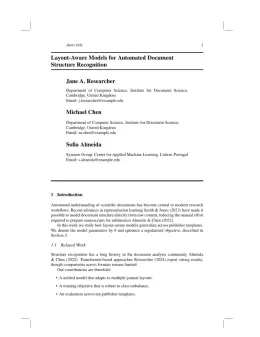
About the International Journal of Electric and Hybrid Vehicles format
International Journal of Electric and Hybrid Vehicles is a peer-reviewed journal published by Inderscience, covering Electric and Hybrid Vehicle Technologies, Electric Vehicles and Infrastructure, Advanced Battery Technologies Research.
| Publisher | Inderscience |
|---|
| Reference style | Author–year (Harvard/AGSM) Author–year — (Smith, 2023) in the text
Smith, A., Jones, B. and Lee, C. (2023) 'A representative article title', International Journal of Electric and Hybrid Vehicles, 12(3), pp. 45–58.
Formats any DOI in International Journal of Electric and Hybrid Vehicles style. No sign-up.
|
|---|
| Publishes research in | Electric and Hybrid Vehicle Technologies Electric Vehicles and Infrastructure Advanced Battery Technologies Research Vehicle emissions and performance Electric Motor Design and Analysis |
|---|
| ISSN | 1751-4088 |
|---|
| Citation impact (2-yr) | 0.51 |
|---|
| h-index | 23 |
|---|
| i10-index | 68 |
|---|
| Total citations | 2,903 |
|---|
| Top institutions publishing here | Chongqing University |
|---|
| You get | A submission-ready PDF and the editable LaTeX source — ready to submit. |
|---|
Papers published in International Journal of Electric and Hybrid Vehicles per year
Citation impact of International Journal of Electric and Hybrid Vehicles by publication year
Citations each year’s papers have accumulated so far — the most recent years are still building up.
Most-cited papers in International Journal of Electric and Hybrid Vehicles
Rule-based energy management strategies for hybrid vehicles
Théo Hofman, M. Steinbuch, R. van Druten et al. · 1 Jan 2007
The highest control layer of a (hybrid) vehicular drive train is termed the Energy Management Strategy (EMS). In this paper an overview of different control methods is given and a new rule-based EMS is introduced, based on the combination of Rule-Based and Equivalent Consumption Minimization Strategies (RB-ECMS). The RB-ECMS uses only one decision variable and…
The electric vehicle: a review
Ning Ding, K. Prasad, Tek Tjing Lie · 1 Jan 2017
Electric vehicles (EV), as a promising way to reduce the greenhouse effect, have been researched extensively. With improvements in the areas of power electrics, energy storage and support, the plug-in hybrid electric vehicle (PHEV) provides competitive driving range and fuel economy compared to the internal combustion engine vehicle (ICEV). Operating with optimised control strategies or…
Energy management for plug-in hybrid electric vehicles using equivalent consumption minimisation strategy
Punit Tulpule, Vincenzo Marano, Giorgio Rizzoni · 1 Jan 2010
One strategy to minimise petroleum fuel consumption of a Plug-in Hybrid Electric Vehicle (PHEV) is to attain the lowest admissible battery State of Charge (SOC) at the end of driving cycle while following an optimal SOC profile. The challenge of an optimisation algorithm is to find this optimal profile by using least future information about…
Consumer attitudes towards battery electric vehicles: a large-scale survey
Kenneth Lebeau, Joeri Van Mierlo, Philippe Lebeau et al. · 1 Jan 2013
Nowadays, Electric Vehicles (EVs) receive a lot of attention. However, their market breakthrough is not straightforward. This paper presents the results of a large-scale data collection (survey with 1196 respondents) held in Flanders (Belgium). The results include perceptions on the advantages and disadvantages of Battery Electric Vehicles (BEVs), the acceptable driving range, the acceptable charging…
Hybrid vehicle design using global optimisation algorithms
Wenzhong Gao, Chris Mı · 1 Jan 2007
Four global optimisation algorithms are applied in the design optimisation of a hybrid electric vehicle (HEV). These four algorithms are: DIRECT, Simulated Annealing, Genetic Algorithm, and Particle Swarm Optimisation. The optimisation objective is to achieve maximum fuel economy, subject to the constraints of vehicle performance. The model in the loop methodology is adopted for our…