Frontiers

Frontiers in Molecular Biosciences Template

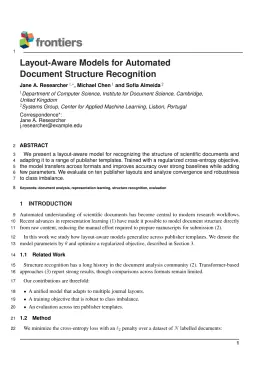
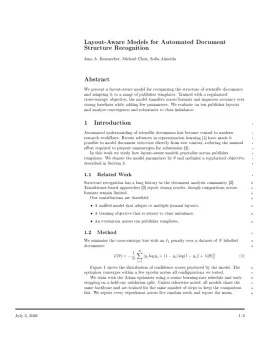
Write in a clean editor, then format for Frontiers in Molecular Biosciences in one click — DocuGuru applies the official Frontiers template with author–year references and exports a submission-ready PDF plus the editable LaTeX source. Free to start.

About the Frontiers in Molecular Biosciences format

Frontiers in Molecular Biosciences is a peer-reviewed journal published by Frontiers, covering RNA modifications and cancer, Ferroptosis and cancer prognosis, Protein Structure and Dynamics. Over its lifetime it has published 6,122 papers, which have received 122,201 citations.

PublisherFrontiers
Reference styleAuthor–year (Harvard)
Author–year — (Smith, 2023) in the text
Smith, A., Jones, B. and Lee, C. (2023) 'A representative article title', Frontiers in Molecular Biosciences, 12(3), pp. 45–58.

Formats any DOI in Frontiers in Molecular Biosciences style. No sign-up.

Publishes research inRNA modifications and cancer Ferroptosis and cancer prognosis Protein Structure and Dynamics Cancer-related molecular mechanisms research RNA and protein synthesis mechanisms
ISSN2296-889X
Citation impact (2-yr)3.88
h-index120
i10-index3,085
Article processing charge$2,490
Open accessYes — indexed in DOAJ
Top institutions publishing hereCentre National de la Recherche Scientifique
Journal websitewww.frontiersin.org
You getA submission-ready PDF and the editable LaTeX source — ready to submit.

Papers published in Frontiers in Molecular Biosciences per year

31
2014
74
2015
87
2016
91
2017
125
2018
152
2019
437
2020
1.4K
2021
1.5K
2022
819
2023
527
2024
534
2025

Citation impact of Frontiers in Molecular Biosciences by publication year

1.8K
2014
3.8K
2015
3.7K
2016
4.7K
2017
6.1K
2018
6.7K
2019
20.3K
2020
33.3K
2021
25.6K
2022
9.5K
2023
3.6K
2024
1.4K
2025

Citations each year’s papers have accumulated so far — the most recent years are still building up.

Most-cited papers in Frontiers in Molecular Biosciences

Is It Time to Start Transitioning From 2D to 3D Cell Culture?

Caleb Jensen, Yong Teng · 6 Mar 2020

Cell culture is an important and necessary process in drug discovery, cancer research, as well as stem cell research. Most cells are currently cultured using two-dimensional (2D) methods, but new and improved methods that implement three-dimensional (3D) cell culture techniques suggest compelling evidence that much more advanced experiments can be performed. When performing 3D cell…

1,608 citations Cite SaveGo to paper →
Nanoparticle-Based Drug Delivery in Cancer Therapy and Its Role in Overcoming Drug Resistance

Yihan Yao, Yunxiang Zhou, Lihong Liu et al. · 20 Aug 2020

Nanotechnology has been extensively studied and exploited for cancer treatment as nanoparticles can play a significant role as a drug delivery system. Compared to conventional drugs, nanoparticle-based drug delivery has specific advantages, such as improved stability and biocompatibility, enhanced permeability and retention effect, and precise targeting. The application and development of hybrid nanoparticles, which incorporates…

1,508 citations Cite SaveGo to paper →
Extracellular Matrix in the Tumor Microenvironment and Its Impact on Cancer Therapy

Erik Henke, Rajender Nandigama, Süleyman Ergün · 31 Jan 2020

Solid tumors are complex organ-like structures that consist not only of tumor cells but also of vasculature, extracellular matrix (ECM), stromal, and immune cells. Often, this tumor microenvironment (TME) comprises the larger part of the overall tumor mass. Like the other components of the TME, the ECM in solid tumors differs significantly from that in…

1,122 citations Cite SaveGo to paper →
Nanoparticle Surface Functionalization: How to Improve Biocompatibility and Cellular Internalization

Gennaro Sanità, Barbara Carrese, Annalisa Lamberti · 26 Nov 2020

The use of nanoparticles (NP) in diagnosis and treatment of many human diseases, including cancer, is of increasing interest. However, cytotoxic effects of NPs on cells and the uptake efficiency significantly limit their use in clinical practice. The physico-chemical properties of NPs including surface composition, superficial charge, size and shape are considered the key factors…

Recent Developments and Applications of the MMPBSA Method

Changhao Wang, D’Artagnan Greene, Li Xiao et al. · 10 Jan 2018

The Molecular Mechanics Poisson-Boltzmann Surface Area (MMPBSA) approach has been widely applied as an efficient and reliable free energy simulation method to model molecular recognition, such as for protein-ligand binding interactions. In this review, we focus on recent developments and applications of the MMPBSA method. The methodology review covers solvation terms, the entropy term, extensions…


Frontiers in Molecular Biosciences template — frequently asked questions

How do I write a paper in the Frontiers in Molecular Biosciences format?
In DocuGuru you write your manuscript in a normal editor — no LaTeX setup required — and select the Frontiers in Molecular Biosciences template. When you export, DocuGuru compiles the paper into the official Frontiers format and hands you a submission-ready PDF along with the editable LaTeX source.
What reference style does Frontiers in Molecular Biosciences use?
Frontiers in Molecular Biosciences uses Author–year (Harvard) references, shown as author–year markers such as (Smith, 2023) in the text. DocuGuru formats every in-text citation and the reference list in this exact style automatically. A reference appears like this: Smith, A., Jones, B. and Lee, C. (2023) 'A representative article title', Frontiers in Molecular Biosciences, 12(3), pp. 45–58.
Do I need to know LaTeX to submit to Frontiers in Molecular Biosciences?
No. DocuGuru generates the FrontiersinHarvard LaTeX class and compiles the PDF for you in the background, so you get a Frontiers-ready Frontiers in Molecular Biosciences document without writing any LaTeX. If you do want it, the LaTeX source is included in the export.
Can I import an existing draft into the Frontiers in Molecular Biosciences template?
Yes. Paste or upload your current manuscript — Word, LaTeX, Markdown, or plain text — and DocuGuru reflows it into the Frontiers in Molecular Biosciences format with correct headings, figures, tables, and author–year citations.
What is Frontiers in Molecular Biosciences?
Frontiers journal. It is a life sciences and medicine journal, published by Frontiers.
Can I export a submission-ready Frontiers in Molecular Biosciences PDF?
Yes — DocuGuru produces a PDF built with the official Frontiers in Molecular Biosciences template (the FrontiersinHarvard class) that is ready to submit to Frontiers, together with the matching LaTeX source files.
How much does the Frontiers in Molecular Biosciences template cost?
You can start writing in the Frontiers in Molecular Biosciences template for free. Exporting the final submission-ready Frontiers in Molecular Biosciences PDF and LaTeX source is part of DocuGuru's paid plans — see the app for current pricing.
Use the Frontiers in Molecular Biosciences template