Elsevier

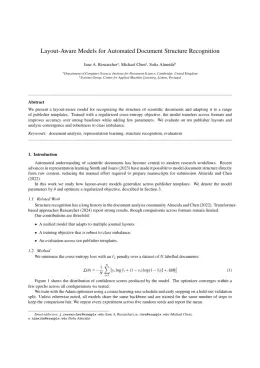
Virtual Reality & Intelligent Hardware Template

Write in a clean editor, then format for Virtual Reality & Intelligent Hardware in one click — DocuGuru applies the official Elsevier template with numbered references and exports a submission-ready PDF plus the editable LaTeX source. Free to start.

About the Virtual Reality & Intelligent Hardware format

Virtual Reality & Intelligent Hardware is a peer-reviewed journal published by Elsevier, covering Virtual Reality Applications and Impacts, Augmented Reality Applications, Computer Graphics and Visualization Techniques.

PublisherElsevier
Reference styleNumbered (Elsevier)
Numbered — [1], [2] in the text
[1] A. Smith, B. Jones, C. Lee, A representative article title, Virtual Reality & Intelligent Hardware 12 (2023) 45–58.

Formats any DOI in Virtual Reality & Intelligent Hardware style. No sign-up.

Publishes research inVirtual Reality Applications and Impacts Augmented Reality Applications Computer Graphics and Visualization Techniques Advanced Vision and Imaging Tactile and Sensory Interactions
ISSN2096-5796
Citation impact (2-yr)4.67
h-index35
i10-index117
Total citations5,128
Open accessYes
Top institutions publishing hereBeihang University
Journal websitewww.sciencedirect.com
You getA submission-ready PDF and the editable LaTeX source — ready to submit.

Papers published in Virtual Reality & Intelligent Hardware per year

42
2019
43
2020
41
2021
37
2022
38
2023
33
2024
36
2025

Citation impact of Virtual Reality & Intelligent Hardware by publication year

1.6K
2019
1.1K
2020
520
2021
828
2022
618
2023
298
2024
77
2025

Citations each year’s papers have accumulated so far — the most recent years are still building up.

Most-cited papers in Virtual Reality & Intelligent Hardware

Gesture interaction in virtual reality

Yang Li, Jin Huang, Feng Tian et al. · 10 Jan 2019

With the development of virtual reality (VR) and human-computer interaction technology, how to use natural and efficient interaction methods in the virtual environment has become a hot topic of research. Gesture is one of the most important communication methods of human beings, which can effectively express users’ demands. In the past few decades, gesture-based interaction…

Haptic display for virtual reality: progress and challenges

Dangxiao Wang, Yuan Guo, Shiyi Liu et al. · 1 Apr 2019

Immersion, interaction, and imagination are three features of virtual reality (VR). Existing VR systems possess fairly realistic visual and auditory feedbacks, and however, are poor with haptic feedback, by means of which human can perceive the physical world via abundant haptic properties. Haptic display is an interface aiming to enable bilateral signal communications between human…

Multimodal teaching, learning and training in virtual reality: a review and case study

Stéphanie Philippe, Alexis D. Souchet, Petros Lameras et al. · 1 Oct 2020

It is becoming increasingly prevalent in digital learning research to encompass an array of different meanings, spaces, processes, and teaching strategies for discerning a global perspective on constructing the student learning experience. Multimodality is an emergent phenomenon that may influence how digital learning is designed, especially when employed in highly interactive and immersive learning environments…

Deep learning based point cloud registration: an overview

Zhiyuan Zhang, Yuchao Dai, Jiadai Sun · 1 Jun 2020

Point cloud registration aims at finding a rigid transformation to align one point cloud to another one. It is a fundamental problem in computer vision and robotics, which has been widely used in various applications, such as 3D reconstruction, SLAM (simultaneous localization and mapping), and autonomous driving. Over the last decades, many researchers have devoted…

Survey and evaluation of monocular visual-inertial SLAM algorithms for augmented reality

Jinyu Li, Bangbang Yang, Chen Danpeng et al. · 1 Aug 2019

Although VSLAM/VISLAM has achieved great success, it is still difficult to quantitatively evaluate the localization results of different kinds of SLAM systems from the aspect of augmented reality due to the lack of an appropriate benchmark. For AR applications in practice, a variety of challenging situations (e.g., fast motion, strong rotation, serious motion blur, dynamic…

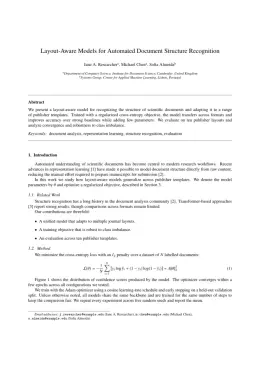
Virtual Reality & Intelligent Hardware template — frequently asked questions

How do I write a paper in the Virtual Reality & Intelligent Hardware format?
In DocuGuru you write your manuscript in a normal editor — no LaTeX setup required — and select the Virtual Reality & Intelligent Hardware template. When you export, DocuGuru compiles the paper into the official Elsevier format and hands you a submission-ready PDF along with the editable LaTeX source.
What reference style does Virtual Reality & Intelligent Hardware use?
Virtual Reality & Intelligent Hardware uses Numbered (Elsevier) references, shown as numbered [1], [2] markers in the text. DocuGuru formats every in-text citation and the reference list in this exact style automatically. A reference appears like this: [1] A. Smith, B. Jones, C. Lee, A representative article title, Virtual Reality & Intelligent Hardware 12 (2023) 45–58.
Do I need to know LaTeX to submit to Virtual Reality & Intelligent Hardware?
No. DocuGuru generates the elsarticle LaTeX class and compiles the PDF for you in the background, so you get a Elsevier-ready Virtual Reality & Intelligent Hardware document without writing any LaTeX. If you do want it, the LaTeX source is included in the export.
Can I import an existing draft into the Virtual Reality & Intelligent Hardware template?
Yes. Paste or upload your current manuscript — Word, LaTeX, Markdown, or plain text — and DocuGuru reflows it into the Virtual Reality & Intelligent Hardware format with correct headings, figures, tables, and numbered citations.
Who publishes Virtual Reality & Intelligent Hardware?
Virtual Reality & Intelligent Hardware is a multidisciplinary journal published by Elsevier. DocuGuru's Virtual Reality & Intelligent Hardware template matches Elsevier's official submission format.
Can I export a submission-ready Virtual Reality & Intelligent Hardware PDF?
Yes — DocuGuru produces a PDF built with the official Virtual Reality & Intelligent Hardware template (the elsarticle class) that is ready to submit to Elsevier, together with the matching LaTeX source files.
How much does the Virtual Reality & Intelligent Hardware template cost?
You can start writing in the Virtual Reality & Intelligent Hardware template for free. Exporting the final submission-ready Virtual Reality & Intelligent Hardware PDF and LaTeX source is part of DocuGuru's paid plans — see the app for current pricing.
Use the Virtual Reality & Intelligent Hardware template