Elsevier

URINE Template

Write in a clean editor, then format for URINE in one click — DocuGuru applies the official Elsevier template with numbered references and exports a submission-ready PDF plus the editable LaTeX source. Free to start.

About the URINE format

URINE is a peer-reviewed journal published by Elsevier, covering Metabolomics and Mass Spectrometry Studies, Advanced Proteomics Techniques and Applications, Mass Spectrometry Techniques and Applications.

PublisherElsevier
Reference styleNumbered (Elsevier)
Numbered — [1], [2] in the text
[1] A. Smith, B. Jones, C. Lee, A representative article title, URINE 12 (2023) 45–58.

Formats any DOI in URINE style. No sign-up.

Publishes research inMetabolomics and Mass Spectrometry Studies Advanced Proteomics Techniques and Applications Mass Spectrometry Techniques and Applications Alzheimer's disease research and treatments Bladder and Urothelial Cancer Treatments
ISSN2590-2806
Citation impact (2-yr)0.03
h-index6
i10-index4
Total citations213
Open accessYes
Top institutions publishing hereBeijing Normal University
Journal websitewww.sciencedirect.com
You getA submission-ready PDF and the editable LaTeX source — ready to submit.

Papers published in URINE per year

26
2019
1
2020
5
2021
9
2022
9
2023
1
2024
31
2025

Citation impact of URINE by publication year

29
2019
73
2020
6
2021
8
2022
92
2023
1
2024
0
2025

Citations each year’s papers have accumulated so far — the most recent years are still building up.

Most-cited papers in URINE

Urine proteome of COVID-19 patients

Yanchang Li, Yihao Wang, Huiying Liu et al. · 1 Jan 2020

The atypical pneumonia (COVID-19) caused by SARS-CoV-2 is a serious threat to global public health. However, early detection and effective prediction of patients with mild to severe symptoms remain challenging. The proteomic profiling of urine samples from healthy individuals, mild and severe COVID-19 positive patients with comorbidities can be clearly differentiated. Multiple pathways have been…

Urine; a new promising biological fluid to act as a non-invasive biomarker for different human diseases

Namrata Balhara, M. Memita Devi, Ajay Balda et al. · 1 Jan 2023

Traditional disease diagnosis often involves invasive procedures like biopsies or blood draws, which are uncomfortable, costly, and carry risks. However, recent advancements in non-invasive biomarker detection have opened new avenues for diagnosing diseases using accessible biological fluids such as urine. Urine shows great promise as a fluid that can provide insights of all the physiological…

Urine biomarkers can outperform serum biomarkers in certain diseases

Cheng Xue, Bo Yang, Lili Fu et al. · 1 Jan 2023

Urinary biomarkers offer a non-invasive and easily accessible means of assessing an individual's health and susceptibility to various diseases. They can provide critical insights into an individual's predisposition to certain conditions, disease progression, and therapeutic response. In this review, we summarized the currently reported urinary biomarkers that outperformed serum biomarkers, including urinary protein biomarkers, gene…

A new HPLC-MS/MS method for urinary creatinine determination: Comparison study with Jaffè’s method

Lidia Caporossi, Enrico Paci, Silvia Capanna et al. · 1 Jan 2023

Urinary biomarkers are usually reported as a normalized ratio to creatinuria, a lack of correct creatinine determination lead to wrong final data. This study aimed to evaluate the Jaffè method accuracy, proposing a new HPLC-MS/MS method. The validation parameters were: run time of 4 ​min, LOD of 0.02 ​mg/L, CV% lower than 4%, recovery >96.1%,…

Urinary metabolomic and proteomic analyses in a mouse model of prostatic inflammation

Pingli Wei, Ling Hao, Fengfei Ma et al. · 1 Jun 2019

Lower urinary tract symptoms (LUTS) are common among aging men. Since prostatic inflammation is one of its etiologies, it is plausible that urinary metabolite and protein biomarkers could be identified and used to diagnose inflammation-induced LUTS. We characterized the urine metabolome and proteome in a mouse model of bacterial-induced prostatic inflammation. Mass Spectrometry (MS)-based multi-omics…

URINE template — frequently asked questions

How do I write a paper in the URINE format?
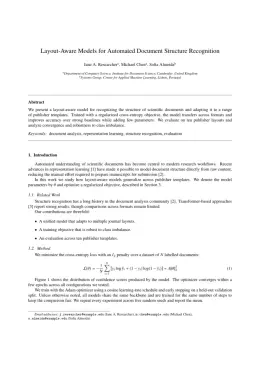
In DocuGuru you write your manuscript in a normal editor — no LaTeX setup required — and select the URINE template. When you export, DocuGuru compiles the paper into the official Elsevier format and hands you a submission-ready PDF along with the editable LaTeX source.
What reference style does URINE use?
URINE uses Numbered (Elsevier) references, shown as numbered [1], [2] markers in the text. DocuGuru formats every in-text citation and the reference list in this exact style automatically. A reference appears like this: [1] A. Smith, B. Jones, C. Lee, A representative article title, URINE 12 (2023) 45–58.
Do I need to know LaTeX to submit to URINE?
No. DocuGuru generates the elsarticle LaTeX class and compiles the PDF for you in the background, so you get a Elsevier-ready URINE document without writing any LaTeX. If you do want it, the LaTeX source is included in the export.
Can I import an existing draft into the URINE template?
Yes. Paste or upload your current manuscript — Word, LaTeX, Markdown, or plain text — and DocuGuru reflows it into the URINE format with correct headings, figures, tables, and numbered citations.
Who publishes URINE?
URINE is a multidisciplinary journal published by Elsevier. DocuGuru's URINE template matches Elsevier's official submission format.
Can I export a submission-ready URINE PDF?
Yes — DocuGuru produces a PDF built with the official URINE template (the elsarticle class) that is ready to submit to Elsevier, together with the matching LaTeX source files.
How much does the URINE template cost?
You can start writing in the URINE template for free. Exporting the final submission-ready URINE PDF and LaTeX source is part of DocuGuru's paid plans — see the app for current pricing.
Use the URINE template