Elsevier

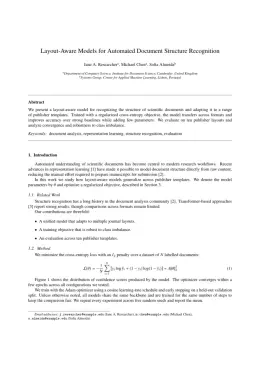
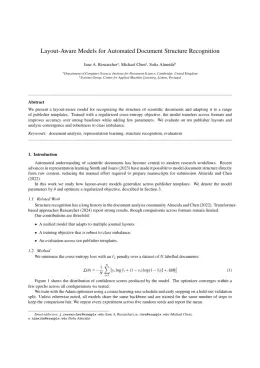
Transplantation Reports Template

Write in a clean editor, then format for Transplantation Reports in one click — DocuGuru applies the official Elsevier template with numbered references and exports a submission-ready PDF plus the editable LaTeX source. Free to start.

About the Transplantation Reports format

Transplantation Reports is a peer-reviewed journal published by Elsevier, covering Renal Transplantation Outcomes and Treatments, Organ Transplantation Techniques and Outcomes, Organ Donation and Transplantation.

PublisherElsevier
Reference styleNumbered (Elsevier)
Numbered — [1], [2] in the text
[1] A. Smith, B. Jones, C. Lee, A representative article title, Transplantation Reports 12 (2023) 45–58.

Formats any DOI in Transplantation Reports style. No sign-up.

Publishes research inRenal Transplantation Outcomes and Treatments Organ Transplantation Techniques and Outcomes Organ Donation and Transplantation Transplantation: Methods and Outcomes Liver Disease and Transplantation
ISSN2451-9596
Citation impact (2-yr)0.55
h-index7
i10-index3
Total citations347
Article processing charge$1,800
Open accessYes
Top institutions publishing hereUniversity of California, Los Angeles
Journal websitewww.journals.elsevier.com
You getA submission-ready PDF and the editable LaTeX source — ready to submit.

Papers published in Transplantation Reports per year

7
2016
5
2017
6
2018
18
2019
32
2020
15
2021
32
2022
23
2023
17
2024
22
2025

Citation impact of Transplantation Reports by publication year

19
2016
15
2017
12
2018
26
2019
82
2020
26
2021
99
2022
37
2023
18
2024
8
2025

Citations each year’s papers have accumulated so far — the most recent years are still building up.

Most-cited papers in Transplantation Reports

Sirolimus use improves cancer-free survival following transplantation: A single center 12-year analysis

Reynold I. Lopez‐Soler, Panpan Chen, Lakshmi Nair et al. · 30 Jan 2020

Sirolimus, is used in ~5% of all US transplant centers as part of a maintenance immunosuppression regimen following solid organ transplantation. In previous published results, we showed that the use of a Sirolimus-based, early steroid withdrawal immunosuppression regimen improved patient and graft 10-year survival. In this study, we aimed to determine whether long-term Sirolimus use…

Immunosuppressive regimens following kidney transplantation in five European countries: The observational RECORD study

Miha Arnol, Radomir Naumović, Emil Paskalev Dimitrov et al. · 13 Jul 2020

Objective: To examine current immunosuppressive regimens administered to kidney transplant recipients (KTRs) in South-eastern Europe. Methods: This was a 12-month, multicenter, non-interventional, prospective, observational study of immunosuppressive regimens in adult de novo and maintenance KTRs. The primary endpoint was to identify the number, type, dosage and trough concentrations (C0) of immunosuppressive medications. Results: Data were…

Graft-versus-host disease: Therapeutic prospects of improving the long-term post-transplant outcomes

Abdulaziz Umar Kurya, Usama Aliyu, Abdulrahman Tudu Ibrahim et al. · 6 Sep 2022

Graft-versus-host disease (GVHD) continues to emerge as the topmost causative factor of the morbidity and mortality rate post hematopoietic stem cell transplantation. The graft cells attack the recipient host tissues resulting in acute or chronic GVHD that affect organs, including the lung, liver, skin, and gastrointestinal tract. Certain factors are considered to play a crucial…

Coinhibition of mTORC1/mTORC2 and RhoA /ROCK pathways prevents chronic rejection of rat cardiac allografts

Wei Chen, Wenhao Chen, Li X et al. · 20 Sep 2018

Chronic rejection of transplanted organs remains an unresolved issue in clinical organ transplantation. The macrophages play a crucial role in the development of chronic rejection. We showed previously that macrophage-specific deletion of RhoA or RhoA/ROCK inhibition prevent macrophage movement to the cardiac allografts and abrogate chronic rejection in rodent transplantation models. Here we assessed the…

Single center experience comparing two clinically available donor derived cell free DNA tests and review of literature

Erik L. Lum, Karid Nieves-Borrero, Piyavadee Homkrailas et al. · 25 Jul 2021

The introduction of assays for donor-derived cell-free DNA into clinical transplant medicine has provided an additional method to assess allograft health. We compared the performance of two of these assays, Prospera™ and AlloSure®. A series of 15 paired-samples from individual kidney transplant recipients were tested using both Prospera™ and AlloSure® assays simultaneously. Test performances were…

Transplantation Reports template — frequently asked questions

How do I write a paper in the Transplantation Reports format?
In DocuGuru you write your manuscript in a normal editor — no LaTeX setup required — and select the Transplantation Reports template. When you export, DocuGuru compiles the paper into the official Elsevier format and hands you a submission-ready PDF along with the editable LaTeX source.
What reference style does Transplantation Reports use?
Transplantation Reports uses Numbered (Elsevier) references, shown as numbered [1], [2] markers in the text. DocuGuru formats every in-text citation and the reference list in this exact style automatically. A reference appears like this: [1] A. Smith, B. Jones, C. Lee, A representative article title, Transplantation Reports 12 (2023) 45–58.
Do I need to know LaTeX to submit to Transplantation Reports?
No. DocuGuru generates the elsarticle LaTeX class and compiles the PDF for you in the background, so you get a Elsevier-ready Transplantation Reports document without writing any LaTeX. If you do want it, the LaTeX source is included in the export.
Can I import an existing draft into the Transplantation Reports template?
Yes. Paste or upload your current manuscript — Word, LaTeX, Markdown, or plain text — and DocuGuru reflows it into the Transplantation Reports format with correct headings, figures, tables, and numbered citations.
Who publishes Transplantation Reports?
Transplantation Reports is a multidisciplinary journal published by Elsevier. DocuGuru's Transplantation Reports template matches Elsevier's official submission format.
Can I export a submission-ready Transplantation Reports PDF?
Yes — DocuGuru produces a PDF built with the official Transplantation Reports template (the elsarticle class) that is ready to submit to Elsevier, together with the matching LaTeX source files.
How much does the Transplantation Reports template cost?
You can start writing in the Transplantation Reports template for free. Exporting the final submission-ready Transplantation Reports PDF and LaTeX source is part of DocuGuru's paid plans — see the app for current pricing.
Use the Transplantation Reports template