Elsevier

Translational Research in Anatomy Template

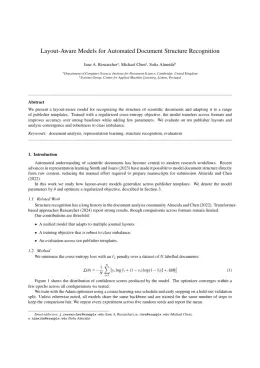
Write in a clean editor, then format for Translational Research in Anatomy in one click — DocuGuru applies the official Elsevier template with numbered references and exports a submission-ready PDF plus the editable LaTeX source. Free to start.

About the Translational Research in Anatomy format

Translational Research in Anatomy is a peer-reviewed journal published by Elsevier, covering Peripheral Nerve Disorders, Anatomy and Medical Technology, Orthopedic Surgery and Rehabilitation.

PublisherElsevier
Reference styleNumbered (Elsevier)
Numbered — [1], [2] in the text
[1] A. Smith, B. Jones, C. Lee, A representative article title, Translational Research in Anatomy 12 (2023) 45–58.

Formats any DOI in Translational Research in Anatomy style. No sign-up.

Publishes research inPeripheral Nerve Disorders Anatomy and Medical Technology Orthopedic Surgery and Rehabilitation Nerve Injury and Rehabilitation Forensic Anthropology and Bioarchaeology Studies
ISSN2214-854X
Citation impact (2-yr)1.21
h-index22
i10-index66
Total citations2,437
Article processing charge$1,750
Open accessYes
Top institutions publishing hereMedical University of Lodz
Journal websitewww.journals.elsevier.com
You getA submission-ready PDF and the editable LaTeX source — ready to submit.

Papers published in Translational Research in Anatomy per year

6
2015
10
2016
11
2017
12
2018
21
2019
45
2020
54
2021
69
2022
47
2023
100
2024
77
2025

Citation impact of Translational Research in Anatomy by publication year

30
2015
179
2016
61
2017
171
2018
264
2019
559
2020
434
2021
295
2022
161
2023
229
2024
32
2025

Citations each year’s papers have accumulated so far — the most recent years are still building up.

Most-cited papers in Translational Research in Anatomy

Anatomical normality and variability: Historical perspective and methodological considerations

Andrzej Żytkowski, R. Shane Tubbs, Joe Iwanaga et al. · 29 Dec 2020

Having established and classified the laws of nature, scientists gradually achieved the skill of judging what is most typical and what is rare or deviates from the commonly-observed pattern. Normality in anatomy can be considered relative (linked to a specific set of assumptions) and is inferred from numerous repeated observations. In anatomy textbooks, the term…

The structure and function of the cervix during pregnancy

James Nott, Elizabeth A. Bonney, James D. Pickering et al. · 1 Mar 2016

The structure of the cervix is integral to the maintenance of pregnancy, keeping the developing baby in utero and forming a barrier to the ascent of microorganisms from the vagina. Weakness of the cervix may lead to deficiency of this barrier and is associated with subsequent preterm birth. The underlying cause of this structural weakness…

Assessment of the utility of Mixed Reality in medical education

Radek Kolecki, Agnieszka Pręgowska, Julianna Dąbrowa et al. · 28 Jun 2022

Immersive technologies like Mixed Reality (MR), Virtual Reality (VR) and Augmented Reality (AR) are becoming increasingly popular and gain user trust across various fields, particularly in medicine. In this paper we will use the general term Mixed Reality (MR) to refer to the various virtual reality methods, namely VR and AR. These new immersive technologies…

Analysis of surgical errors associated with anatomical variations clinically relevant in general surgery. Review of the literature

Katarzyna A. Kowalczyk, A Majewski · 10 Jan 2021

Anatomic variations have a significant impact in general and oncological surgery, often necessitating modification of surgical techniques or leading to intraoperative complications. Difficult or variant anatomy is often cited as a significant contributing factor to injuries attributed to surgical errors. In order to investigate the influence of anatomical variations on surgical procedures, a literature search…

Urachal anomalies: A review of pathological conditions, diagnosis, and management

Anthony L. Wilson, Jason Gandhi, Omar Seyam et al. · 24 May 2019

The urachus is a tubular structure that extends cranially from the anterior dome of the bladder to the umbilicus. Urachal anomalies (UA) formation results from incomplete involution of this embryonic structure, leading to various pathologies. Congenital UA can be divided into five groups: patent urachus, umbilical-urachal sinus, vesicourachal diverticulum, urachal cyst, and alternating sinus. Typically,…

Translational Research in Anatomy template — frequently asked questions

How do I write a paper in the Translational Research in Anatomy format?
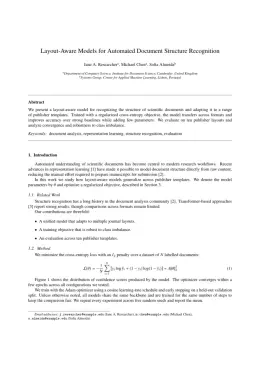
In DocuGuru you write your manuscript in a normal editor — no LaTeX setup required — and select the Translational Research in Anatomy template. When you export, DocuGuru compiles the paper into the official Elsevier format and hands you a submission-ready PDF along with the editable LaTeX source.
What reference style does Translational Research in Anatomy use?
Translational Research in Anatomy uses Numbered (Elsevier) references, shown as numbered [1], [2] markers in the text. DocuGuru formats every in-text citation and the reference list in this exact style automatically. A reference appears like this: [1] A. Smith, B. Jones, C. Lee, A representative article title, Translational Research in Anatomy 12 (2023) 45–58.
Do I need to know LaTeX to submit to Translational Research in Anatomy?
No. DocuGuru generates the elsarticle LaTeX class and compiles the PDF for you in the background, so you get a Elsevier-ready Translational Research in Anatomy document without writing any LaTeX. If you do want it, the LaTeX source is included in the export.
Can I import an existing draft into the Translational Research in Anatomy template?
Yes. Paste or upload your current manuscript — Word, LaTeX, Markdown, or plain text — and DocuGuru reflows it into the Translational Research in Anatomy format with correct headings, figures, tables, and numbered citations.
Who publishes Translational Research in Anatomy?
Translational Research in Anatomy is a multidisciplinary journal published by Elsevier. DocuGuru's Translational Research in Anatomy template matches Elsevier's official submission format.
Can I export a submission-ready Translational Research in Anatomy PDF?
Yes — DocuGuru produces a PDF built with the official Translational Research in Anatomy template (the elsarticle class) that is ready to submit to Elsevier, together with the matching LaTeX source files.
How much does the Translational Research in Anatomy template cost?
You can start writing in the Translational Research in Anatomy template for free. Exporting the final submission-ready Translational Research in Anatomy PDF and LaTeX source is part of DocuGuru's paid plans — see the app for current pricing.
Use the Translational Research in Anatomy template