Elsevier

Translational Oncology Template

Write in a clean editor, then format for Translational Oncology in one click — DocuGuru applies the official Elsevier template with numbered references and exports a submission-ready PDF plus the editable LaTeX source. Free to start.

About the Translational Oncology format

Translational Oncology is a peer-reviewed journal published by Elsevier, covering Cancer Immunotherapy and Biomarkers, Ferroptosis and cancer prognosis, Cancer Cells and Metastasis.

PublisherElsevier
Reference styleNumbered (Elsevier)
Numbered — [1], [2] in the text
[1] A. Smith, B. Jones, C. Lee, A representative article title, Translational Oncology 12 (2023) 45–58.

Formats any DOI in Translational Oncology style. No sign-up.

Publishes research inCancer Immunotherapy and Biomarkers Ferroptosis and cancer prognosis Cancer Cells and Metastasis Cancer, Hypoxia, and Metabolism Cancer-related molecular mechanisms research
ISSN1936-5233
Citation impact (2-yr)4.08
h-index96
i10-index1,716
Total citations69,558
Article processing charge$2,300
Open accessYes
Top institutions publishing hereSun Yat-sen University
Journal websitewww.journals.elsevier.com
You getA submission-ready PDF and the editable LaTeX source — ready to submit.

Papers published in Translational Oncology per year

104
2014
68
2015
93
2016
127
2017
196
2018
164
2019
277
2020
321
2021
272
2022
242
2023
396
2024
383
2025

Citation impact of Translational Oncology by publication year

3.6K
2014
2.1K
2015
3.6K
2016
4.2K
2017
6.6K
2018
4.8K
2019
8.5K
2020
9.5K
2021
4.6K
2022
3.3K
2023
3K
2024
922
2025

Citations each year’s papers have accumulated so far — the most recent years are still building up.

Most-cited papers in Translational Oncology

Global colorectal cancer burden in 2020 and projections to 2040

Yue Xi, Pengfei Xu · 6 Jul 2021

As the third most common malignancy and the second most deadly cancer, colorectal cancer (CRC) induces estimated 1.9 million incidence cases and 0.9 million deaths worldwide in 2020. The incidence of CRC is higher in highly developed countries, and it is increasing in middle- and low-income countries due to westernization. Moreover, a rising incidence of…

2,477 citations Cite SaveGo to paper →
Epithelial-Mesenchymal Transition in Cancer: A Historical Overview

Doménico Ribatti, Roberto Tamma, Tiziana Annese · 22 Apr 2020

Epithelial-mesenchymal transitions (EMTs), the acquisition of mesenchymal features from epithelial cells, occur during some biological processes and are classified into three types: the first type occurs during embryonic development, the second type is associated with adult tissue regeneration, and the third type occurs in cancer progression. EMT occurring during embryonic development in gastrulation, renal development,…

1,043 citations Cite SaveGo to paper →
PLK1, A Potential Target for Cancer Therapy

Zhixian Liu, Qingrong Sun, Xiaosheng Wang · 24 Nov 2016

Polo-like kinase 1 (PLK1) plays an important role in the initiation, maintenance, and completion of mitosis. Dysfunction of PLK1 may promote cancerous transformation and drive its progression. PLK1 overexpression has been found in a variety of human cancers and was associated with poor prognoses in cancers. Many studies have showed that inhibition of PLK1 could…

SPARC Expression Correlates with Tumor Response to Albumin-Bound Paclitaxel in Head and Neck Cancer Patients

Neil Desai, Vuong Trieu, B Damascelli et al. · 1 Jun 2009

SPARC up-regulation is a poor prognostic factor in head and neck cancer. It was hypothesized that because of a SPARC-albumin interaction, tumoral SPARC facilitates the accumulation of albumin in the tumor and increases the effectiveness of albumin-bound paclitaxel (nab-paclitaxel). This hypothesis was tested by correlating the response to nab-paclitaxel and SPARC tumor expression in a…

Intratumor and Intertumor Heterogeneity in Melanoma

Tomasz M. Grzywa, Wiktor Paskal, Paweł Włodarski · 24 Oct 2017

Melanoma is a cancer that exhibits one of the most aggressive and heterogeneous features. The incidence rate escalates. A high number of clones harboring various mutations contribute to an exceptional level of intratumor heterogeneity of melanoma. It also refers to metastases which may originate from different subclones of primary lesion. Such component of the neoplasm…

Translational Oncology template — frequently asked questions

How do I write a paper in the Translational Oncology format?
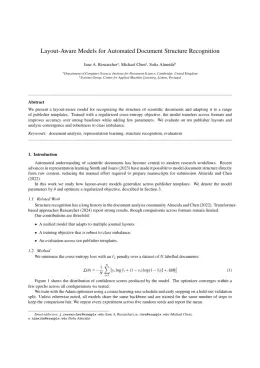
In DocuGuru you write your manuscript in a normal editor — no LaTeX setup required — and select the Translational Oncology template. When you export, DocuGuru compiles the paper into the official Elsevier format and hands you a submission-ready PDF along with the editable LaTeX source.
What reference style does Translational Oncology use?
Translational Oncology uses Numbered (Elsevier) references, shown as numbered [1], [2] markers in the text. DocuGuru formats every in-text citation and the reference list in this exact style automatically. A reference appears like this: [1] A. Smith, B. Jones, C. Lee, A representative article title, Translational Oncology 12 (2023) 45–58.
Do I need to know LaTeX to submit to Translational Oncology?
No. DocuGuru generates the elsarticle LaTeX class and compiles the PDF for you in the background, so you get a Elsevier-ready Translational Oncology document without writing any LaTeX. If you do want it, the LaTeX source is included in the export.
Can I import an existing draft into the Translational Oncology template?
Yes. Paste or upload your current manuscript — Word, LaTeX, Markdown, or plain text — and DocuGuru reflows it into the Translational Oncology format with correct headings, figures, tables, and numbered citations.
Who publishes Translational Oncology?
Translational Oncology is a multidisciplinary journal published by Elsevier. DocuGuru's Translational Oncology template matches Elsevier's official submission format.
Can I export a submission-ready Translational Oncology PDF?
Yes — DocuGuru produces a PDF built with the official Translational Oncology template (the elsarticle class) that is ready to submit to Elsevier, together with the matching LaTeX source files.
How much does the Translational Oncology template cost?
You can start writing in the Translational Oncology template for free. Exporting the final submission-ready Translational Oncology PDF and LaTeX source is part of DocuGuru's paid plans — see the app for current pricing.
Use the Translational Oncology template