Elsevier

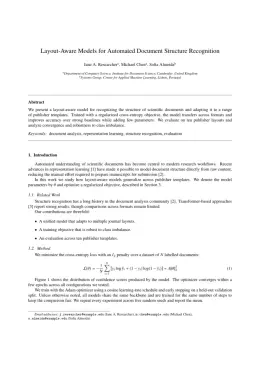
The Crop Journal Template

Write in a clean editor, then format for The Crop Journal in one click — DocuGuru applies the official Elsevier template with numbered references and exports a submission-ready PDF plus the editable LaTeX source. Free to start.

About the The Crop Journal format

The Crop Journal is a peer-reviewed journal published by Elsevier, covering Genetic Mapping and Diversity in Plants and Animals, Wheat and Barley Genetics and Pathology, Plant Molecular Biology Research.

PublisherElsevier
Reference styleNumbered (Elsevier)
Numbered — [1], [2] in the text
[1] A. Smith, B. Jones, C. Lee, A representative article title, The Crop Journal 12 (2023) 45–58.

Formats any DOI in The Crop Journal style. No sign-up.

Publishes research inGenetic Mapping and Diversity in Plants and Animals Wheat and Barley Genetics and Pathology Plant Molecular Biology Research Plant nutrient uptake and metabolism Plant Stress Responses and Tolerance
ISSN2095-5421
Citation impact (2-yr)5.86
h-index88
i10-index964
Total citations46,370
Open accessYes
Top institutions publishing hereChinese Academy of Agricultural Sciences
Journal websitewww.sciencedirect.com
You getA submission-ready PDF and the editable LaTeX source — ready to submit.

Papers published in The Crop Journal per year

52
2014
65
2015
81
2016
63
2017
74
2018
99
2019
138
2020
170
2021
179
2022
131
2023
178
2024
224
2025

Citation impact of The Crop Journal by publication year

1.7K
2014
5.7K
2015
5.4K
2016
3.3K
2017
3.6K
2018
4K
2019
5K
2020
6.6K
2021
4K
2022
2.1K
2023
2K
2024
856
2025

Citations each year’s papers have accumulated so far — the most recent years are still building up.

Most-cited papers in The Crop Journal

QTL IciMapping: Integrated software for genetic linkage map construction and quantitative trait locus mapping in biparental populations

Lei Meng, Huihui Li, Luyan Zhang et al. · 23 Feb 2015

QTL IciMapping is freely available public software capable of building high-density linkage maps and mapping quantitative trait loci (QTL) in biparental populations. Eight functionalities are integrated in this software package: (1) BIN: binning of redundant markers; (2) MAP: construction of linkage maps in biparental populations; (3) CMP: consensus map construction from multiple linkage maps sharing…

2,066 citations Cite SaveGo to paper →
Phytohormones and their metabolic engineering for abiotic stress tolerance in crop plants

Shabir Hussain Wani, Vinay Kumar, Varsha Shriram et al. · 3 Apr 2016

Abiotic stresses including drought, salinity, heat, cold, flooding, and ultraviolet radiation causes crop losses worldwide. In recent times, preventing these crop losses and producing more food and feed to meet the demands of ever-increasing human populations have gained unprecedented importance. However, the proportion of agricultural lands facing multiple abiotic stresses is expected only to rise…

Estimation of biomass in wheat using random forest regression algorithm and remote sensing data

Liai Wang, Xudong Zhou, Xinkai Zhu et al. · 31 Mar 2016

Wheat biomass can be estimated using appropriate spectral vegetation indices. However, the accuracy of estimation should be further improved for on-farm crop management. Previous studies focused on developing vegetation indices, however limited research exists on modeling algorithms. The emerging Random Forest (RF) machine-learning algorithm is regarded as one of the most precise prediction methods for…

Magnesium deficiency in plants: An urgent problem

Wanli Guo, Hussain Nazim, Zongsuo Liang et al. · 17 Dec 2015

Although magnesium (Mg) is one of the most important nutrients, involved in many enzyme activities and the structural stabilization of tissues, its importance as a macronutrient ion has been overlooked in recent decades by botanists and agriculturists, who did not regard Mg deficiency (MGD) in plants as a severe health problem. However, recent studies have…

From leaf to whole-plant water use efficiency (WUE) in complex canopies: Limitations of leaf WUE as a selection target

H. Medrano, Magdalena Tomás, Sebastià Martorell et al. · 12 May 2015

Plant water use efficiency (WUE) is becoming a key issue in semiarid areas, where crop production relies on the use of large volumes of water. Improving WUE is necessary for securing environmental sustainability of food production in these areas. Given that climate change predictions include increases in temperature and drought in semiarid regions, improving crop…

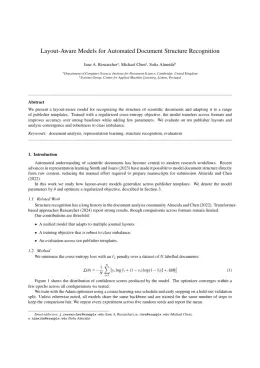
The Crop Journal template — frequently asked questions

How do I write a paper in the The Crop Journal format?
In DocuGuru you write your manuscript in a normal editor — no LaTeX setup required — and select the The Crop Journal template. When you export, DocuGuru compiles the paper into the official Elsevier format and hands you a submission-ready PDF along with the editable LaTeX source.
What reference style does The Crop Journal use?
The Crop Journal uses Numbered (Elsevier) references, shown as numbered [1], [2] markers in the text. DocuGuru formats every in-text citation and the reference list in this exact style automatically. A reference appears like this: [1] A. Smith, B. Jones, C. Lee, A representative article title, The Crop Journal 12 (2023) 45–58.
Do I need to know LaTeX to submit to The Crop Journal?
No. DocuGuru generates the elsarticle LaTeX class and compiles the PDF for you in the background, so you get a Elsevier-ready The Crop Journal document without writing any LaTeX. If you do want it, the LaTeX source is included in the export.
Can I import an existing draft into the The Crop Journal template?
Yes. Paste or upload your current manuscript — Word, LaTeX, Markdown, or plain text — and DocuGuru reflows it into the The Crop Journal format with correct headings, figures, tables, and numbered citations.
Who publishes The Crop Journal?
The Crop Journal is a multidisciplinary journal published by Elsevier. DocuGuru's The Crop Journal template matches Elsevier's official submission format.
Can I export a submission-ready The Crop Journal PDF?
Yes — DocuGuru produces a PDF built with the official The Crop Journal template (the elsarticle class) that is ready to submit to Elsevier, together with the matching LaTeX source files.
How much does the The Crop Journal template cost?
You can start writing in the The Crop Journal template for free. Exporting the final submission-ready The Crop Journal PDF and LaTeX source is part of DocuGuru's paid plans — see the app for current pricing.
Use the The Crop Journal template