Elsevier

Technical Innovations & Patient Support in Radiation Oncology Template

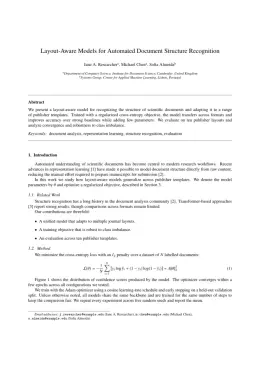
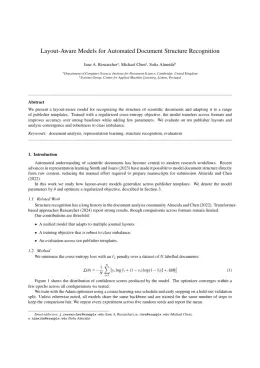
Write in a clean editor, then format for Technical Innovations & Patient Support in Radiation Oncology in one click — DocuGuru applies the official Elsevier template with numbered references and exports a submission-ready PDF plus the editable LaTeX source. Free to start.

About the Technical Innovations & Patient Support in Radiation Oncology format

Technical Innovations & Patient Support in Radiation Oncology is a peer-reviewed journal published by Elsevier, covering Advanced Radiotherapy Techniques, Advances in Oncology and Radiotherapy, Radiation Therapy and Dosimetry.

PublisherElsevier
Reference styleNumbered (Elsevier)
Numbered — [1], [2] in the text
[1] A. Smith, B. Jones, C. Lee, A representative article title, Technical Innovations & Patient Support in Radiation Oncology 12 (2023) 45–58.

Formats any DOI in Technical Innovations & Patient Support in Radiation Oncology style. No sign-up.

Publishes research inAdvanced Radiotherapy Techniques Advances in Oncology and Radiotherapy Radiation Therapy and Dosimetry Prostate Cancer Diagnosis and Treatment Lung Cancer Diagnosis and Treatment
ISSN2405-6324
Citation impact (2-yr)1.22
h-index27
i10-index100
Total citations3,085
Article processing charge$1,389
Open accessYes
Top institutions publishing herePrincess Margaret Cancer Centre
Journal websitewww.journals.elsevier.com
You getA submission-ready PDF and the editable LaTeX source — ready to submit.

Papers published in Technical Innovations & Patient Support in Radiation Oncology per year

1
2007
1
2010
1
2011
15
2017
23
2018
27
2019
32
2020
47
2021
52
2022
35
2023
65
2024
74
2025

Citation impact of Technical Innovations & Patient Support in Radiation Oncology by publication year

5
2007
1
2010
0
2011
159
2017
295
2018
333
2019
642
2020
587
2021
632
2022
175
2023
164
2024
47
2025

Citations each year’s papers have accumulated so far — the most recent years are still building up.

Most-cited papers in Technical Innovations & Patient Support in Radiation Oncology

Sarcopenia in cancer: Risking more than muscle loss

Milan Anjanappa, Michael Corden, Andrew Green et al. · 9 Nov 2020

Sarcopenia is characterised by progressive and extensive skeletal muscle degeneration and is associated with functional decline. Sarcopenia has primary and secondary aetiology, arising as a result of the ageing process or through chronic cytokine-mediated inflammation (associated with health conditions including cancer), respectively. Diagnosis of sarcopenia is dependent upon detection of reduced skeletal muscle strength, mass…

On-line adaptive MR guided radiotherapy for locally advanced pancreatic cancer: Clinical and dosimetric considerations

Lorenzo Placidi, Angela Romano, Giuditta Chiloiro et al. · 2 Jul 2020

INTRODUCTION: Magnetic Resonance-guided Radiation Therapy (MRgRT) allows online adaptations (OA) of the treatment plan to optimize daily dose distribution based on patient's anatomy, just before fraction delivery. The aim of this study is to evaluate feasibility and the dosimetric improvement of the OA workflow implemented in our institution for locally advanced pancreatic cancer (LAPC) patients,…

Virtual reality and augmented reality in radiation oncology education – A review and expert commentary

David L. Kok, Sathana Dushyanthen, Gabrielle W. Peters et al. · 16 Sep 2022

The field of radiation oncology is rapidly advancing through technological and biomedical innovation backed by robust research evidence. However, cancer professionals are notoriously time-poor, meaning there is a need for high quality, accessible and tailored oncologic education programs. While traditional teaching methods including lectures and other in-person delivery formats remain important, digital learning (DL) has…

Dosimetric analysis of Deep Inspiratory Breath-hold technique (DIBH) in left-sided breast cancer radiotherapy and evaluation of pre-treatment predictors of cardiac doses for guiding patient selection for DIBH

Soujanya Ferdinand, Monidipa Mondal, Suman Mallik et al. · 1 Mar 2021

INTRODUCTION: The risk of radiotherapy-associated cardiovascular disease has been a concern for decades in breast cancer survivors. The objective of our study is to evaluate the dosimetric benefit of Deep Inspiratory Breath-hold technique (DIBH) on organs-at-risk (OAR) sparing in left-sided breast cancer radiotherapy and to find out pre-treatment predictors of cardiac doses for guiding patient…

Breast cancer patients report reduced sensitivity and pain using a barrier film during radiotherapy – A Danish intra-patient randomized multicentre study

Pia Krause Møller, Karina Olling, Martin Berg et al. · 18 Jun 2018

Background and Purpose: Radiodermatitis is a well-known toxicity of radiotherapy and barrier film has been shown to reduce the severity of radiodermatitis. We have validated prior findings in a Danish cohort, using a similar barrier film and patient reported outcomes. Materials and Methods: 101 Danish breast cancer patients were included at three radiotherapy centres. Based…

Technical Innovations & Patient Support in Radiation Oncology template — frequently asked questions

How do I write a paper in the Technical Innovations & Patient Support in Radiation Oncology format?
In DocuGuru you write your manuscript in a normal editor — no LaTeX setup required — and select the Technical Innovations & Patient Support in Radiation Oncology template. When you export, DocuGuru compiles the paper into the official Elsevier format and hands you a submission-ready PDF along with the editable LaTeX source.
What reference style does Technical Innovations & Patient Support in Radiation Oncology use?
Technical Innovations & Patient Support in Radiation Oncology uses Numbered (Elsevier) references, shown as numbered [1], [2] markers in the text. DocuGuru formats every in-text citation and the reference list in this exact style automatically. A reference appears like this: [1] A. Smith, B. Jones, C. Lee, A representative article title, Technical Innovations & Patient Support in Radiation Oncology 12 (2023) 45–58.
Do I need to know LaTeX to submit to Technical Innovations & Patient Support in Radiation Oncology?
No. DocuGuru generates the elsarticle LaTeX class and compiles the PDF for you in the background, so you get a Elsevier-ready Technical Innovations & Patient Support in Radiation Oncology document without writing any LaTeX. If you do want it, the LaTeX source is included in the export.
Can I import an existing draft into the Technical Innovations & Patient Support in Radiation Oncology template?
Yes. Paste or upload your current manuscript — Word, LaTeX, Markdown, or plain text — and DocuGuru reflows it into the Technical Innovations & Patient Support in Radiation Oncology format with correct headings, figures, tables, and numbered citations.
Who publishes Technical Innovations & Patient Support in Radiation Oncology?
Technical Innovations & Patient Support in Radiation Oncology is a multidisciplinary journal published by Elsevier. DocuGuru's Technical Innovations & Patient Support in Radiation Oncology template matches Elsevier's official submission format.
Can I export a submission-ready Technical Innovations & Patient Support in Radiation Oncology PDF?
Yes — DocuGuru produces a PDF built with the official Technical Innovations & Patient Support in Radiation Oncology template (the elsarticle class) that is ready to submit to Elsevier, together with the matching LaTeX source files.
How much does the Technical Innovations & Patient Support in Radiation Oncology template cost?
You can start writing in the Technical Innovations & Patient Support in Radiation Oncology template for free. Exporting the final submission-ready Technical Innovations & Patient Support in Radiation Oncology PDF and LaTeX source is part of DocuGuru's paid plans — see the app for current pricing.

Use the Technical Innovations & Patient Support in Radiation Oncology template