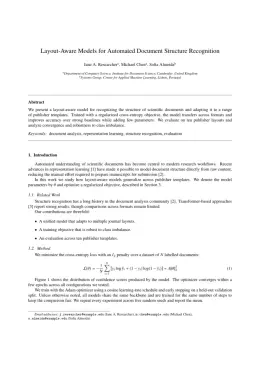
Elsevier

Sustainable Chemistry for the Environment Template

Write in a clean editor, then format for Sustainable Chemistry for the Environment in one click — DocuGuru applies the official Elsevier template with numbered references and exports a submission-ready PDF plus the editable LaTeX source. Free to start.

About the Sustainable Chemistry for the Environment format

Sustainable Chemistry for the Environment is a peer-reviewed journal published by Elsevier, covering Adsorption and biosorption for pollutant removal, Recycling and Waste Management Techniques, Advanced Photocatalysis Techniques.

PublisherElsevier
Reference styleNumbered (Elsevier)
Numbered — [1], [2] in the text
[1] A. Smith, B. Jones, C. Lee, A representative article title, Sustainable Chemistry for the Environment 12 (2023) 45–58.

Formats any DOI in Sustainable Chemistry for the Environment style. No sign-up.

Publishes research inAdsorption and biosorption for pollutant removal Recycling and Waste Management Techniques Advanced Photocatalysis Techniques Biofuel production and bioconversion Microplastics and Plastic Pollution
ISSN2949-8392
Citation impact (2-yr)10.68
h-index28
i10-index125
Total citations3,814
Open accessYes
Top institutions publishing hereAristotle University of Thessaloniki
You getA submission-ready PDF and the editable LaTeX source — ready to submit.

Papers published in Sustainable Chemistry for the Environment per year

56
2023
148
2024
102
2025

Citation impact of Sustainable Chemistry for the Environment by publication year

906
2023
2K
2024
671
2025

Citations each year’s papers have accumulated so far — the most recent years are still building up.

Most-cited papers in Sustainable Chemistry for the Environment

A review of photocatalysis, basic principles, processes, and materials

Abir Chakravorty, Somnath Roy · 6 Sep 2024

The industrial revolution has improved living standards while destroying the natural world, and as a result, environmental pollution has become a serious concern for both developed and developing countries. Furthermore, photocatalysis is a chemical process that uses light energy to accelerate thermodynamically demanding operations, such as photosynthesis, which makes it a viable substitute for deep…

Cellulose: A comprehensive review of its properties and applications

Elina Marinho · 18 Aug 2025

Cellulose is a complex carbohydrate and a fundamental structural element in plant cell walls, consisting of long chains of glucose molecules that form a rigid framework providing strength and support to plants. As the most prevalent natural polymer, cellulose is an ideal candidate for producing environmentally friendly and economically viable polymeric products, traditionally made from…

Photocatalytic action of Ag/TiO2 nanoparticles to emerging pollutants degradation: A comprehensive review

Caroline Zarzzeka, Jonas Goldoni, Jessica do Rocio de Paula de Oliveira et al. · 24 Oct 2024

Silver (Ag) doped titanium dioxide (TiO 2 ) nanoparticles are promising photocatalysts for the degradation of emerging pollutants. These nanocomposites enhance the photocatalytic activity of TiO 2 in visible light, suppress the e - /h + rearrangement, and enhance their bactericidal properties. This review proposes a bibliometric analysis that elucidates research trends, and important topics…

Investigating the interactions between dyes and porous/composite materials: A comprehensive study

Muhammad Zeeshan, Tariq Javed, Chandresh Kumari et al. · 10 Feb 2025

The subject of pollution resulting from dyes has emerged as a significant global issue. Dyes adsorption analysis has gained more significance in the last several years. The process of adsorption are among the most financially viable and effective approaches for reducing dye concentrations in water systems. These hazardous and carcinogenic dyes find their way into…

A comprehensive review of the oxidation states of molybdenum oxides and their diverse applications

Abdul Aziz Shaikh, Jyoti Bhattacharjee, Preetam Datta et al. · 18 Jun 2024

Molybdenum oxide, belonging to the transition metal group, has garnered significant attention due to its diverse chemical properties, leading to extensive research in various fields. It manifests in multiple forms, including molybdenum oxides (MoO2 and MoO3), each showcasing distinct features. Their remarkable adaptability finds applications across different disciplines. This comprehensive review delves into the various…

Sustainable Chemistry for the Environment template — frequently asked questions

How do I write a paper in the Sustainable Chemistry for the Environment format?
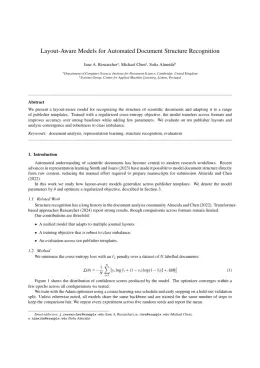
In DocuGuru you write your manuscript in a normal editor — no LaTeX setup required — and select the Sustainable Chemistry for the Environment template. When you export, DocuGuru compiles the paper into the official Elsevier format and hands you a submission-ready PDF along with the editable LaTeX source.
What reference style does Sustainable Chemistry for the Environment use?
Sustainable Chemistry for the Environment uses Numbered (Elsevier) references, shown as numbered [1], [2] markers in the text. DocuGuru formats every in-text citation and the reference list in this exact style automatically. A reference appears like this: [1] A. Smith, B. Jones, C. Lee, A representative article title, Sustainable Chemistry for the Environment 12 (2023) 45–58.
Do I need to know LaTeX to submit to Sustainable Chemistry for the Environment?
No. DocuGuru generates the elsarticle LaTeX class and compiles the PDF for you in the background, so you get a Elsevier-ready Sustainable Chemistry for the Environment document without writing any LaTeX. If you do want it, the LaTeX source is included in the export.
Can I import an existing draft into the Sustainable Chemistry for the Environment template?
Yes. Paste or upload your current manuscript — Word, LaTeX, Markdown, or plain text — and DocuGuru reflows it into the Sustainable Chemistry for the Environment format with correct headings, figures, tables, and numbered citations.
Who publishes Sustainable Chemistry for the Environment?
Sustainable Chemistry for the Environment is a multidisciplinary journal published by Elsevier. DocuGuru's Sustainable Chemistry for the Environment template matches Elsevier's official submission format.
Can I export a submission-ready Sustainable Chemistry for the Environment PDF?
Yes — DocuGuru produces a PDF built with the official Sustainable Chemistry for the Environment template (the elsarticle class) that is ready to submit to Elsevier, together with the matching LaTeX source files.
How much does the Sustainable Chemistry for the Environment template cost?
You can start writing in the Sustainable Chemistry for the Environment template for free. Exporting the final submission-ready Sustainable Chemistry for the Environment PDF and LaTeX source is part of DocuGuru's paid plans — see the app for current pricing.
Use the Sustainable Chemistry for the Environment template