Elsevier

Sustainable Chemistry for Climate Action Template

Write in a clean editor, then format for Sustainable Chemistry for Climate Action in one click — DocuGuru applies the official Elsevier template with numbered references and exports a submission-ready PDF plus the editable LaTeX source. Free to start.

About the Sustainable Chemistry for Climate Action format

Sustainable Chemistry for Climate Action is a peer-reviewed journal published by Elsevier, covering Carbon Dioxide Capture Technologies, Thermochemical Biomass Conversion Processes, Catalysts for Methane Reforming.

PublisherElsevier
Reference styleNumbered (Elsevier)
Numbered — [1], [2] in the text
[1] A. Smith, B. Jones, C. Lee, A representative article title, Sustainable Chemistry for Climate Action 12 (2023) 45–58.

Formats any DOI in Sustainable Chemistry for Climate Action style. No sign-up.

Publishes research inCarbon Dioxide Capture Technologies Thermochemical Biomass Conversion Processes Catalysts for Methane Reforming Membrane Separation and Gas Transport Carbon dioxide utilization in catalysis
ISSN2772-8269
Citation impact (2-yr)3.46
h-index18
i10-index32
Total citations1,428
Open accessYes
Top institutions publishing hereIndian Institute of Technology Roorkee
You getA submission-ready PDF and the editable LaTeX source — ready to submit.

Papers published in Sustainable Chemistry for Climate Action per year

10
2022
25
2023
18
2024
127
2025

Citation impact of Sustainable Chemistry for Climate Action by publication year

196
2022
557
2023
160
2024
441
2025

Citations each year’s papers have accumulated so far — the most recent years are still building up.

Most-cited papers in Sustainable Chemistry for Climate Action

The prospects of hydrogen in achieving net zero emissions by 2050: A critical review

Somtochukwu Godfrey Nnabuife, Eni Oko, Boyu Kuang et al. · 1 Jan 2023

Hydrogen (H2) usage was 90 tnes (Mt) in 2020, almost entirely for industrial and refining uses and generated almost completely from fossil fuels, leading to nearly 900 Mt of carbon dioxide emissions. However, there has been significant growth of H2 in recent years. Electrolysers' total capacity, which are required to generate H2 from electricity, has…

A review on green synthesis of nanoparticles toward sustainable environment

Richa Saxena, Shreya Kotnala, S C Bhatt et al. · 16 Apr 2025

Nanoparticles have become remarkable recognition in a variety of medical fields, including biomedical research, biosensors, pharmaceuticals, catalysis, delivery of drugs, the health sector, beauty products, household products, mechanics, optics, and chemicals due to their outstanding mechanical, chemical, biological, thermal, and physical qualities. The green synthesis method is an environmentally responsible, economical, and safe way to…

Conventional and unconventional chemical treatment methods of natural fibres for sustainable biocomposites

Mahima Samanth, K. Subrahmanya Bhat · 1 Jan 2023

Natural fibres could be used as one of the raw materials for the production of engineering materials. They have the advantage of low density, light weight, biodegrability and the capacity to reprocess to a certain extent. There are certain limitations of such fibres when formed composites with synthetic polymers like high degree of moisture absorption,…

A realistic look at CO2 emissions, climate change and the role of sustainable chemistry

Gadi Rothenberg · 1 Jan 2023

The increase of man-made greenhouse gas (GHG) emissions is a serious global problem. Hence the 2015 Paris Agreement and the COP meetings, which show the willingness of governments to reduce emissions and fight climate change. Their main goals are keeping average temperatures to max 2 °C above pre-industrial times, and reaching net-zero emissions by 2050.…

Green pathways for urea synthesis: A review from Australia's perspective

Dia Milani, Ali Kiani, Nawshad Haque et al. · 1 Jan 2022

This paper discusses the status of the global fertilizer industry with a primary focus on Australian market. The conventional energy- and carbon-intensive ammonia production industry is taking serious steps in transforming to more environmentally benign pathways via utilising ‘green’ hydrogen (hydrogen production via water electrolysis powered by renewable energy) feedstock into their production process and…

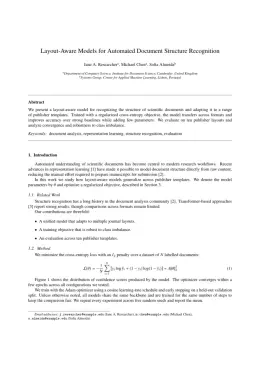
Sustainable Chemistry for Climate Action template — frequently asked questions

How do I write a paper in the Sustainable Chemistry for Climate Action format?
In DocuGuru you write your manuscript in a normal editor — no LaTeX setup required — and select the Sustainable Chemistry for Climate Action template. When you export, DocuGuru compiles the paper into the official Elsevier format and hands you a submission-ready PDF along with the editable LaTeX source.
What reference style does Sustainable Chemistry for Climate Action use?
Sustainable Chemistry for Climate Action uses Numbered (Elsevier) references, shown as numbered [1], [2] markers in the text. DocuGuru formats every in-text citation and the reference list in this exact style automatically. A reference appears like this: [1] A. Smith, B. Jones, C. Lee, A representative article title, Sustainable Chemistry for Climate Action 12 (2023) 45–58.
Do I need to know LaTeX to submit to Sustainable Chemistry for Climate Action?
No. DocuGuru generates the elsarticle LaTeX class and compiles the PDF for you in the background, so you get a Elsevier-ready Sustainable Chemistry for Climate Action document without writing any LaTeX. If you do want it, the LaTeX source is included in the export.
Can I import an existing draft into the Sustainable Chemistry for Climate Action template?
Yes. Paste or upload your current manuscript — Word, LaTeX, Markdown, or plain text — and DocuGuru reflows it into the Sustainable Chemistry for Climate Action format with correct headings, figures, tables, and numbered citations.
Who publishes Sustainable Chemistry for Climate Action?
Sustainable Chemistry for Climate Action is a multidisciplinary journal published by Elsevier. DocuGuru's Sustainable Chemistry for Climate Action template matches Elsevier's official submission format.
Can I export a submission-ready Sustainable Chemistry for Climate Action PDF?
Yes — DocuGuru produces a PDF built with the official Sustainable Chemistry for Climate Action template (the elsarticle class) that is ready to submit to Elsevier, together with the matching LaTeX source files.
How much does the Sustainable Chemistry for Climate Action template cost?
You can start writing in the Sustainable Chemistry for Climate Action template for free. Exporting the final submission-ready Sustainable Chemistry for Climate Action PDF and LaTeX source is part of DocuGuru's paid plans — see the app for current pricing.
Use the Sustainable Chemistry for Climate Action template