Elsevier

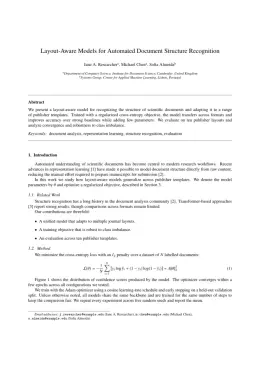
Studies in Mycology Template

Write in a clean editor, then format for Studies in Mycology in one click — DocuGuru applies the official Elsevier template with numbered references and exports a submission-ready PDF plus the editable LaTeX source. Free to start.

About the Studies in Mycology format

Studies in Mycology is a peer-reviewed journal published by Elsevier, covering Plant Pathogens and Fungal Diseases, Mycorrhizal Fungi and Plant Interactions, Yeasts and Rust Fungi Studies.

PublisherElsevier
Reference styleNumbered (Elsevier)
Numbered — [1], [2] in the text
[1] A. Smith, B. Jones, C. Lee, A representative article title, Studies in Mycology 12 (2023) 45–58.

Formats any DOI in Studies in Mycology style. No sign-up.

Publishes research inPlant Pathogens and Fungal Diseases Mycorrhizal Fungi and Plant Interactions Yeasts and Rust Fungi Studies Mycotoxins in Agriculture and Food Fungal Biology and Applications
ISSN0166-0616
Citation impact (2-yr)7.25
h-index131
i10-index326
Total citations54,471
Top institutions publishing hereWesterdijk Fungal Biodiversity Institute
Journal websitewww.journals.elsevier.com
You getA submission-ready PDF and the editable LaTeX source — ready to submit.

Papers published in Studies in Mycology per year

18
2014
21
2015
19
2016
25
2017
28
2018
6
2019
18
2020
13
2021
22
2022
14
2023
29
2024
18
2025

Citation impact of Studies in Mycology by publication year

4.9K
2014
3.5K
2015
1.7K
2016
2.6K
2017
3.9K
2018
383
2019
1.9K
2020
871
2021
878
2022
526
2023
349
2024
38
2025

Citations each year’s papers have accumulated so far — the most recent years are still building up.

Most-cited papers in Studies in Mycology

The Colletotrichum gloeosporioides species complex

Bevan Weir, Peter R. Johnston, Ulrike Damm · 1 Sep 2012

The limit of the Colletotrichum gloeosporioides species complex is defined genetically, based on a strongly supported clade within the Colletotrichum ITS gene tree. All taxa accepted within this clade are morphologically more or less typical of the broadly defined C. gloeosporioides, as it has been applied in the literature for the past 50 years. We…

1,639 citations Cite SaveGo to paper →
Phylogeny, identification and nomenclature of the genus<i>Aspergillus</i>

Robert A. Samson, Cobus M. Visagie, Jos Houbraken et al. · 1 Jun 2014

Aspergillus comprises a diverse group of species based on morphological, physiological and phylogenetic characters, which significantly impact biotechnology, food production, indoor environments and human health. Aspergillus was traditionally associated with nine teleomorph genera, but phylogenetic data suggest that together with genera such as Polypaecilum, Phialosimplex, Dichotomomyces and Cristaspora, Aspergillus forms a monophyletic clade closely related…

1,105 citations Cite SaveGo to paper →
Colletotrichum – current status and future directions

P. F. Cannon, Ulrike Damm, Peter R. Johnston et al. · 1 Sep 2012

A review is provided of the current state of understanding of Colletotrichum systematics, focusing on species-level data and the major clades. The taxonomic placement of the genus is discussed, and the evolution of our approach to species concepts and anamorph-teleomorph relationships is described. The application of multilocus technologies to phylogenetic analysis of Colletotrichum is reviewed,…

1,096 citations Cite SaveGo to paper →
Phylogenetic classification of Cordyceps and the clavicipitaceous fungi

Gi‐Ho Sung, Nigel L. Hywel‐Jones, Jae-Mo Sung et al. · 1 Jan 2007

Cordyceps, comprising over 400 species, was historically classified in the Clavicipitaceae, based on cylindrical asci, thickened ascus apices and filiform ascospores, which often disarticulate into part-spores. Cordyceps was characterized by the production of well-developed often stipitate stromata and an ecology as a pathogen of arthropods and Elaphomyces with infrageneric classifications emphasizing arrangement of perithecia, ascospore…

1,058 citations Cite SaveGo to paper →
The Botryosphaeriaceae: genera and species known from culture

Alan J. L. Phillips, Artur Alves, Jafar Abdollahzadeh et al. · 1 Sep 2013

In this paper we give an account of the genera and species in the Botryosphaeriaceae. We consider morphological characters alone as inadequate to define genera or identify species, given the confusion it has repeatedly introduced in the past, their variation during development, and inevitable overlap as representation grows. Thus it seems likely that all of…

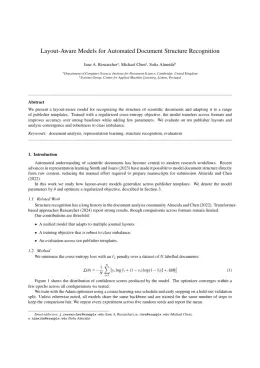
Studies in Mycology template — frequently asked questions

How do I write a paper in the Studies in Mycology format?
In DocuGuru you write your manuscript in a normal editor — no LaTeX setup required — and select the Studies in Mycology template. When you export, DocuGuru compiles the paper into the official Elsevier format and hands you a submission-ready PDF along with the editable LaTeX source.
What reference style does Studies in Mycology use?
Studies in Mycology uses Numbered (Elsevier) references, shown as numbered [1], [2] markers in the text. DocuGuru formats every in-text citation and the reference list in this exact style automatically. A reference appears like this: [1] A. Smith, B. Jones, C. Lee, A representative article title, Studies in Mycology 12 (2023) 45–58.
Do I need to know LaTeX to submit to Studies in Mycology?
No. DocuGuru generates the elsarticle LaTeX class and compiles the PDF for you in the background, so you get a Elsevier-ready Studies in Mycology document without writing any LaTeX. If you do want it, the LaTeX source is included in the export.
Can I import an existing draft into the Studies in Mycology template?
Yes. Paste or upload your current manuscript — Word, LaTeX, Markdown, or plain text — and DocuGuru reflows it into the Studies in Mycology format with correct headings, figures, tables, and numbered citations.
Who publishes Studies in Mycology?
Studies in Mycology is a multidisciplinary journal published by Elsevier. DocuGuru's Studies in Mycology template matches Elsevier's official submission format.
Can I export a submission-ready Studies in Mycology PDF?
Yes — DocuGuru produces a PDF built with the official Studies in Mycology template (the elsarticle class) that is ready to submit to Elsevier, together with the matching LaTeX source files.
How much does the Studies in Mycology template cost?
You can start writing in the Studies in Mycology template for free. Exporting the final submission-ready Studies in Mycology PDF and LaTeX source is part of DocuGuru's paid plans — see the app for current pricing.
Use the Studies in Mycology template